

أفضل 5 أنظمة تركيب الطاقة الشمسية للبلاط الطيني في عام 2026

Last Updated: September 9th, 2026
مؤلف: ديفي هوانغ | فريق المبيعات الدولية، ALV (عنوان البريد الإلكتروني:sales@xmalv.com)
ديفي هوانغ عضو في فريق المبيعات الدولية في شركة ALV، وهي شركة مصنعة لأنظمة تركيب الألواح الشمسية وقطاعات الألمنيوم. وهي تعمل مع مقاولي الهندسة والمشتريات والإنشاءات، والموزعين، ومطوري المشاريع في جميع أنحاء العالم، لمساعدة العملاء على اختيار حلول التركيب المناسبة بناءً على متطلبات المشروع، والمعايير المحلية، والميزانية.
What Are the Best Solar Mounting Systems for Clay Tile Roofs?
The best solar mounting systems for clay tile roofs in 2026 are stainless-steel roof hooks with aluminum rails, adjustable tile hooks, tile-replacement mounts, rail-less systems, and mini-rail solutions. For most residential clay tile roofs, a rafter-mounted stainless-steel hook combined with an aluminum rail remains the most versatile option because it provides strong structural attachment while minimizing modification to the tiles.
The choice should be based on the roof structure, tile profile, wind and snow loads, module layout, installation method, and local building requirements—not simply the lowest product price.
Global solar deployment continues to expand rapidly. The IEA reports that solar PV accounted for more than three-quarters of new renewable capacity additions worldwide in 2025, while global annual solar PV additions exceeded 600 GW. This continued growth makes reliable rooftop mounting infrastructure increasingly important for installers and EPC contractors.
Why Clay Tile Roofs Need Specialized Solar Mounting
Clay tiles are durable roofing materials, but they are not designed to carry concentrated loads from solar attachments. A mounting system should transfer structural loads into the roof rafters or other approved structural members rather than relying on the tile itself.
Installers must also avoid unnecessary tile cutting and ensure that the attachment does not compromise the roof’s water-shedding function. A good system therefore combines a properly engineered hook, rail, fastener, and flashing or tile interface.
For ALV, the objective is not simply to hold the PV module in place. The mounting solution must also make installation predictable, protect the roof, accommodate different clay tile profiles, and remain structurally reliable throughout the project’s service life.
Quick Comparison: Top 5 Clay Tile Mounting Systems
| System | الأفضل لـ | الميزة الرئيسية | تعقيد التركيب | مادة نموذجية |
| خطاف + سكة من الفولاذ المقاوم للصدأ | معظم أسطح المنازل السكنية | قوي ومتعدد الاستخدامات | واسطة | ألومنيوم + فولاذ مقاوم للصدأ SUS304 |
| خطاف بلاط قابل للتعديل | Uneven or irregular roofs | محاذاة أسهل | واسطة | Aluminum + stainless steel |
| تركيب بديل للبلاط | Fragile or difficult tiles | Minimal tile modification | واسطة | Aluminum + stainless steel |
| حامل بدون سكة | فنيو تركيب ذوو خبرة | Lightweight and clean appearance | عالي | Aluminum + stainless steel |
| نظام السكك الحديدية المصغرة | Cost-sensitive projects | مواد أقل للسكك الحديدية | منخفض - متوسط | Aluminum + stainless steel |
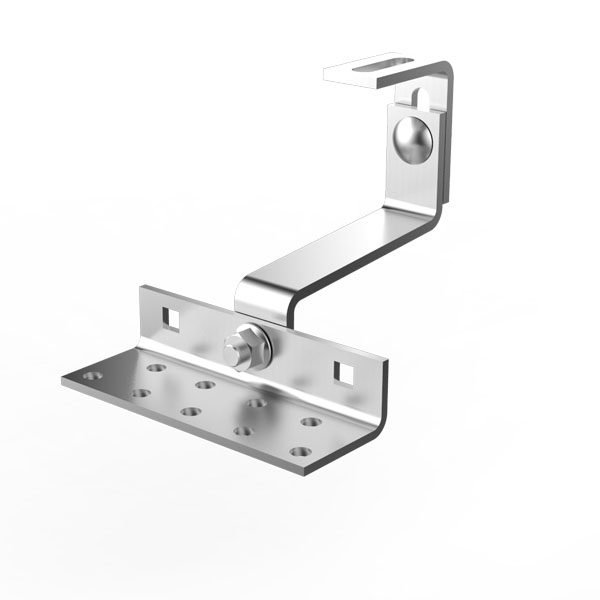
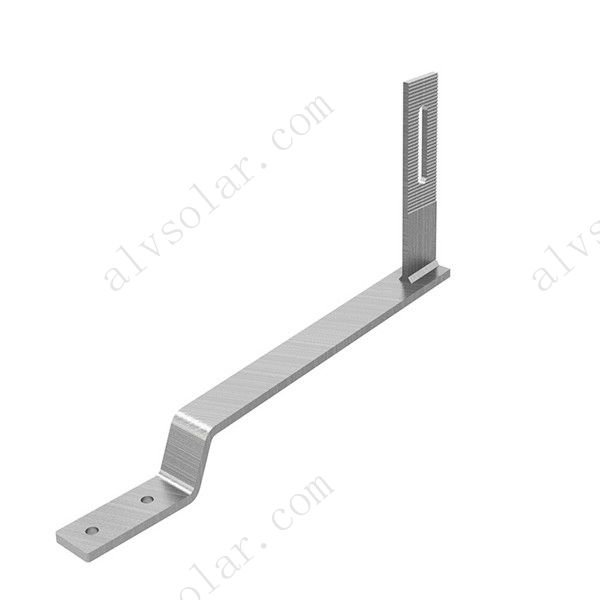
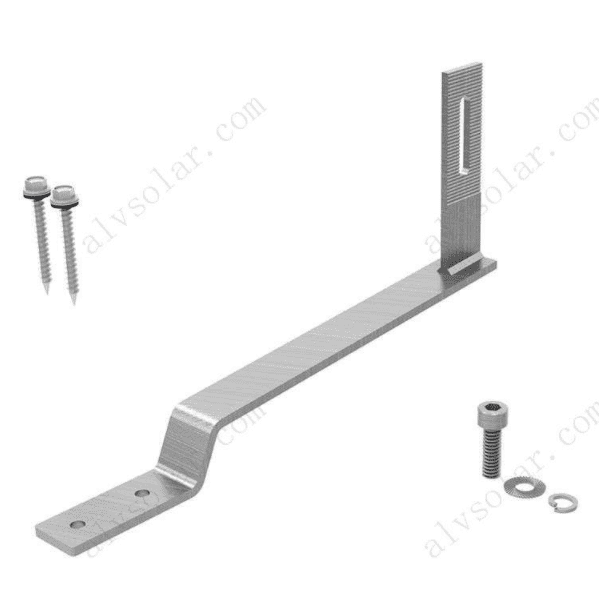
1. خطاف سقف من الفولاذ المقاوم للصدأ + سكة من الألومنيوم
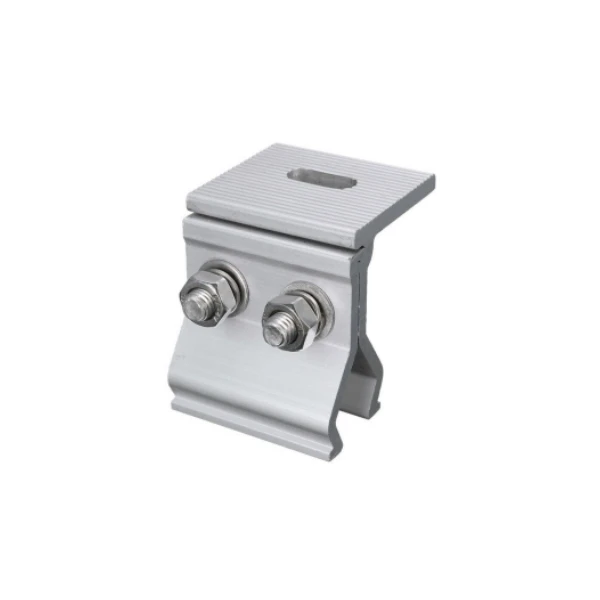
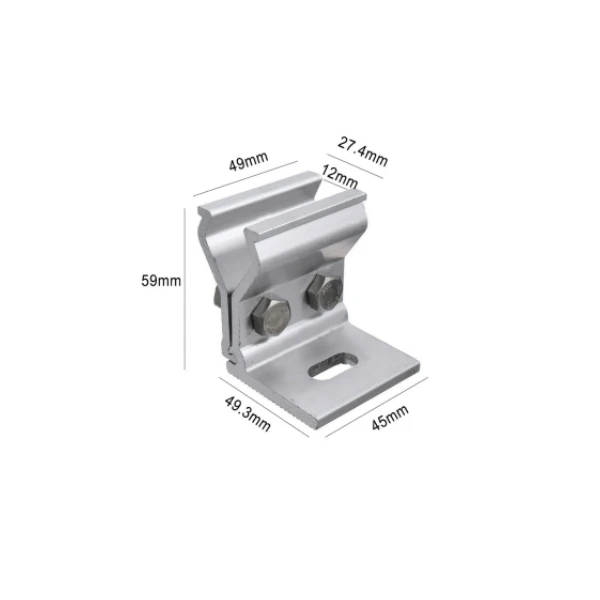
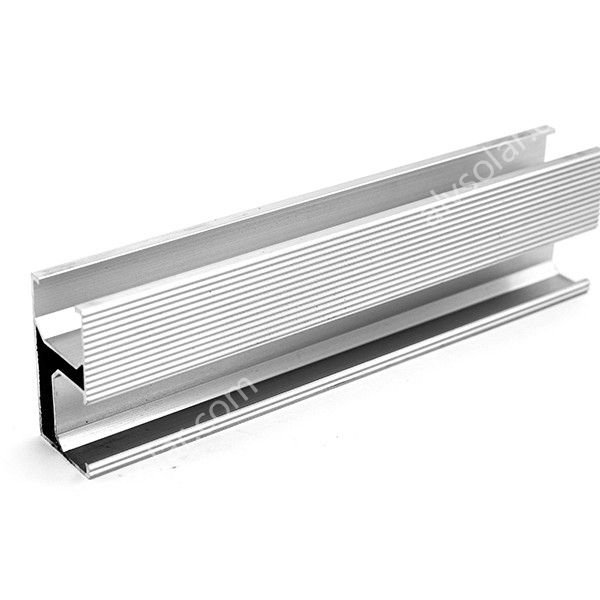
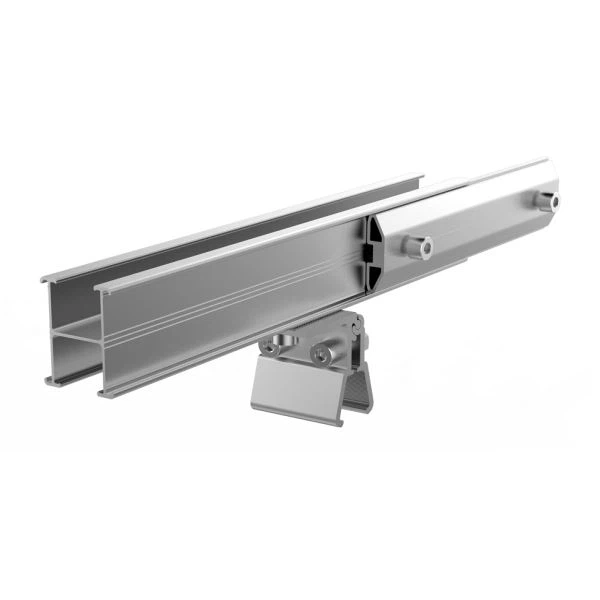
The conventional roof-hook-and-rail system is the best all-around choice for most clay tile solar installations. Stainless steel hooks attach to the structural framing below the tiles, while aluminum rails provide continuous support for the modules.
This configuration offers good flexibility for different panel sizes and layouts. It also makes it easier to adjust module positions during installation, which is useful when roof geometry is irregular.
ALV can customize hook dimensions, rail lengths, and attachment configurations according to the clay tile profile and project requirements. For EPC contractors handling multiple roof types, this versatility can simplify product selection and inventory management.
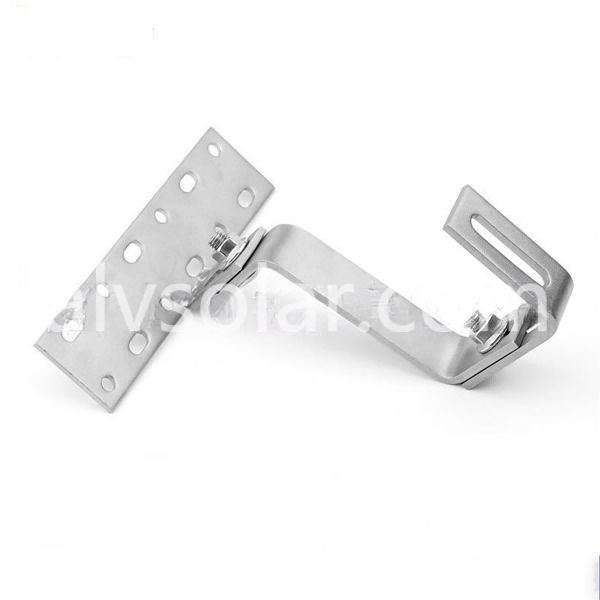
2. Adjustable Clay Tile Roof Hook
Adjustable hooks are particularly useful when clay tiles or roof rafters are not perfectly aligned. The adjustment mechanism allows installers to compensate for differences in height and positioning without forcing the rail into an uneven configuration.
This can improve module alignment and reduce unnecessary pressure on tiles. Adjustable hooks are especially useful on older residential buildings where roof structures may have accumulated dimensional tolerances over time.
For projects where installation labor is expensive, the additional cost of an adjustable component can be justified if it reduces alignment work and tile modification.
3. حامل شمسي بديل للبلاط
A tile-replacement mount replaces a conventional roof tile at the attachment location with a purpose-designed metal or composite mounting component. The solar attachment then connects through this replacement element to the underlying structure.
This approach can be useful when the existing clay tile profile is fragile, difficult to drill, or poorly suited to conventional hook geometry.
The key advantage is controlled interface design. Instead of forcing a standard hook through an unsuitable tile, the replacement mount creates a dedicated mounting point while maintaining a more consistent roof surface.
ALV can evaluate the tile profile and project drawings to determine whether a replacement-style solution is more appropriate than a conventional hook.
4. Rail-Less Clay Tile Mounting System
Rail-less systems attach solar modules using compact brackets rather than continuous aluminum rails. They can reduce material volume, shipping weight, and the visual footprint of the mounting system.
However, rail-less systems require more precise installation because module positioning and attachment points must be planned carefully. They are therefore better suited to experienced installers with standardized roof and module layouts.
For distributors and EPC contractors, rail-less mounting can be attractive when logistics and installation efficiency are major priorities. ALV can help determine whether a rail-less configuration is technically suitable for a particular clay tile project.
5. Mini-Rail System for Clay Tile Roofs
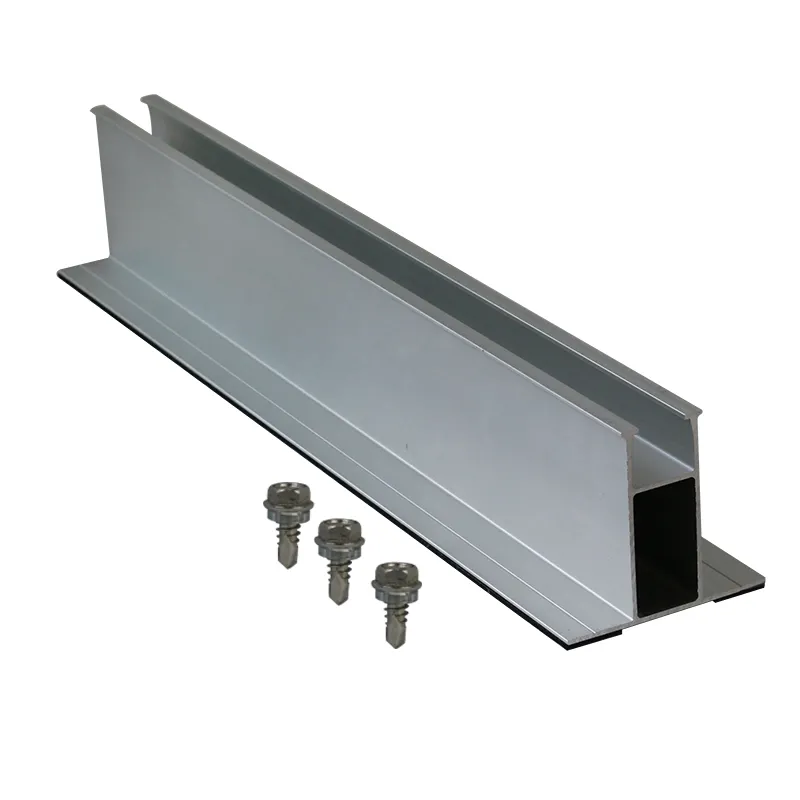
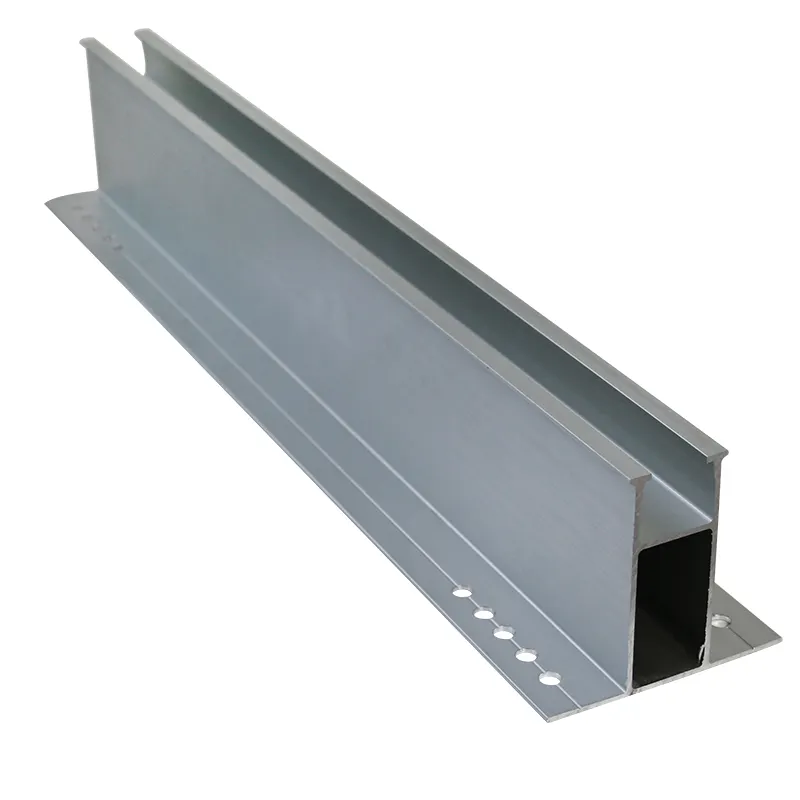
Mini-rail systems use short aluminum rail sections instead of long continuous rails. This can reduce aluminum consumption and simplify packaging and transportation.
Mini rails can work well on repetitive residential projects where module layouts are standardized. However, the attachment points still need to connect to suitable structural members, and the system must be engineered for the project’s wind and snow loads.
For high-volume residential projects, the combination of standardized components and shorter rails can help installers improve handling efficiency without moving to a completely rail-less design.
Material Comparison for Clay Tile Mounting
| مادة | مقاومة التآكل | وزن | قوة | Recommended Use |
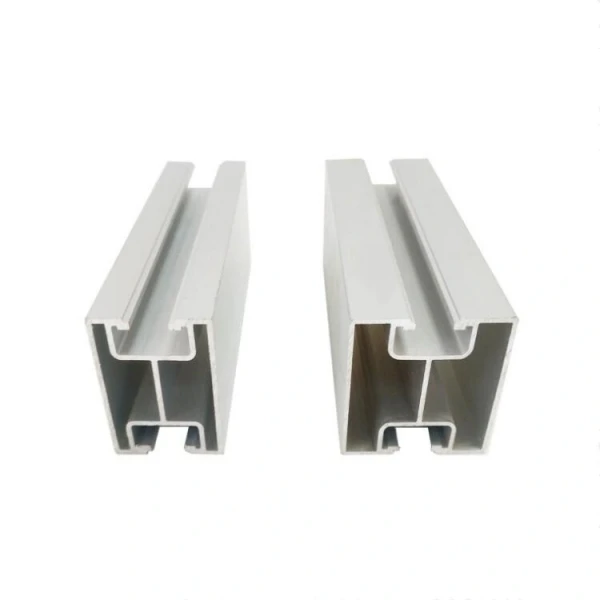
| ألومنيوم 6005-T5 | ممتاز | خفيف الوزن | عالي | القضبان والقطاعات الهيكلية |
| الفولاذ المقاوم للصدأ SUS304 | ممتاز | واسطة | مرتفع جداً | خطافات ومثبتات السقف |
| الفولاذ المقاوم للصدأ SUS316 | متميز | واسطة | مرتفع جداً | Coastal/high-corrosion projects |
| الفولاذ المجلفن بالغمس الساخن | جيد | ثقيل | ممتاز | تطبيقات هيكلية خاصة |
For most clay tile rooftop systems, an aluminum rail + stainless-steel attachment combination provides a practical balance between weight, corrosion resistance, strength, and installation efficiency.
For coastal projects, SUS316 may be preferable for exposed fasteners and critical components because chloride-rich environments can accelerate corrosion.
ISO 9227:2022 defines neutral salt spray, acetic acid salt spray, and copper-accelerated acetic acid salt spray test methods for evaluating corrosion resistance of metallic materials and protective coatings. However, ISO also cautions that salt-spray results should not simply be interpreted as a direct prediction of long-term outdoor service life.
How Much Does a Clay Tile Solar Mounting System Cost in 2026?
Mounting-system prices vary significantly according to material, roof geometry, engineering requirements, quantity, and destination market.
As a planning reference, solar mounting systems are commonly estimated at approximately 0.05–0.20 دولار أمريكي/واط for the mounting structure, although actual quotations can fall outside this range depending on project specifications and whether installation labor, engineering, freight, or accessories are included.
| عامل التكلفة | خيار أقل تكلفة | خيار ذو تكلفة أعلى |
| Hook | Standard fixed hook | Adjustable/custom hook |
| السكك الحديدية | Standard aluminum rail | Custom/high-strength rail |
| قفل | SUS304 | SUS316 |
| Mounting Method | Standard hook | Tile replacement/custom interface |
| هندسة | Standard layout | Project-specific structural design |
| Indicative Mounting Cost | ~$0.05/W | Up to ~$0.20/W+ |
Important: These are planning ranges rather than fixed market prices. A supplier quotation should be based on the actual roof, module, wind/snow loads, quantity, and delivery terms.
ما هي المعايير التي يجب عليك التحقق منها؟
A professional clay tile mounting project should consider structural design standards and product-specific testing rather than relying only on generic product specifications.
| معيار / مرجعي | الغرض الرئيسي |
| ASCE 7 | Structural wind, snow, and other design loads in applicable markets |
| EN 1991 | European actions on structures, including wind and snow |
| ISO 9227 | اختبار التآكل برذاذ الملح |
| IEC 61215 | PV module design qualification and testing |
| IEC 61730 | PV module safety qualification |
IEC 61215 is a PV module qualification standard rather than a mounting-system certification. It specifies design qualification and testing requirements for terrestrial PV modules intended for long-term outdoor operation. Therefore, it should not be presented as a certification of the mounting structure itself.
Which Clay Tile Mounting System Should You Choose?
For most residential clay tile roofs, stainless-steel roof hooks with aluminum rails are the safest starting point because they offer flexibility, structural reliability, and compatibility with different module layouts.
Choose an adjustable hook when roof geometry is uneven, a tile-replacement mount when the existing tile profile makes conventional hooks impractical, a rail-less system when installation precision and lightweight logistics are priorities, and a mini-rail system when reducing rail material and packaging volume is important.
The correct solution should always be verified against the actual roof structure, tile profile, module dimensions, wind speed, snow load, roof slope, and local building requirements.
لماذا تختار ALV for Clay Tile Solar Mounting?
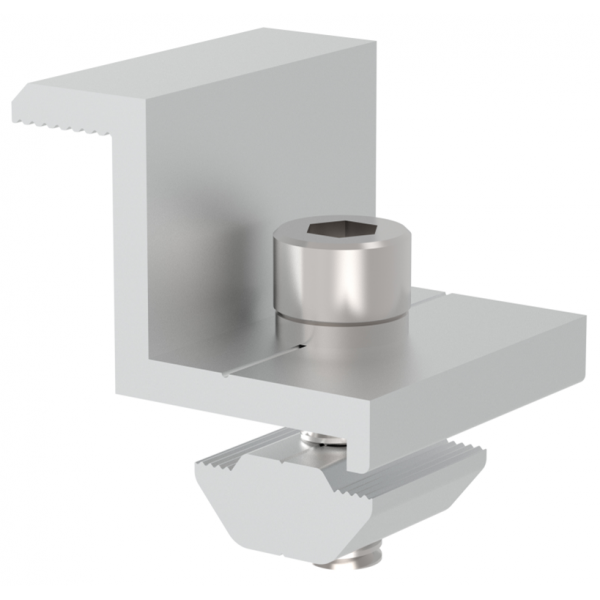
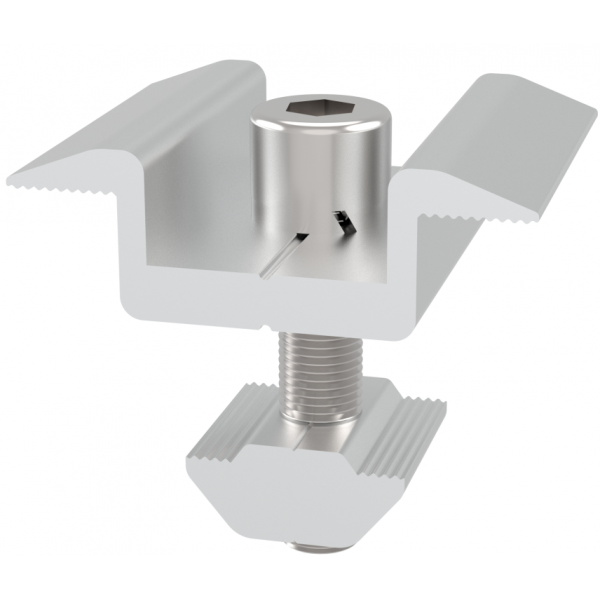
ALV provides customized solar mounting solutions for clay tile, concrete tile, metal, and other rooftop applications. Our product range includes roof hooks, aluminum rails, clamps, mini-rail systems, and customized mounting components.
Instead of supplying a one-size-fits-all kit, ALV can review the roof type, module specifications, project location, structural requirements, and installation method before recommending a suitable configuration.
This approach is particularly useful for EPC contractors and distributors who need repeatable mounting solutions across different residential markets.
Fraunhofer ISE’s July 2026 Photovoltaics Report notes that the global PV market continues to grow rapidly, with a reported CAGR of approximately 27% in its market review. The report also highlights continued improvements in PV technology, system economics, and sustainability. As PV deployment expands, mounting systems increasingly need to combine installation efficiency with long-term structural performance.
الأسئلة الشائعة
1. What is the best solar mounting system for clay tile roofs?
For most clay tile roofs, a stainless-steel roof hook combined with an aluminum rail is the most versatile option. It provides structural attachment to the roof framing while allowing flexible module positioning.
2. Can solar panels be installed on clay tile roofs without breaking tiles?
Yes. Professional installers can remove tiles carefully and use appropriately designed roof hooks or tile-replacement mounts. Damaged tiles should be replaced rather than reused.
3. Are solar roof hooks compatible with all clay tiles?
No. Clay tile profiles and dimensions vary significantly. Hook geometry should be checked against the actual tile profile and roof structure before installation.
4. Is aluminum strong enough for clay tile solar mounting?
Yes. Properly engineered aluminum alloys such as 6005-T5 are widely used for solar rails and structural profiles because they provide a useful combination of strength, low weight, and corrosion resistance.
5. Should I use SUS304 or SUS316 for clay tile mounting?
SUS304 is suitable for many standard environments, while SUS316 is preferable for coastal or high-corrosion locations where chloride exposure is a significant concern.
6. How much does a clay tile solar mounting system cost?
A preliminary 2026 planning range is approximately USD 0.05–0.20/W for mounting structures, but the actual price depends on roof type, quantity, materials, engineering, accessories, and shipping terms.
7. How long do clay tile solar mounting systems last?
High-quality aluminum and stainless-steel mounting components can be designed for service lives of 25–30 years or longer, but actual performance depends on material quality, structural design, installation, environment, and maintenance.
8. Does ALV provide customized clay tile mounting systems?
Yes. ALV can provide customized roof hooks, rails, mini-rail systems, and other mounting components based on the tile profile, module dimensions, roof structure, environmental loads, and project requirements.
Final Takeaway
The best clay tile solar mounting system depends on the roof structure and project requirements, but a stainless-steel roof hook combined with an aluminum rail remains the most versatile solution for most installations. Adjustable hooks, tile-replacement mounts, rail-less systems, and mini rails can provide better performance for specific roof conditions or installation priorities.
Before choosing a system, confirm the clay tile profile, rafter position, roof slope, module dimensions, wind and snow loads, corrosion environment, and required documentation.
ALV can provide customized clay tile solar mounting solutions based on your project requirements.
اتصال ALV to request a product recommendation, engineering layout, or quotation for your next project.
Contact:sales@xmalv.com