

Dach- vs. Freiflächen-Solarmontagesysteme – Welches System bietet die beste Rendite für Ihr Projekt im Jahr 2026?

Deciding between rooftop solar mounting systems and ground-mounted alternatives is one of the most critical choices in any PV project. Each approach offers distinct advantages depending on available space, budget constraints, and performance goals. Understanding these differences ensures you make a decision that maximizes your return on investment over the system’s 25+ year lifespan.
Performance Comparison: Rooftop vs Ground-Mount Solar Racking Systems
The performance gap between rooftop solar mounting systems and ground-mounted solutions can be significant. Ground-mounted systems typically allow for optimal tilt and orientation toward the equator, while rooftop systems are constrained by the existing roof pitch and direction.
| Factor | Rooftop Solar Mounting Systems | Ground-Mount Solar Racking Systems |
|---|---|---|
| Cost per kW | 15–25% cheaper | Higher due to foundation costs |
| Energy Yield | Limited by roof orientation | Optimal tilt + bifacial gain (10–25% extra) |
| Temperature | Runs hotter (reduces efficiency) | Better natural ventilation |
| Wartung | Harder to access | Easy ground-level access |
| Space Use | Uses otherwise unused roof space | Requires dedicated land area |
| Bifacial Compatibility | Minimal gain (2–5% on dark roofs) | Significant gain (10–25% on light surfaces) |
When to Choose Rooftop Solar Mounting Systems
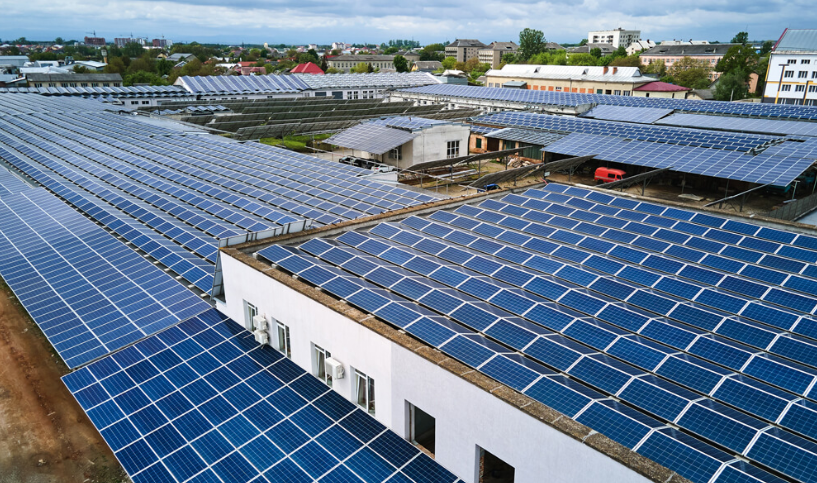
Rooftop solar mounting systems are the most popular choice for residential and small commercial projects, representing approximately 97% of U.S. solar installations today. They make sense when:
- Land is expensive or limited – Urban environments with high property values favor rooftop use
- Net metering programs exist – Utilities like DEWA Shams Dubai incentivize rooftop generation
- Budget is a primary concern – Lower hardware and installation costs make rooftop systems accessible
Key Design Considerations for Rooftop Mount Solar Racking Systems
Quality rooftop solar mounting systems include several critical components:
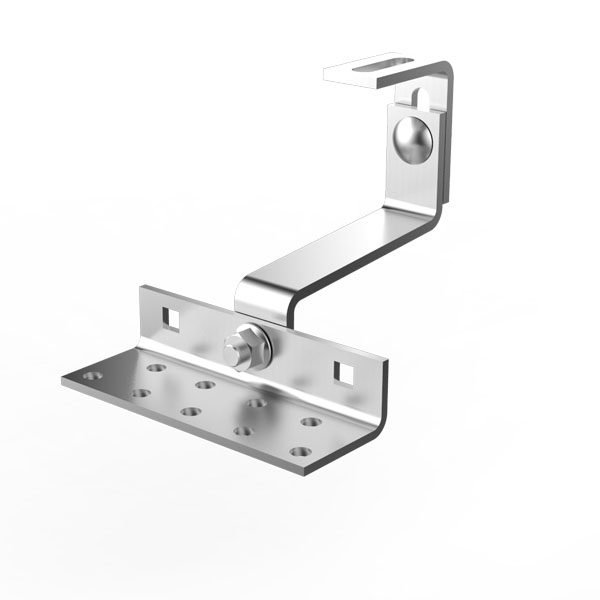
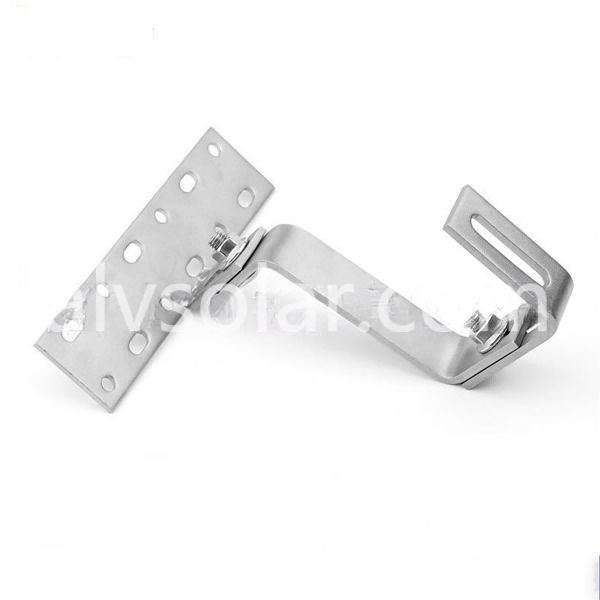
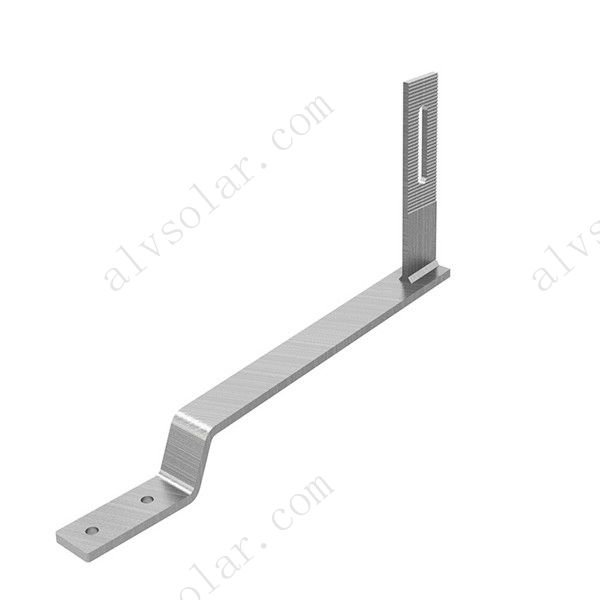
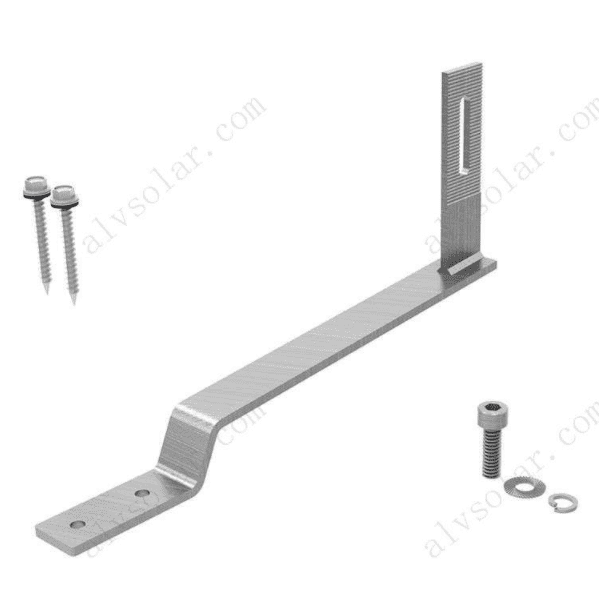
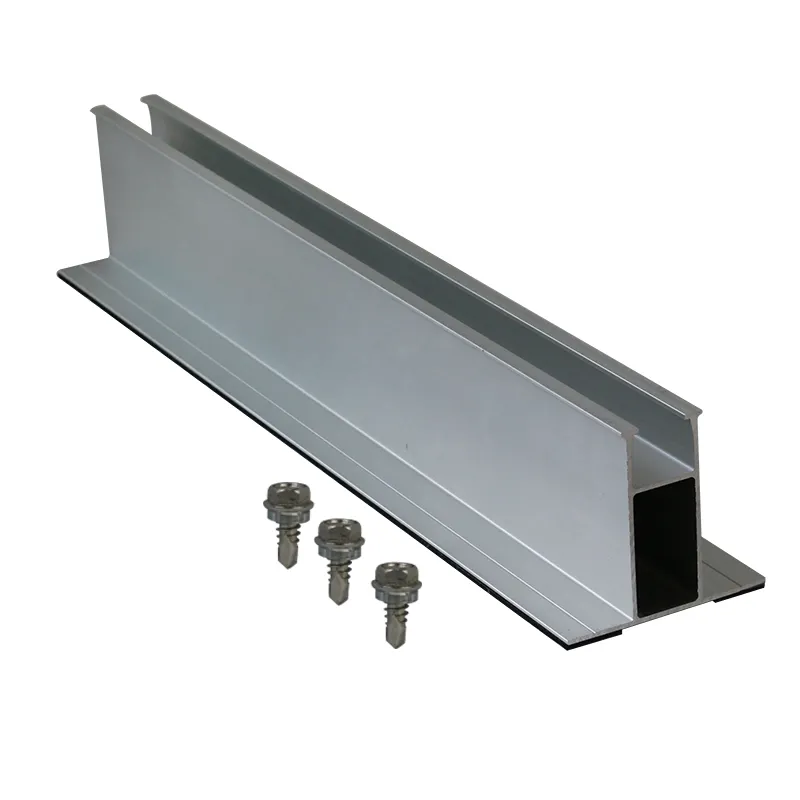
- Roof Attachments: Lag bolts secured to rafters with standoffs creating space between roof and panels
- Flashing: Essential for weatherproofing around penetrations, adding protection beyond sealant alone
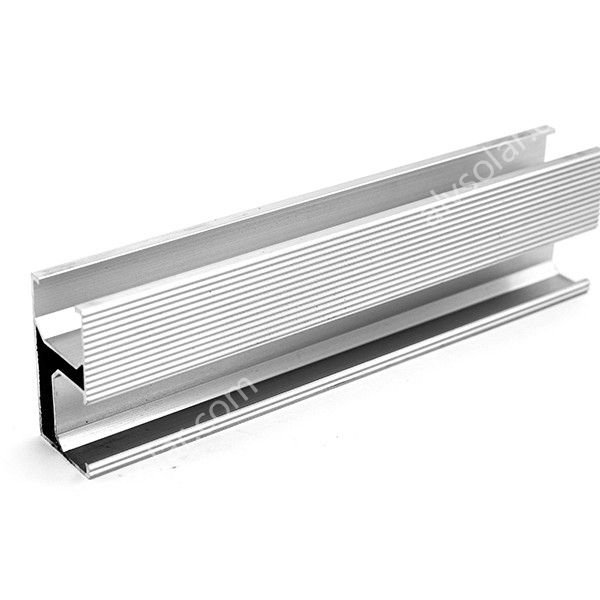
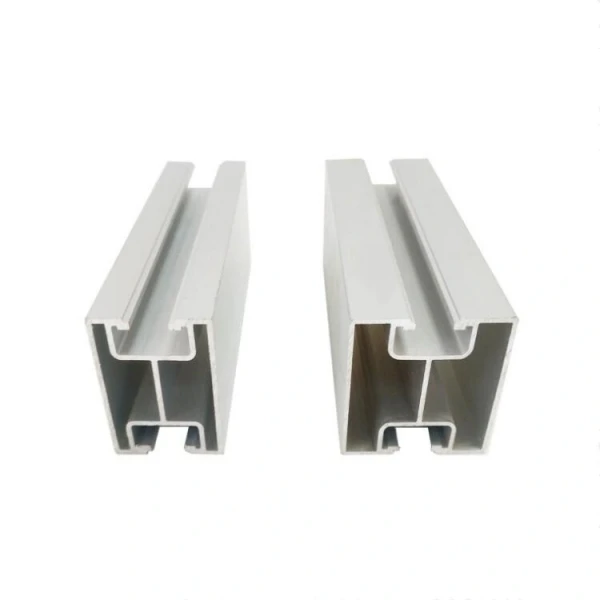
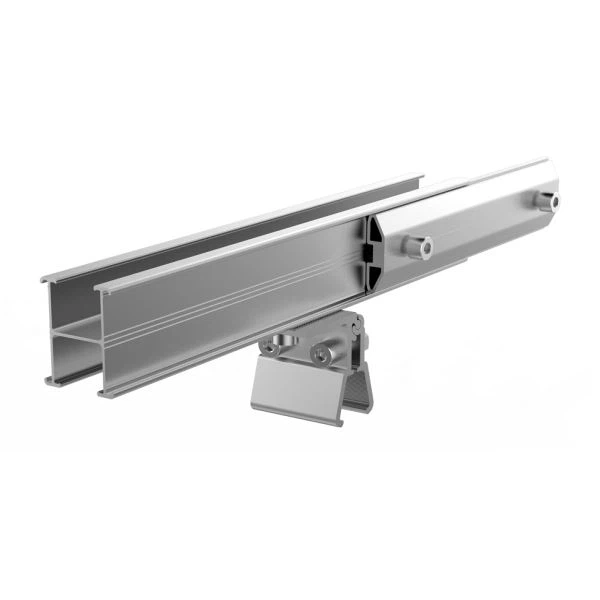
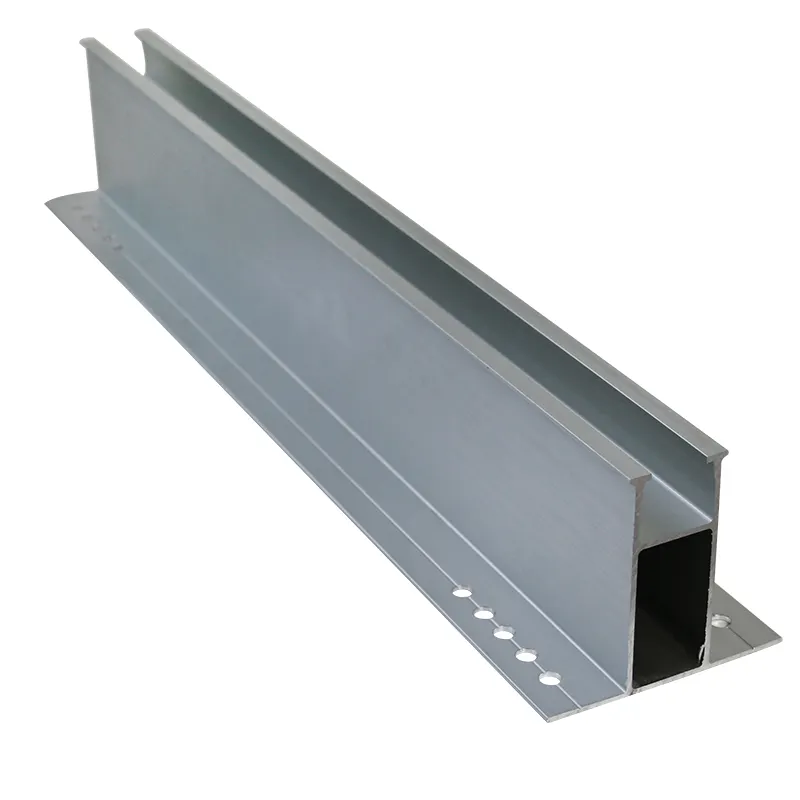
- Mounting Rails or Rail-Less Systems: Rails distribute weight across multiple panels, while rail-less systems cut hardware costs and installation time
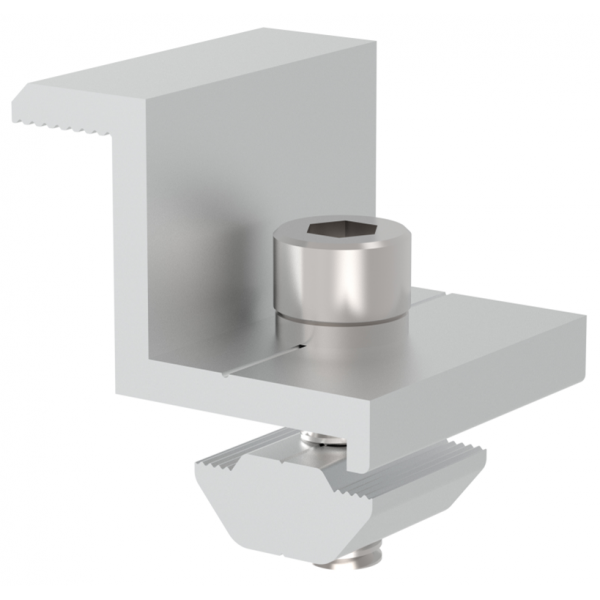
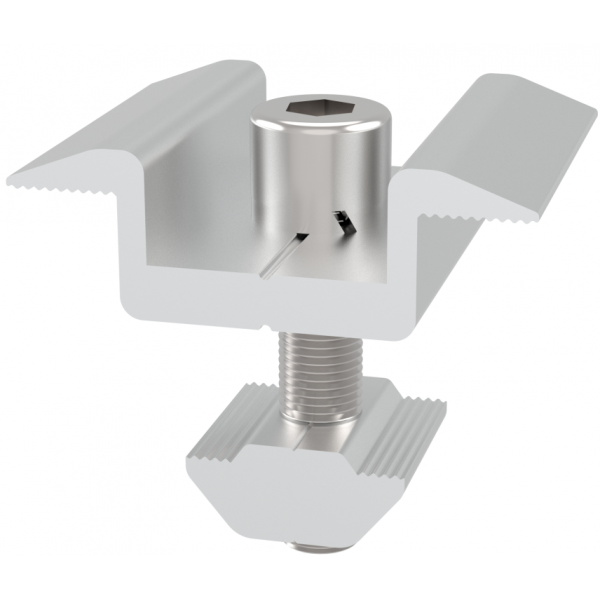
- Module Clamps: Secure panels to rails; clamp depth must match frame thickness (30mm to 50mm)
The Ground-Mount Solar Racking System Advantage
For projects with available land, a ground-mount solar racking system offers compelling benefits that often justify the higher upfront cost.
Higher Energy Yield Potential
Ground-mounted systems can be precisely oriented for maximum sun exposure. When paired with bifacial panels, installations on light-colored ground surfaces can achieve 10–25% more energy than comparable rooftop monofacial systems. This yield advantage can offset the higher initial investment over the system’s lifetime.
Fixed-Tilt vs. Tracking Options
Ground-mount solar racking systems come in three main configurations:
| System Type | Annual Yield Gain | Additional Cost | Beste Anwendung |
|---|---|---|---|
| Fixed-Tilt | Baseline | — | Most residential/commercial projects |
| Single-Axis Tracker | +15–25% | €0.06–€0.10/Wp | Projects >500 kWp in high-DNI regions |
| Dual-Axis Tracker | +30–40% | €0.15–€0.30/Wp | Research/niche (rarely commercial) |
Single-axis trackers make financial sense when three conditions are met: Direct Normal Irradiance exceeds 1,800 kWh/m²/year, land cost is low relative to system cost, and the project is large enough (typically >500 kWp) to spread controller costs.
Real-World Innovation: The Rock-Filled Ground Mount
Dave Sand of Avon, Minnesota, developed a practical ground-mount solar racking system that eliminates the need for digging holes and pouring concrete foundations. His kit includes a galvanized steel A-frame stand anchored by rectangular rock-filled bases made from expanded steel mesh. Customers supply the rocks, and a hand-cranked ratchet allows seasonal angle adjustment from 10 to 60 degrees—perfect for snow-prone regions where panels can be tilted steeply in winter to shed snow quickly.
Foundation Considerations for Ground-Mount Solar Racking Systems
The foundation is critical to any ground-mount solar racking system. Common options include:
- Concrete Foundations: Strip, mat, or block types offering long lifespan and high stability for permanent installations
- Pile-Driven Foundations: Faster installation with lower cost; screw piles provide moderate strength while pipe piles offer less wind uplift resistance
Pre-installation site testing is essential:
- Pull-out strength tests measure foundation resistance to upward wind forces
- Soil investigations (e.g., Swedish Weight Sounding tests) ensure ground can support the structure without shifting