

Топ-5 систем крепления солнечных батарей к черепичным крышам в 2026 году

Last Updated: September 9th, 2026
Author: Деви Хуанг | International Sales Team, АЛВ (E-mail address:sales@xmalv.com)
Devi Huang is part of the international sales team at ALV, a manufacturer of solar mounting systems and aluminum profiles. She works with EPC contractors, distributors, and project developers worldwide, helping customers choose the right mounting solutions based on project requirements, local standards, and budget.
What Are the Best Solar Mounting Systems for Clay Tile Roofs?
The best solar mounting systems for clay tile roofs in 2026 are stainless-steel roof hooks with aluminum rails, adjustable tile hooks, tile-replacement mounts, rail-less systems, and mini-rail solutions. For most residential clay tile roofs, a rafter-mounted stainless-steel hook combined with an aluminum rail remains the most versatile option because it provides strong structural attachment while minimizing modification to the tiles.
The choice should be based on the roof structure, tile profile, wind and snow loads, module layout, installation method, and local building requirements—not simply the lowest product price.
Global solar deployment continues to expand rapidly. The IEA reports that solar PV accounted for more than three-quarters of new renewable capacity additions worldwide in 2025, while global annual solar PV additions exceeded 600 GW. This continued growth makes reliable rooftop mounting infrastructure increasingly important for installers and EPC contractors.
Why Clay Tile Roofs Need Specialized Solar Mounting
Clay tiles are durable roofing materials, but they are not designed to carry concentrated loads from solar attachments. A mounting system should transfer structural loads into the roof rafters or other approved structural members rather than relying on the tile itself.
Installers must also avoid unnecessary tile cutting and ensure that the attachment does not compromise the roof’s water-shedding function. A good system therefore combines a properly engineered hook, rail, fastener, and flashing or tile interface.
For АЛВ, the objective is not simply to hold the PV module in place. The mounting solution must also make installation predictable, protect the roof, accommodate different clay tile profiles, and remain structurally reliable throughout the project’s service life.
Quick Comparison: Top 5 Clay Tile Mounting Systems
| System | Best For | Main Advantage | Installation Complexity | Typical Material |
| Stainless Steel Hook + Rail | Most residential roofs | Strong and versatile | Medium | Aluminum + SUS304 |
| Adjustable Tile Hook | Uneven or irregular roofs | Easier alignment | Medium | Aluminum + stainless steel |
| Tile-Replacement Mount | Fragile or difficult tiles | Minimal tile modification | Medium | Aluminum + stainless steel |
| Rail-Less Mount | Experienced installers | Lightweight and clean appearance | Высокий | Aluminum + stainless steel |
| Mini-Rail System | Cost-sensitive projects | Less rail material | Low–Medium | Aluminum + stainless steel |
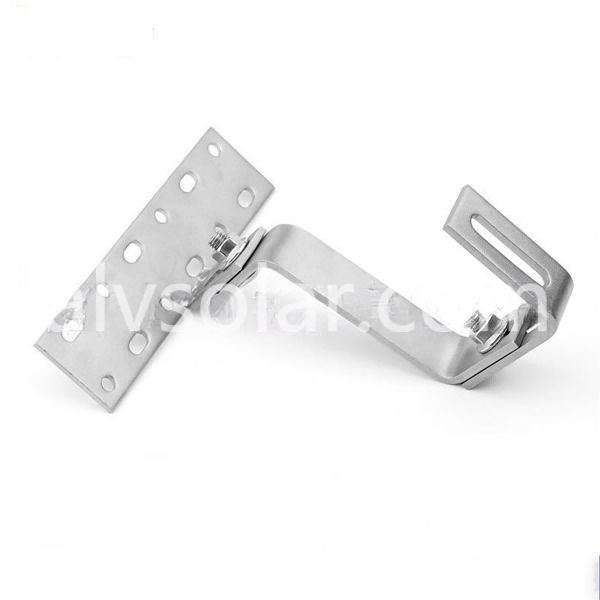
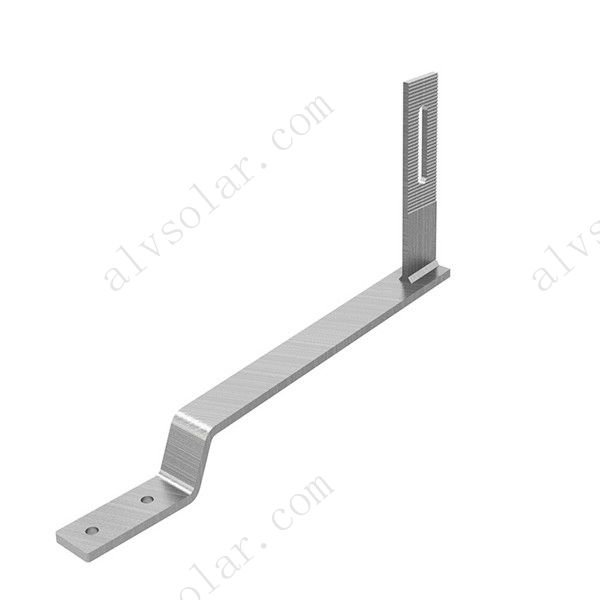
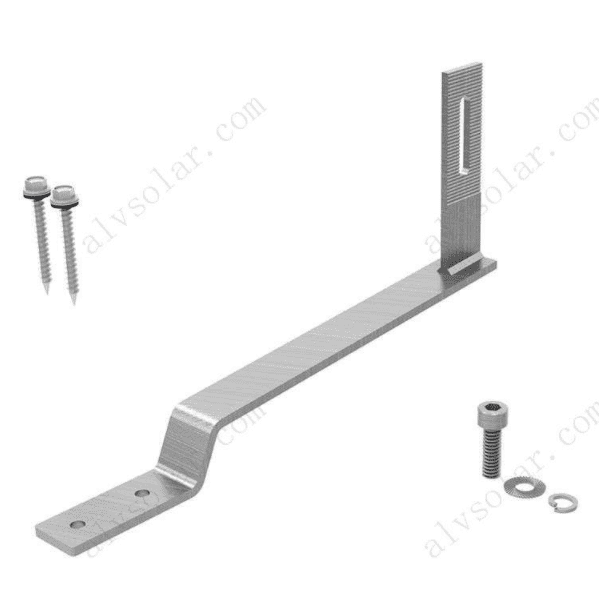
1. Stainless Steel Roof Hook + Aluminum Rail
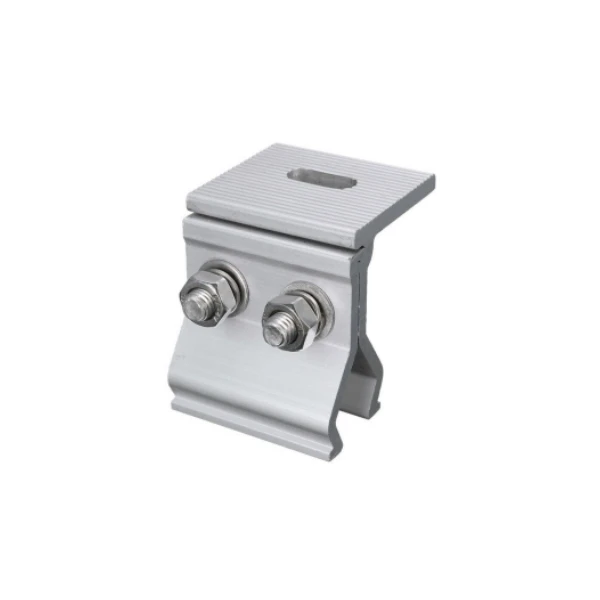
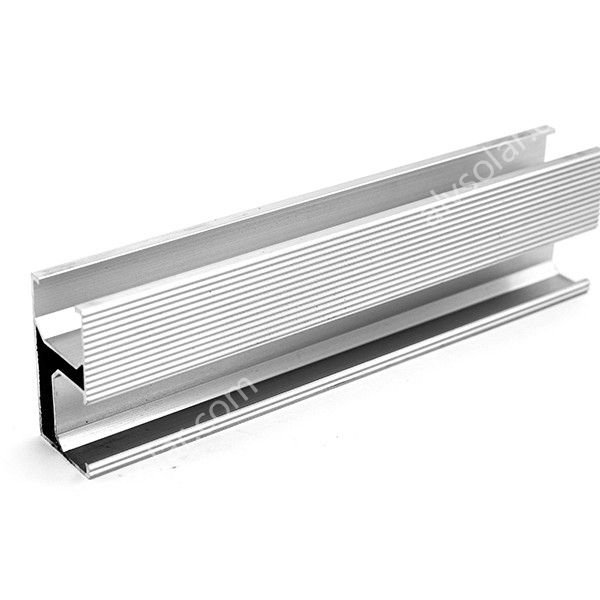
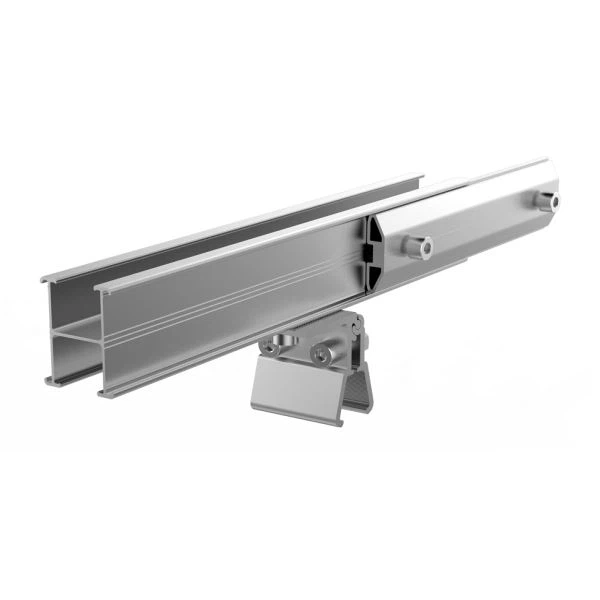
The conventional roof-hook-and-rail system is the best all-around choice for most clay tile solar installations. Stainless steel hooks attach to the structural framing below the tiles, while aluminum rails provide continuous support for the modules.
This configuration offers good flexibility for different panel sizes and layouts. It also makes it easier to adjust module positions during installation, which is useful when roof geometry is irregular.
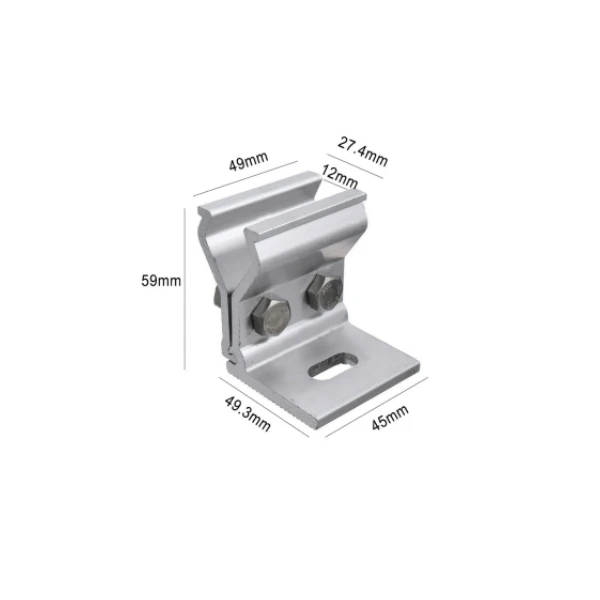
АЛВ can customize hook dimensions, rail lengths, and attachment configurations according to the clay tile profile and project requirements. For EPC contractors handling multiple roof types, this versatility can simplify product selection and inventory management.
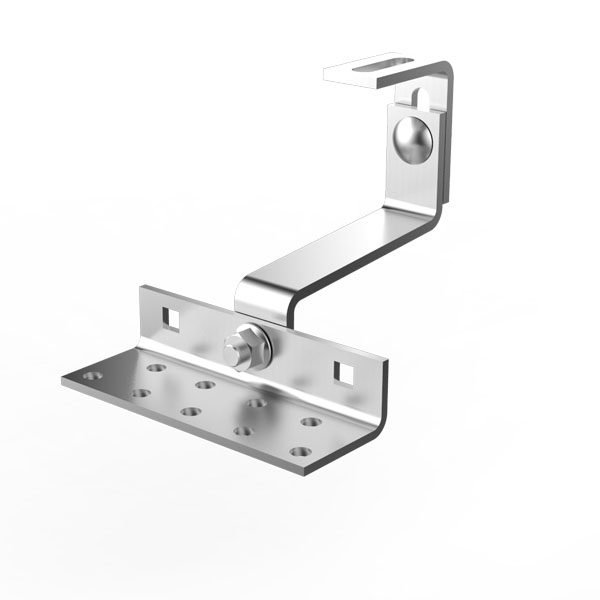
2. Adjustable Clay Tile Roof Hook
Adjustable hooks are particularly useful when clay tiles or roof rafters are not perfectly aligned. The adjustment mechanism allows installers to compensate for differences in height and positioning without forcing the rail into an uneven configuration.
This can improve module alignment and reduce unnecessary pressure on tiles. Adjustable hooks are especially useful on older residential buildings where roof structures may have accumulated dimensional tolerances over time.
For projects where installation labor is expensive, the additional cost of an adjustable component can be justified if it reduces alignment work and tile modification.
3. Tile-Replacement Solar Mount
A tile-replacement mount replaces a conventional roof tile at the attachment location with a purpose-designed metal or composite mounting component. The solar attachment then connects through this replacement element to the underlying structure.
This approach can be useful when the existing clay tile profile is fragile, difficult to drill, or poorly suited to conventional hook geometry.
The key advantage is controlled interface design. Instead of forcing a standard hook through an unsuitable tile, the replacement mount creates a dedicated mounting point while maintaining a more consistent roof surface.
АЛВ can evaluate the tile profile and project drawings to determine whether a replacement-style solution is more appropriate than a conventional hook.
4. Rail-Less Clay Tile Mounting System
Rail-less systems attach solar modules using compact brackets rather than continuous aluminum rails. They can reduce material volume, shipping weight, and the visual footprint of the mounting system.
However, rail-less systems require more precise installation because module positioning and attachment points must be planned carefully. They are therefore better suited to experienced installers with standardized roof and module layouts.
For distributors and EPC contractors, rail-less mounting can be attractive when logistics and installation efficiency are major priorities. АЛВ can help determine whether a rail-less configuration is technically suitable for a particular clay tile project.
5. Mini-Rail System for Clay Tile Roofs
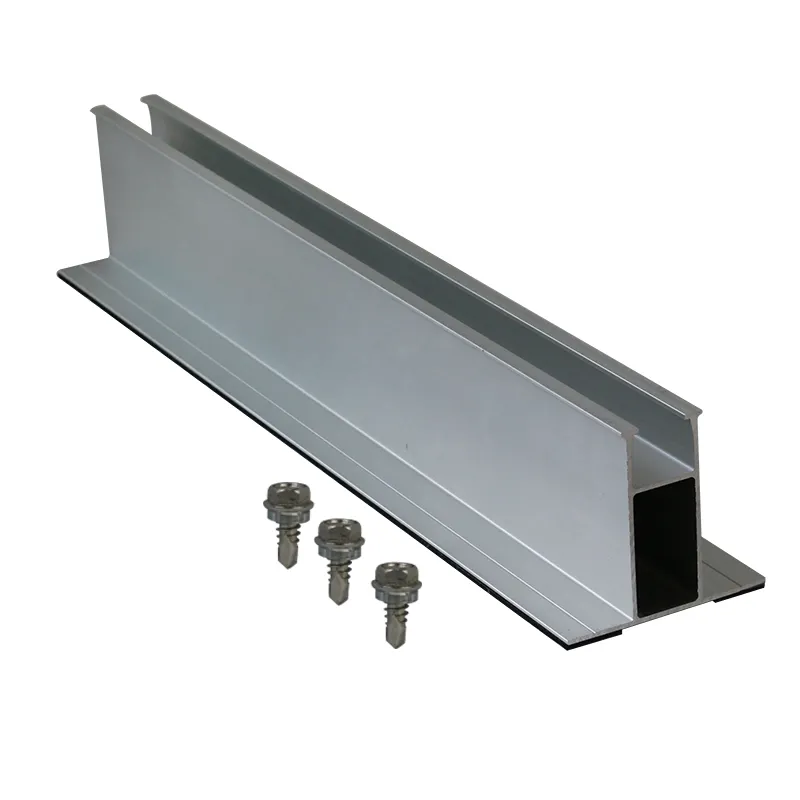
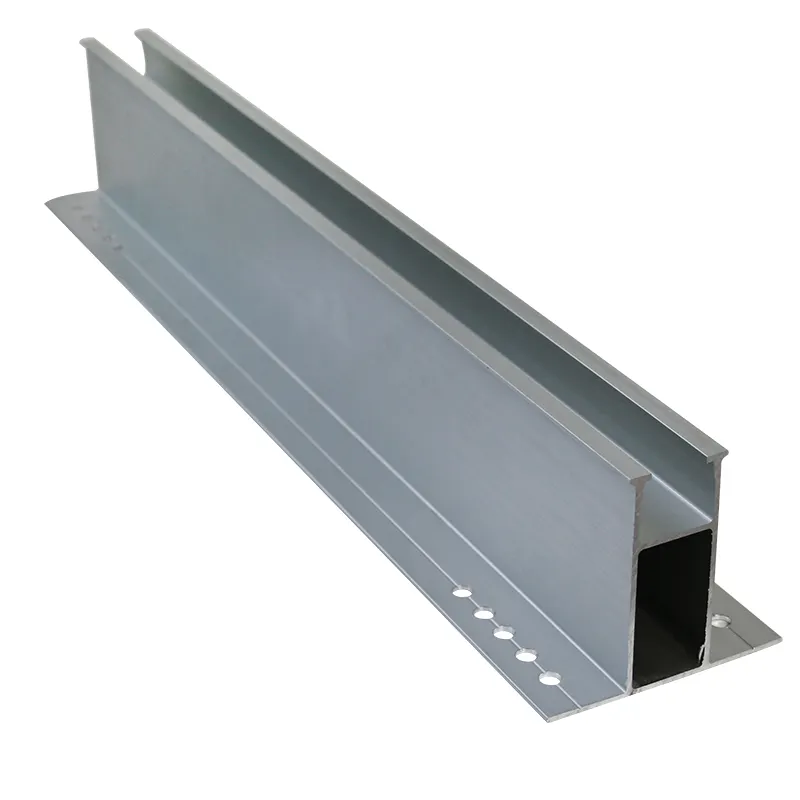
Mini-rail systems use short aluminum rail sections instead of long continuous rails. This can reduce aluminum consumption and simplify packaging and transportation.
Mini rails can work well on repetitive residential projects where module layouts are standardized. However, the attachment points still need to connect to suitable structural members, and the system must be engineered for the project’s wind and snow loads.
For high-volume residential projects, the combination of standardized components and shorter rails can help installers improve handling efficiency without moving to a completely rail-less design.
Material Comparison for Clay Tile Mounting
| Материал | Corrosion Resistance | Масса | Strength | Recommended Use |
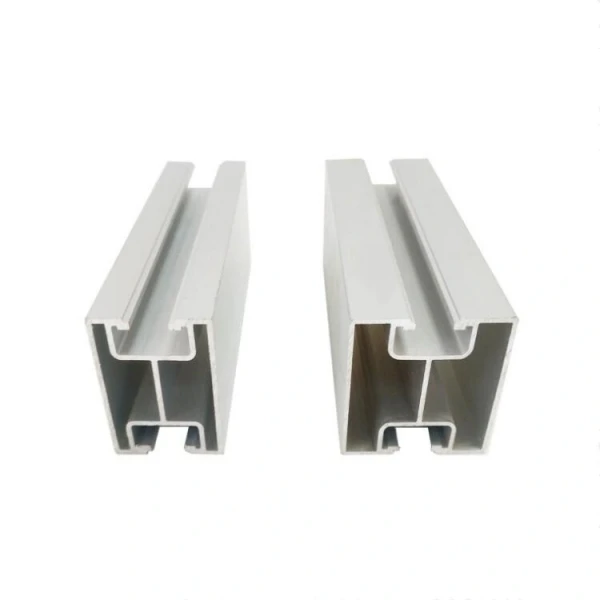
| Алюминий 6005-Т5 | Отличный | Lightweight | Высокий | Rails and structural profiles |
| SUS304 Stainless Steel | Отличный | Medium | Very High | Roof hooks and fasteners |
| SUS316 Stainless Steel | Outstanding | Medium | Very High | Coastal/high-corrosion projects |
| Hot-Dip Galvanized Steel | Хороший | Тяжелый | Отличный | Special structural applications |
For most clay tile rooftop systems, an aluminum rail + stainless-steel attachment combination provides a practical balance between weight, corrosion resistance, strength, and installation efficiency.
For coastal projects, SUS316 may be preferable for exposed fasteners and critical components because chloride-rich environments can accelerate corrosion.
ISO 9227:2022 defines neutral salt spray, acetic acid salt spray, and copper-accelerated acetic acid salt spray test methods for evaluating corrosion resistance of metallic materials and protective coatings. However, ISO also cautions that salt-spray results should not simply be interpreted as a direct prediction of long-term outdoor service life.
How Much Does a Clay Tile Solar Mounting System Cost in 2026?
Mounting-system prices vary significantly according to material, roof geometry, engineering requirements, quantity, and destination market.
As a planning reference, solar mounting systems are commonly estimated at approximately USD 0.05–0.20/W for the mounting structure, although actual quotations can fall outside this range depending on project specifications and whether installation labor, engineering, freight, or accessories are included.
| Cost Factor | Lower-Cost Option | Higher-Cost Option |
| Hook | Standard fixed hook | Adjustable/custom hook |
| Rail | Standard aluminum rail | Custom/high-strength rail |
| Fastener | SUS304 | SUS316 |
| Mounting Method | Standard hook | Tile replacement/custom interface |
| Engineering | Standard layout | Project-specific structural design |
| Indicative Mounting Cost | ~$0.05/W | Up to ~$0.20/W+ |
Important: These are planning ranges rather than fixed market prices. A supplier quotation should be based on the actual roof, module, wind/snow loads, quantity, and delivery terms.
What Standards Should You Check?
A professional clay tile mounting project should consider structural design standards and product-specific testing rather than relying only on generic product specifications.
| Standard / Reference | Main Purpose |
| ASCE 7 | Structural wind, snow, and other design loads in applicable markets |
| EN 1991 | European actions on structures, including wind and snow |
| ISO 9227 | Salt spray corrosion testing |
| МЭК 61215 | Квалификация и тестирование конструкции фотоэлектрических модулей. |
| МЕК 61730 | Квалификация по безопасности фотоэлектрических модулей |
IEC 61215 — это фотоэлектрический модуль Это не сертификация монтажной системы, а стандарт квалификации. Он определяет требования к квалификации конструкции и испытаниям наземных фотоэлектрических модулей, предназначенных для длительной эксплуатации на открытом воздухе. Поэтому его не следует представлять как сертификацию самой монтажной конструкции.
Какую систему крепления глиняной плитки следует выбрать?
Для большинства жилых домов черепичные крыши, Крюки для крепления груза на крыше из нержавеющей стали с алюминиевыми направляющими — это наиболее безопасная отправная точка. потому что они обеспечивают гибкость, структурную надежность и совместимость с различными вариантами компоновки модулей.
При неровной геометрии крыши выбирайте регулируемый крюк, при необходимости — монтаж для замены черепицы, если существующий профиль черепицы делает использование обычных крюков нецелесообразным, при приоритете точности монтажа и легкости конструкции — систему без направляющих, а при необходимости — систему с мини-направляющими, если важно уменьшить количество материала направляющих и объем упаковки.
Правильность решения всегда следует проверять с учетом фактической конструкции крыши, профиля черепицы, размеров модулей, скорости ветра, снеговой нагрузки, уклона крыши и местных строительных требований.
Почему выбрать АЛВ Подходит для крепления солнечных батарей на глиняную черепицу?
АЛВ Мы предлагаем индивидуальные решения для крепления солнечных батарей на кровельных поверхностях из глиняной, бетонной, металлической и других материалов. В нашем ассортименте представлены кровельные крюки, алюминиевые направляющие, зажимы, мини-направляющие системы и компоненты для крепления, изготовленные на заказ.
Вместо того чтобы предлагать универсальный комплект, компания ALV может проанализировать тип кровли, технические характеристики модулей, местоположение проекта, конструктивные требования и способ монтажа, прежде чем рекомендовать подходящую конфигурацию.
Этот подход особенно полезен для подрядчиков и дистрибьюторов, занимающихся проектированием, закупками и строительством, которым необходимы повторяемые решения по монтажу на различных рынках жилой недвижимости.
Отчет Fraunhofer ISE за июль 2026 года Отчет по фотовольтаике В отчете отмечается, что мировой рынок фотоэлектрических систем продолжает быстро расти, демонстрируя среднегодовой темп роста примерно в 271 тыс. тонн в год. Также подчеркиваются постоянные улучшения в фотоэлектрических технологиях, экономической эффективности систем и экологической устойчивости. По мере расширения внедрения фотоэлектрических систем, системы крепления все чаще должны сочетать эффективность установки с долгосрочной структурной прочностью.
Часто задаваемые вопросы
1. Какая система крепления солнечных батарей лучше всего подходит для крыш из глиняной черепицы?
Для большинства крыш из глиняной черепицы наиболее универсальным вариантом является кровельный крюк из нержавеющей стали в сочетании с алюминиевой направляющей. Он обеспечивает прочное крепление к кровельному каркасу, позволяя при этом гибко размещать модули.
2. Можно ли установить солнечные панели на черепичные крыши, не повредив при этом черепицу?
Да. Профессиональные установщики могут аккуратно снять черепицу и использовать специально разработанные кровельные крюки или крепления для замены черепицы. Поврежденную черепицу следует заменить, а не использовать повторно.
3. Совместимы ли крепления для солнечных батарей на крыше со всеми видами глиняной черепицы?
Нет. Профили и размеры глиняной черепицы значительно различаются. Перед установкой геометрию крючков следует проверить, сопоставив ее с фактическим профилем черепицы и конструкцией крыши.
4. Достаточно ли прочен алюминий для крепления солнечных панелей на глиняных плитках?
Да. Правильно спроектированные алюминиевые сплавы, такие как 6005-T5, широко используются для изготовления направляющих для солнечных батарей и конструкционных профилей, поскольку они обеспечивают полезное сочетание прочности, малого веса и коррозионной стойкости.
5. Какую нержавеющую сталь (SUS304 или SUS316) следует использовать для укладки глиняной плитки?
Нержавеющая сталь SUS304 подходит для многих стандартных условий эксплуатации, тогда как сталь SUS316 предпочтительнее для прибрежных районов или мест с высокой коррозионной стойкостью, где воздействие хлоридов представляет собой серьезную проблему.
6. Сколько стоит система крепления солнечных батарей из глиняных черепиц?
Предварительный план на 2026 год составляет приблизительно 0,05–0,20 долларов США/Вт для монтажных конструкций, но фактическая цена зависит от типа крыши, количества, материалов, проектирования, комплектующих и условий доставки.
7. Как долго служат системы крепления солнечных батарей из глиняной черепицы?
Высококачественные алюминиевые и нержавеющие стальные монтажные компоненты могут быть рассчитаны на срок службы 25–30 лет и более, однако фактические характеристики зависят от качества материала, конструкции, монтажа, условий эксплуатации и технического обслуживания.
8. Делает АЛВ Предлагаете ли вы системы крепления глиняной плитки, изготовленные на заказ?
Да. Компания ALV может изготовить на заказ кровельные крюки, направляющие, мини-направляющие системы и другие монтажные компоненты с учетом профиля черепицы, размеров модулей, конструкции крыши, нагрузок окружающей среды и требований проекта.
Итоговый вывод
Выбор оптимальной системы крепления солнечных батарей на глиняной черепице зависит от конструкции крыши и требований проекта, но... Крюк для крепления на крыше из нержавеющей стали в сочетании с алюминиевой направляющей остается наиболее универсальным решением для большинства вариантов монтажа.Регулируемые крюки, крепления для замены черепицы, системы без направляющих и мини-направляющие могут обеспечить более высокую производительность в зависимости от конкретных условий кровли или приоритетов монтажа.
Перед выбором системы необходимо подтвердить профиль черепицы, положение стропил, уклон крыши, размеры модулей, ветровые и снеговые нагрузки, условия коррозии, а также необходимую документацию.
Компания ALV может предложить индивидуальные решения по креплению солнечных батарей с помощью глиняных черепиц, разработанные с учетом требований вашего проекта.
Контакт АЛВ Запросить рекомендации по продукции, техническую документацию или коммерческое предложение для вашего следующего проекта.
Контакт:sales@xmalv.com