

Residential Solar Carport vs Rooftop: 5 Key Ultimate Factors (2026)

For homeowners who cannot or prefer not to install solar on their roof, a residential solar carport offers an alternative path to clean energy. But is it a practical investment, or a niche product with limited payback? The answer depends on why rooftop solar is not an option—and what you value beyond electricity generation.

When a Residential Solar Carport Beats Rooftop Solar
Cái National Renewable Energy Laboratory estimates that up to 49% of U.S. housing stock cannot currently install rooftop solar for reasons including roof orientation, shading, homeowner association restrictions, or historic property designations . For these homeowners, a residential solar carport is not a compromise—it is the only viable option for on-site generation.
A carport also solves problems that rooftop solar cannot address. It provides covered parking that protects vehicles from hail, UV degradation, and snow accumulation. It can integrate EV charging directly into the structure, powering the vehicle from the same canopy that shelters it. And unlike a rooftop array, the carport can be oriented for optimal sun exposure regardless of the house’s roofline.
The Real Cost of a Residential Solar Carport
Residential carports typically range from 4.8 kW to 5.2 kW in rated output, accommodating roughly a dozen standard residential panels . This is smaller than a typical rooftop system but sufficient to offset a meaningful portion of household consumption, especially when paired with EV charging.
The cost premium over rooftop solar comes from the structure itself—steel or aluminum columns, foundations, and elevated labor. However, the economics improve when the carport replaces a conventional carport or garage that would have been built anyway. In that case, the incremental cost of adding solar to the structure is far lower than the cost of a standalone PV system.
Structural and Aesthetic Considerations for Homeowners
MỘT residential solar carport must withstand the same weather as a house—wind, snow, and in some regions, seismic activity. Homeowners should verify that the structure is engineered for their local load zones, with a stamped structural letter available for permit approval. Corrosion protection matters as well, particularly in coastal areas where salt spray accelerates metal degradation .
Aesthetics are often the deciding factor for homeowners. Early residential carports were industrial-looking structures that clashed with residential architecture. Newer designs use aluminum frames with customizable inlays—wood molding, tile, or brick veneer—that allow the carport to blend with the home’s exterior . If visual integration matters, ask the supplier for renderings or sample installations before committing.
Why ALV Solar Delivers Residential Solar Carport Solutions
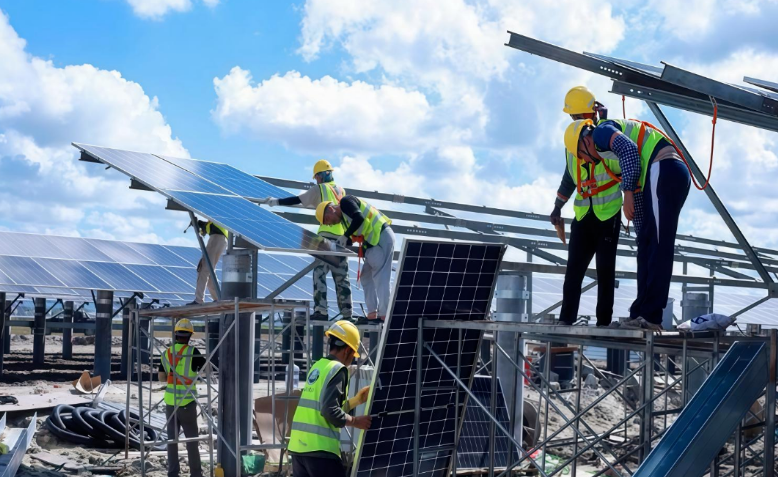
ALV Solar designs residential solar carport structures that balance engineering rigor with residential aesthetics. Our carports are available in aluminum and steel configurations, with customizable colors and finish options to match your home’s design. Every structure is engineered for your site’s wind and snow loads, with structural calculations provided for permit approval.
We understand that residential projects have different constraints than commercial ones. Our team works with homeowners and installers to optimize the carport footprint, clearance height, and module layout for the available space. We offer integrated mounting points for EV chargers, with pre-planned conduit routing that simplifies future upgrades. With a 25-year design life and certification to international standards, ALV Solar’s residential solar carport systems deliver the durability and performance that homeowners expect. Contact our team to discuss whether a carport is the right solution for your property.
Những câu hỏi thường gặp
1. How much does a residential solar carport cost?
Residential carport costs vary by size, foundation type, and customization. A typical 5 kW carport may range from $15,000 to $25,000 before incentives, depending on whether it replaces an existing structure or is a new build .
2. Can a residential solar carport power an EV?
Yes. A 5 kW carport can generate roughly 6,000–7,000 kWh per year in a sunny climate, enough to cover 15,000–20,000 miles of EV driving. Integrating EV charging during installation is far cheaper than retrofitting later .
3. Does a residential solar carport increase property value?
Like rooftop solar, a well-designed carport can increase property value by improving energy efficiency and adding a functional structure. However, market response varies by region and buyer preferences.
4. What maintenance does a residential solar carport require?
Annual inspections should check for loose bolts, corrosion, and drainage issues. Modules should be cleaned periodically to maintain output. Snow should be cleared from the lower edge in winter to prevent ice dams .
5. Can I install a residential solar carport myself?
Most jurisdictions require a licensed engineer’s stamped drawings and a permit for carport installation. While some homeowners may handle site preparation, structural assembly and electrical connections should be performed by qualified professionals.