

Ground-Mount vs. Rooftop Solar Mounting Systems – A 2026 Cost and Performance Comparison

مقدمة
The choice between ground-mount and rooftop أنظمة تركيب الطاقة الشمسية shapes every aspect of a project’s economics, from upfront cost to long-term energy yield. In 2026, with module prices at historic lows and labor costs rising, the mounting decision carries more weight than ever. This comparison examines the real numbers behind each approach.
ost Breakdown: Ground-Mount vs. Rooftop Solar Mounting Systems
Hardware costs for أنظمة تركيب الطاقة الشمسية vary significantly by type. According to 2026 industry data, flush-mount rooftop rail systems cost €0.08–€0.15 per watt, while ground-mount driven-pile systems range from €0.12–€0.20 per watt.
However, hardware is only part of the story. Installation time tells a different tale:
| Mounting Type | Hardware Cost (€/Wp) | Install Time (per 10 panels) |
|---|---|---|
| Pitched roof rail | €0.08–€0.15 | 3–5 hours |
| Rail-less roof | €0.06–€0.12 | 2–4 hours |
| Ground-mount driven pile | €0.12–€0.20 | 100–200 piles/day |
| Single-axis tracker | +€0.06–€0.10 vs fixed | Annual maintenance |
Source: 2026 installer cost data
The ground-mount premium in hardware is partially offset by faster installation at scale. A driven-pile نظام تركيب الطاقة الشمسية for a 1 MW project can install 100–200 piles per day, while rooftop systems require individual roof penetrations and flashing at each attachment point
Energy Yield Comparison for Ground-Mount Solar Mounting Systems
Ground-mounted أنظمة تركيب الطاقة الشمسية consistently outperform rooftop systems on energy yield. The advantages come from three factors: optimal tilt, improved ventilation, and bifacial compatibility.
Optimal tilt: Ground mounts can be set to the ideal angle for the site’s latitude, while rooftop systems are constrained by existing roof pitch. A 5-degree tilt error can reduce annual yield by 1.5%, and a 15-degree error can cost 4–5%.
Ventilation: Ground-mounted panels operate cooler because air flows freely beneath them. Rooftop flush-mount systems require 2–4 inches of air gap for adequate ventilation, but even with this gap, temperatures run higher than ground-mounted equivalents.
Bifacial gain: This is where ground-mount أنظمة تركيب الطاقة الشمسية deliver their most dramatic advantage. Field data from Hyderabad, India, measured bifacial gains up to 19.24% on fixed-tilt arrays with light-colored ground and tall mounting structures. On dark rooftops, bifacial gain is typically only 2–5%.
When Rooftop Solar Mounting Systems Still Win
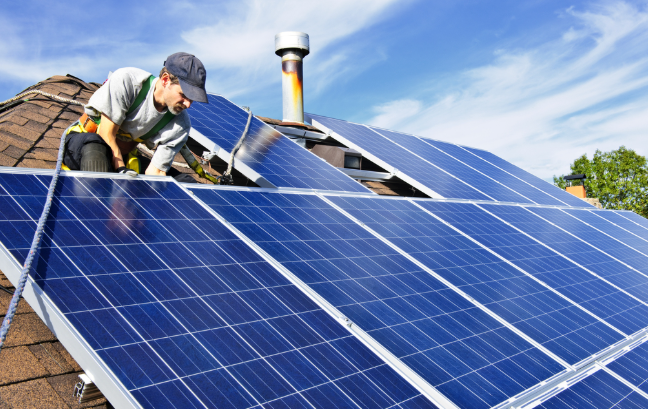
Despite the yield advantages of ground mounts, rooftop أنظمة تركيب الطاقة الشمسية remain the right choice for many projects.
Land cost: In urban and suburban areas, land is simply too valuable for ground-mounted solar. Rooftop systems use existing space that would otherwise be unused.
Net metering and self-consumption: Rooftop systems generate power directly where it is consumed, avoiding transmission losses and maximizing the value of net metering credits.
Permitting simplicity: Ground-mount projects often require additional land-use permits, environmental reviews, or agricultural land conversion approvals. Rooftop systems typically face fewer regulatory hurdles.
Aesthetics and space use: Homeowners and businesses often prefer the clean look of rooftop arrays, and ground-mount systems consume yard space that could serve other purposes.
Making the Decision: Key Factors for Your Project
When evaluating أنظمة تركيب الطاقة الشمسية for a specific project, consider these five factors:
1. Available land: If you have unused land with good sun exposure, ground-mount is worth evaluating. If not, rooftop is the default.
2. Energy goals: For maximum yield per panel, ground-mount wins. For lowest upfront cost, rooftop often wins.
3. Snow and wind exposure: Ground-mount systems can be engineered with steeper tilt for snow shedding. Rooftop systems must work within existing roof constraints.
4. Maintenance access: Ground-mounted أنظمة تركيب الطاقة الشمسية are far easier to inspect, clean, and repair. Rooftop maintenance requires ladders, harnesses, and careful coordination.
5. Future expansion: Ground mounts can often be expanded more easily than rooftop systems, which are constrained by roof area and structural capacity.
Real-World Example: Hybrid Approach
Some projects combine both approaches. A commercial facility with a large flat roof and adjacent unused land might install a ballasted rooftop نظام تركيب الطاقة الشمسية for self-consumption while deploying a ground-mount array for export generation. This hybrid strategy maximizes both space utilization and energy production.
خاتمة
The choice between ground-mount and rooftop أنظمة تركيب الطاقة الشمسية is not about one being universally superior. Ground mounts deliver higher yield and easier maintenance at the cost of land use and higher hardware expense. Rooftop systems offer lower upfront costs and use existing space but are constrained by roof geometry and structural limits.
The right answer depends on your specific site, energy goals, and budget. For projects where both options are viable, a detailed financial model comparing 25-year energy production against total installed cost will reveal the optimal choice.