

أفضل 5 أنظمة تركيب الطاقة الشمسية للبلاط الروماني في عام 2026

Last Updated: September 16th, 2026
مؤلف: ديفي هوانغ | فريق المبيعات الدولية، ALV(عنوان البريد الإلكتروني:sales@xmalv.com)
ديفي هوانغ عضو في فريق المبيعات الدولية في شركة ALV، وهي شركة مصنعة لأنظمة تركيب الألواح الشمسية وقطاعات الألمنيوم. وهي تعمل مع مقاولي الهندسة والمشتريات والإنشاءات، والموزعين، ومطوري المشاريع في جميع أنحاء العالم، لمساعدة العملاء على اختيار حلول التركيب المناسبة بناءً على متطلبات المشروع، والمعايير المحلية، والميزانية.
What Is the Best Solar Mounting System for a Roman Tile Roof?
For most Roman tile roofs, a stainless-steel roof hook combined with an aluminum rail is the best all-around solar mounting solution, while adjustable hooks, tile-replacement mounts, rail-less systems, and mini-rail systems can be better for specific roof structures and installation requirements.
Roman tiles have a curved, interlocking profile that makes mounting different from flat concrete tiles or metal roofs. The mounting system must provide a secure structural connection without placing excessive point loads on the tile or interfering with the roof’s drainage path.
This is especially important as solar deployment continues to expand. The الوكالة الدولية للطاقة (IEA)reports that global renewable capacity additions reached a record 800 جيجاواط في عام 2025، حيث تمثل الطاقة الشمسية الكهروضوئية النسبة المئوية لـ أكثر من ثلاثة أرباع من القدرات المتجددة الجديدة. تجاوزت إضافات الطاقة الشمسية الكهروضوئية 600 جيجاواط لأول مرة, bringing cumulative solar PV capacity to approximately 2800 جيجاواط.
For residential installers and EPC contractors, this growth means mounting systems must increasingly combine structural reliability, installation efficiency, compatibility with different roof profiles, and competitive lifecycle costs.
Why Roman Tile Roofs Require Specialized Solar Mounting
Roman tiles are designed primarily as weatherproof roof coverings, not as structural attachment points for PV arrays. Solar loads should therefore be transferred through mounting hooks or brackets into suitable rafters or structural members.
The curved profile also creates a clearance challenge. A hook that works well with a flat concrete tile may not provide sufficient clearance or may apply unwanted pressure to a Roman tile.
A professional installation should confirm the tile dimensions, tile overlap, rafter position, roof pitch, module dimensions, wind speed, snow load, and local structural requirements before the mounting system is selected.
For ALV, this project-specific approach is important because Roman tile profiles can vary considerably between manufacturers and markets.
Top 5 Roman Tile Solar Mounting Systems
| نظام التثبيت | الأفضل لـ | الميزة الرئيسية | تعقيد التركيب | مادة نموذجية |
| Stainless-Steel Hook + Rail | Most Roman tile roofs | Versatile and structurally reliable | واسطة | ألومنيوم + فولاذ مقاوم للصدأ SUS304 |
| Adjustable Roman Tile Hook | هياكل أسطح غير مستوية | Easier height adjustment | واسطة | ألومنيوم + فولاذ مقاوم للصدأ |
| تركيب بديل للبلاط | Difficult or fragile tiles | Controlled tile interface | واسطة | ألومنيوم + فولاذ مقاوم للصدأ |
| Rail-Less System | فنيو تركيب ذوو خبرة | Low-profile and lightweight | عالي | ألومنيوم + فولاذ مقاوم للصدأ |
| نظام السكك الحديدية المصغرة | مشاريع سكنية متكررة | مواد أقل للسكك الحديدية | منخفض - متوسط | ألومنيوم + فولاذ مقاوم للصدأ |
1. Stainless-Steel Roof Hook + Aluminum Rail
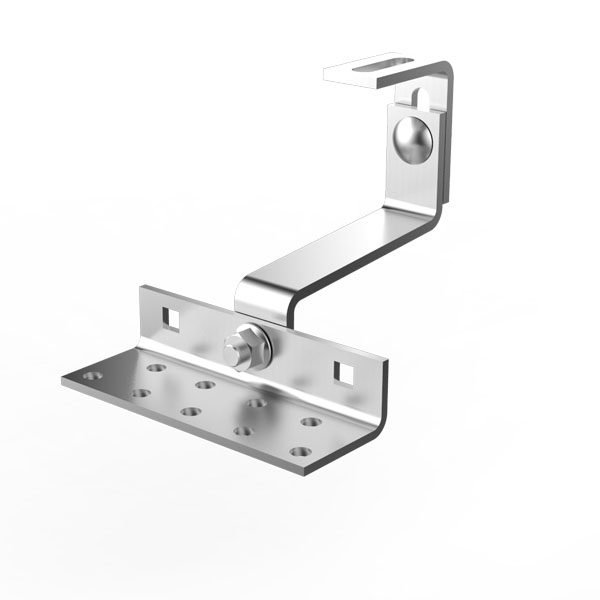
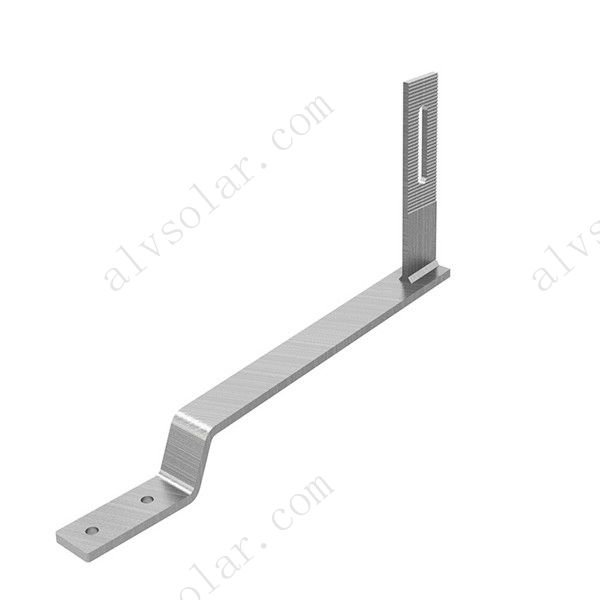
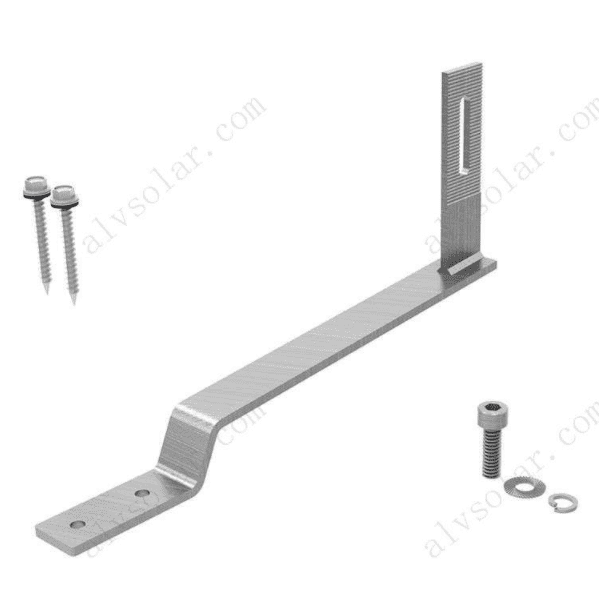
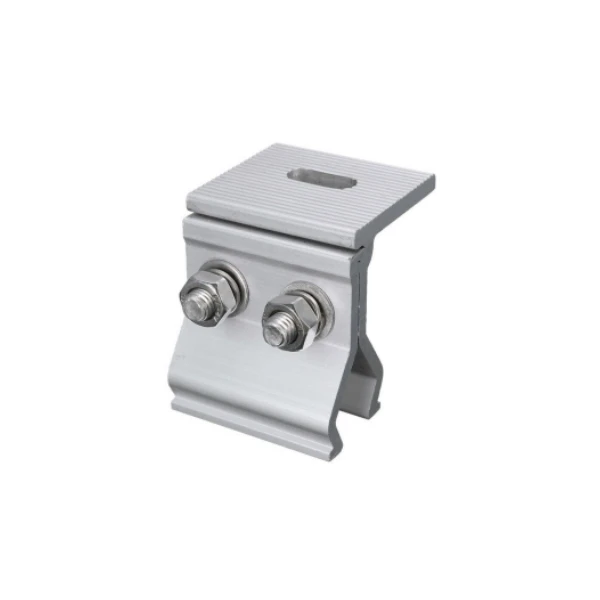
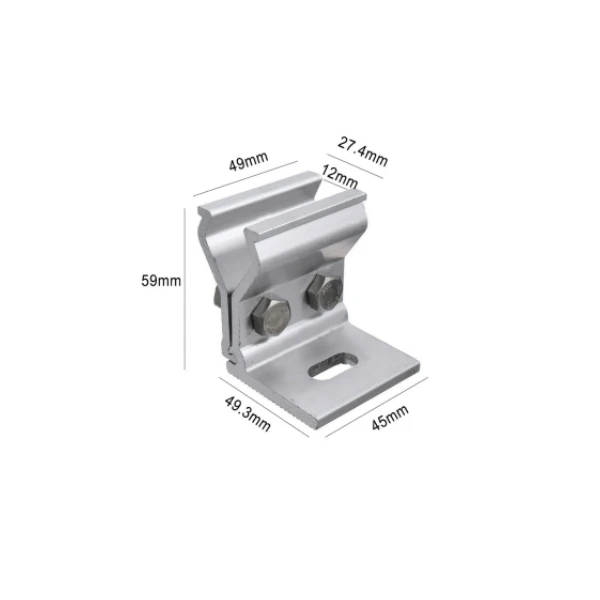
A stainless-steel roof hook with an aluminum rail is generally the most versatile solution for Roman tile roofs.
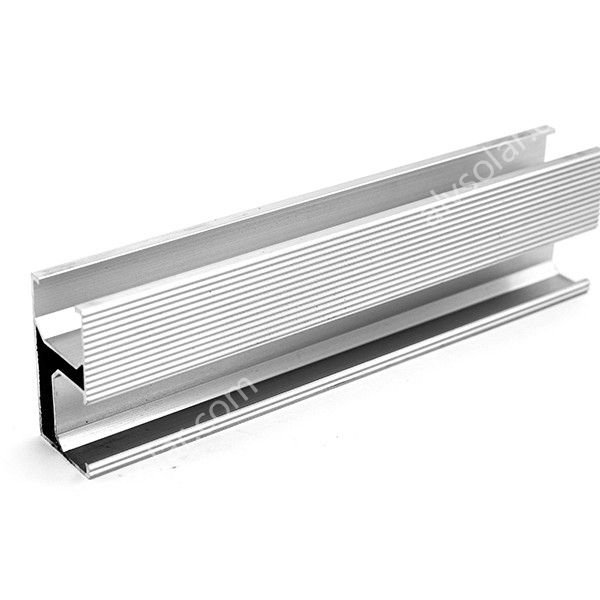
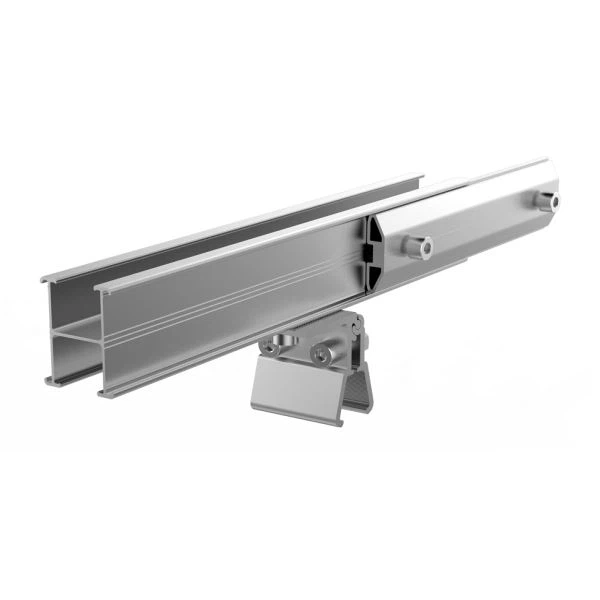
The hook is positioned around the Roman tile and secured to the underlying rafter or structural member. Aluminum rails are then mounted to the hooks to create a continuous platform for the PV modules.
This configuration provides flexibility when module layouts change and is suitable for many residential and small commercial projects. It also allows installers to use common mid and end clamps across different roof configurations.
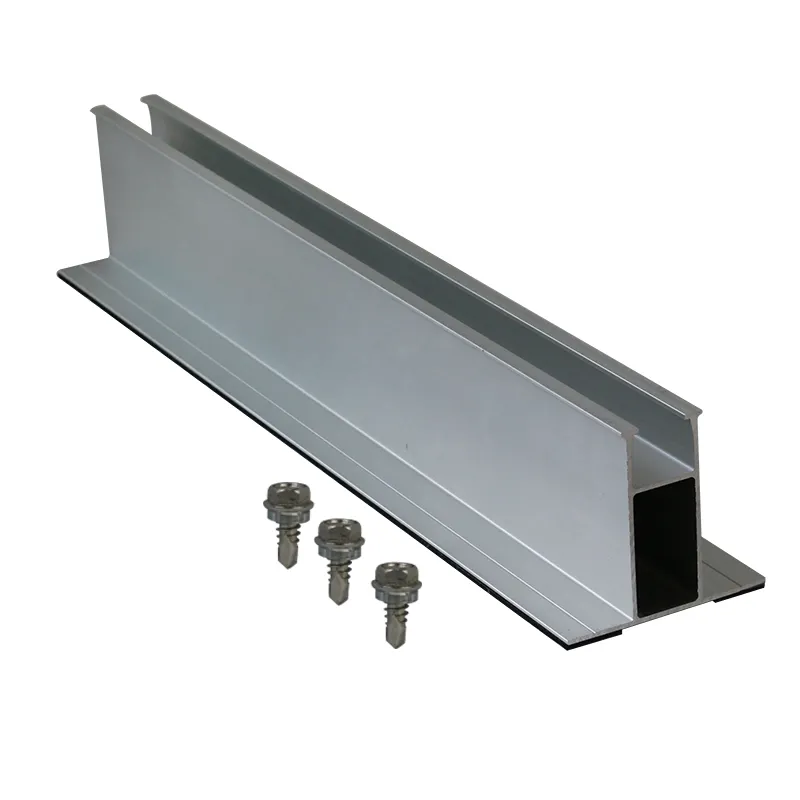
ALV can customize the hook geometry according to the Roman tile profile, including hook height, width, base configuration, and clearance requirements.
Why choose it?
- Suitable for many Roman tile profiles
- Flexible module positioning
- Easy to combine with standard aluminum rails
- Good balance between strength and weight
- Suitable for residential and commercial rooftops
2. Adjustable Roman Tile Roof Hook
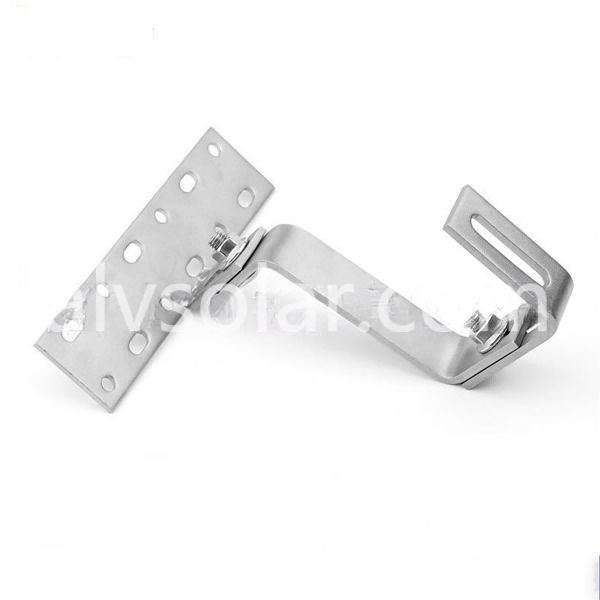
An adjustable roof hook is useful when Roman tiles or rafters have dimensional variations.
Instead of relying on a fixed hook height, an adjustable design allows the installer to fine-tune the position of the rail. This can help maintain a consistent rail plane across an uneven roof.
This is particularly valuable for older buildings where roof structures may not be perfectly uniform.
For installers working in markets with relatively high labor costs, an adjustable hook can potentially reduce alignment and modification work, although the actual benefit depends on the roof and installation method.
ALV can develop adjustable configurations when a standard fixed hook does not provide adequate clearance or alignment.
3. حامل شمسي بديل للبلاط
A tile-replacement mounting system replaces a Roman tile at the attachment point with a purpose-designed mounting component.
This approach can be useful when the original tile is fragile, difficult to accommodate, or incompatible with a conventional hook.
Instead of forcing a hook around the existing tile geometry, the replacement component creates a controlled interface between the roof covering and the solar mounting structure.
The installer must still ensure that the structural fastener connects to the appropriate rafter or structural member. The replacement component should not be considered a substitute for proper structural attachment.
For customized Roman tile projects, ALV can assess the tile dimensions and recommend whether a conventional or replacement-style hook is more appropriate.
4. Rail-Less Roman Tile Mounting System
A rail-less mounting system uses compact brackets to attach modules without long continuous aluminum rails.
The main benefit is reduced material volume and a low-profile appearance. It can also simplify transportation and handling for standardized residential installations.
However, rail-less systems generally require more precise module positioning. Installers need to know the exact module dimensions and attachment locations before installation.
For experienced solar installers with standardized module layouts, a rail-less configuration can be an efficient alternative to conventional rails.
ALV can evaluate the module layout and roof structure to determine whether a rail-less design is suitable for a particular Roman tile project.
5. نظام السكك الحديدية المصغرة
A mini-rail system uses short aluminum rail sections instead of long continuous rails.
This can reduce the amount of aluminum required and simplify packaging. It is particularly useful for repetitive residential projects where module layouts are standardized.
However, reducing rail length does not eliminate structural requirements. Each attachment point still needs to transfer the design loads into suitable structural members.
For distributors and EPC contractors looking for a compromise between conventional rails and rail-less systems, mini rails can provide a practical middle-ground solution.
Material Comparison for Roman Tile Solar Mounting
| مادة | مقاومة التآكل | وزن | Structural Strength | Recommended Use |
| ألومنيوم 6005-T5 | ممتاز | خفيف الوزن | عالي | Solar rails and profiles |
| الفولاذ المقاوم للصدأ SUS304 | ممتاز | واسطة | مرتفع جداً | خطافات ومثبتات السقف |
| الفولاذ المقاوم للصدأ SUS316 | متميز | واسطة | مرتفع جداً | Coastal/high-chloride environments |
| الفولاذ المجلفن بالغمس الساخن | جيد | ثقيل | ممتاز | Larger structural applications |
For most Roman tile rooftop projects, قضبان من الألومنيوم مع خطافات ومثبتات من الفولاذ المقاوم للصدأ provide a practical combination of low weight, corrosion resistance, and structural performance.
For coastal installations, SUS316 may be considered for exposed fasteners and other critical components where chloride exposure is significant.
However, salt-spray testing should not be used as a simple ranking system for mounting materials. ISO 9227:2022 specifies NSS, AASS, and CASS methods for evaluating corrosion resistance, but explicitly states that these tests are not intended to rank materials against each other or predict long-term outdoor corrosion resistance.
How Much Does a Roman Tile Solar Mounting System Cost in 2026?
There is no universal price for Roman tile mounting systems because the final cost depends on the hook design, material grade, quantity, roof geometry, engineering requirements, accessories, packaging, and shipping.
بصفتي مرجع تخطيط السوق الأولي لشركة ALVقد تسقط الهياكل المثبتة في كل مكان 0.05–0.20 دولار أمريكي/واط for many projects. This is a planning range rather than an official industry benchmark.
| عامل التكلفة | خيار أقل تكلفة | خيار ذو تكلفة أعلى |
| خطاف السقف | خطاف ثابت قياسي | خطاف قابل للتعديل/مخصص |
| السكك الحديدية | سكة ألومنيوم قياسية | سكة حديدية عالية القوة/مصممة حسب الطلب |
| قفل | SUS304 | SUS316 |
| Tile Interface | خطاف قياسي | تركيب بديل للبلاط |
| هندسة | التخطيط القياسي | التصميم الخاص بالمشروع |
| مرجع التخطيط | ~$0.05/W | ~$0.20/W+ |
【مرجع السوق: تجربة عروض أسعار مشاريع ALV 2026؛ ليس معيارًا رسميًا للصناعة】
For a precise quotation, provide the supplier with the project location, Roman tile profile, module dimensions, quantity, roof slope, wind speed, snow load, and module layout.
What Standards Should Roman Tile Solar Mounting Follow?
The mounting structure should be designed according to the structural requirements applicable to the project location.
| معيار / مرجعي | الغرض الرئيسي |
| ASCE 7-22 | أحمال التصميم الهيكلي الأخرى الناتجة عن الرياح والثلوج |
| EN 1991 | European actions on structures |
| ISO 9227 | Salt-spray corrosion testing |
| IEC 61215 | PV module design qualification |
| IEC 61730 | PV module safety qualification |
It is important to distinguish between PV module standards and mounting-system requirements. IEC 61215 and IEC 61730 address photovoltaic modules; they should not be presented as certifications of the mounting structure itself.
For an EPC project, the mounting supplier should instead provide appropriate structural calculations, material specifications, installation instructions, and project-specific documentation where required.
How Do You Choose the Right Roman Tile Mounting System?
Start with the roof and tile, not the mounting product.
First identify the exact Roman tile profile and locate the structural rafters. Then check the roof slope, tile overlap, module dimensions, wind speed, snow load, corrosion environment, and applicable building codes.
For a standard Roman tile roof, choose a fixed stainless-steel hook and aluminum rail. For uneven roof geometry, consider an adjustable hook. If the tile profile is difficult to accommodate, evaluate a tile-replacement solution.
Rail-less and mini-rail systems are better considered when module layouts are standardized and installation teams have sufficient experience with those systems.
لماذا تختار ALV for Roman Tile Solar Mounting?
ALV provides customized solar mounting solutions for Roman tile, clay tile, concrete tile, metal roofs, and other rooftop applications.
Our product range includes:
- Roman tile roof hooks
- Adjustable roof hooks
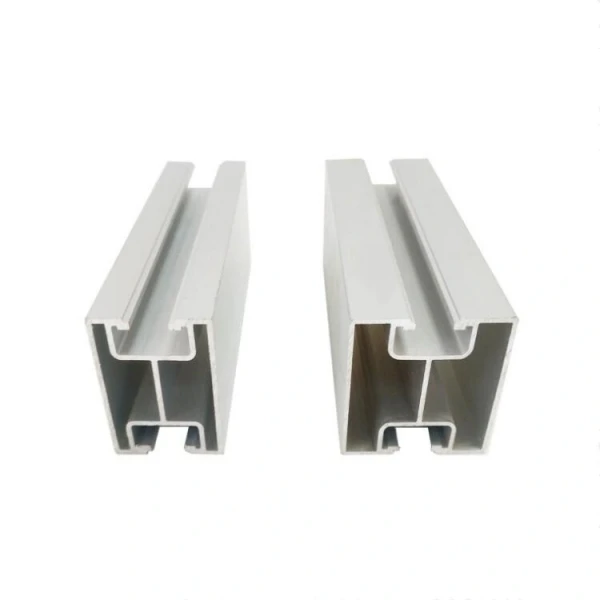
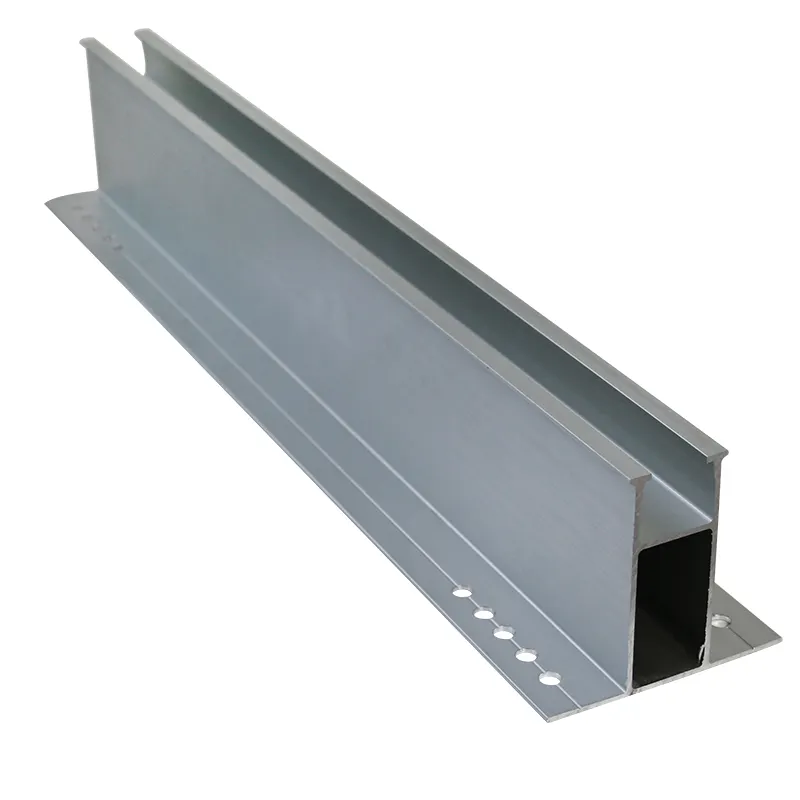
- Aluminum solar rails
- Mini-rail systems
- Rail-less mounting components
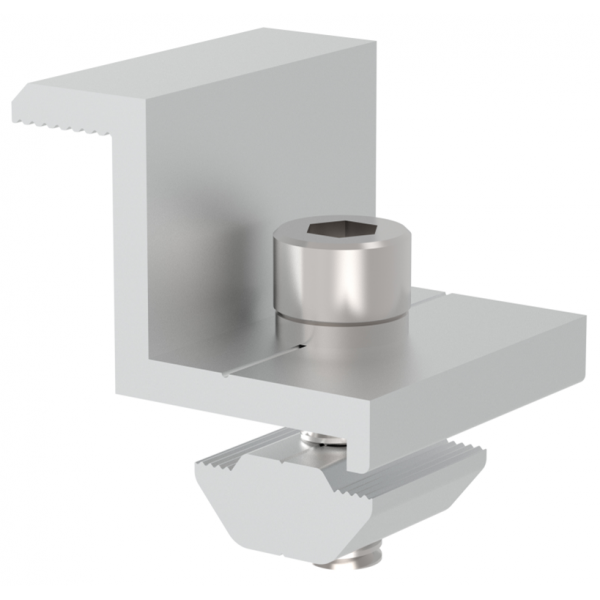
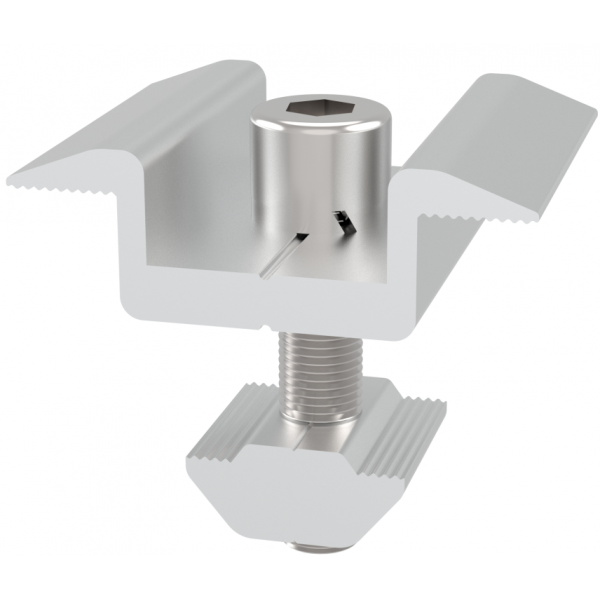
- Mid and end clamps
- Stainless-steel fasteners
- Customized mounting components
- دعم هندسي خاص بالمشروع
Rather than using one universal hook for every tile, ALV can evaluate the tile profile, structural attachment points, module dimensions, environmental loads, and installation method before recommending a suitable configuration.
This is particularly useful for EPC contractors and distributors serving markets where Roman tile roofs are common.
The broader PV industry is also developing rapidly. The Fraunhofer ISE Photovoltaics Report, updated July 14, 2026, reports that the global PV market is growing at approximately 27% CAGR. The same report states that PV module prices have historically fallen by an average of about 26.7% for each doubling of cumulative production, reflecting the industry’s strong scale and cost-development trend.
As module technology and installation economics continue to evolve, mounting suppliers need to provide solutions that are not only structurally reliable but also efficient to manufacture, transport, and install.
الأسئلة الشائعة
1. What is the best solar mounting system for Roman tile roofs?
For most Roman tile roofs, a stainless-steel roof hook combined with an aluminum rail is the most versatile solution. It provides a structural connection to the roof framing while allowing flexible module positioning.
2. Can solar panels be installed on Roman tile roofs?
Yes. Solar panels can be installed on Roman tile roofs using purpose-designed roof hooks, rails, tile-replacement mounts, or other compatible mounting systems.
3. Do Roman tiles need to be drilled for solar installation?
Usually, the preferred approach is to carefully remove selected tiles and install a roof hook beneath or around the tile. The exact method depends on the tile profile and mounting design.
4. Are Roman tile solar roof hooks universal?
No. Roman tiles differ in dimensions, curvature, overlap, and installation geometry. A roof hook should be checked against the actual tile profile before installation.
5. Is aluminum strong enough for Roman tile solar mounting?
Yes. Properly engineered aluminum alloys such as 6005-T5 are commonly used for solar rails because they combine relatively low weight, corrosion resistance, and suitable structural performance.
6. Should I use SUS304 or SUS316 stainless steel?
SUS304 is suitable for many normal environments. SUS316 is generally preferable for coastal or high-chloride environments where greater corrosion resistance is required.
7. How much does a Roman tile solar mounting system cost?
As an ALV preliminary market-planning reference, mounting structures may range around 0.05–0.20 دولار أمريكي/واط, but actual prices depend on material, quantity, roof complexity, engineering, accessories, and shipping.
8. How long do Roman tile solar mounting systems last?
High-quality aluminum and stainless-steel components can be designed for 25–30 years or longer, but actual service life depends on material quality, structural design, environment, installation, and maintenance.
9. Does ALV provide customized Roman tile roof hooks?
Yes. ALV can customize Roman tile hooks, adjustable hooks, rails, mini-rail systems, and other mounting components according to the tile profile, module dimensions, roof structure, and project requirements.
Final Takeaway
For most Roman tile roofs, a stainless-steel roof hook combined with an aluminum rail is the most versatile solar mounting solution. Adjustable hooks, tile-replacement mounts, rail-less systems, and mini rails can provide better results when roof geometry, tile profiles, installation efficiency, or project economics require a different approach.
Before purchasing, confirm the Roman tile profile, rafter location, roof slope, module dimensions, wind and snow loads, corrosion environment, and required technical documentation.
Need a customized Roman tile solar mounting solution?
اتصال ALV for a product recommendation, engineering layout, or quotation based on your roof and project requirements.
أفضل 5 أنظمة تركيب الطاقة الشمسية للبلاط الروماني في عام 2026
(عنوان البريد الإلكتروني:sales@xmalv.com)