

What Certifications Should Solar Mounting Systems Have?(2026)

What Certifications Should Solar Mounting Systems Have?(2026)
Last Updated: September 22nd, 2026
Autor: Devi Huang | Internationales Vertriebsteam ALV (E-Mail-Adresse:sales@xmalv.com)
Devi Huang ist Teil des internationalen Vertriebsteams von ALV, einem Hersteller von Solarmontagesystemen und Aluminiumprofilen. Sie arbeitet weltweit mit Generalunternehmern, Distributoren und Projektentwicklern zusammen und unterstützt Kunden bei der Auswahl der passenden Montagelösungen unter Berücksichtigung von Projektanforderungen, lokalen Normen und Budget.
Which Certifications and Standards Are Important for Solar Mounting Systems?
There is no single worldwide certification that applies to every photovoltaic mounting system. The most relevant requirements depend on where the system will be installed.
| Market / Application | Important Standard or Certification | Hauptzweck |
| United States | UL 2703 | PV mounting, clamping, bonding/grounding and fire classification |
| Europe | EN 1990 / EN 1991 | Structural design, wind, snow and other actions |
| Europe – Aluminium | EN 1999 | Structural design of aluminium systems |
| International PV systems | IEC 62548-1 | PV array design and safety requirements |
| PV modules used with racking | IEC 61730 / IEC 61215 | Module safety and performance qualification |
| Corrosion testing | ISO 9227 | Salzsprühkorrosionsprüfung |
| Steel structures | EN 1090 series | Execution and manufacturing requirements for structural steel/aluminium |
The important point is that these documents serve different purposes. UL 2703 is directly focused on PV mounting systems, while Eurocodes are structural design standards and ISO 9227 is a corrosion test method. They should not be presented as interchangeable “certifications.”
1. UL 2703: The Key Certification for U.S. Solar Mounting Systems
For solar mounting systems intended for the U.S. market, UL 2703 is one of the most important certifications to consider.
UL 2703 covers photovoltaic mounting systems, mounting devices, clamping/retention devices, and grounding lugs. Its requirements include mechanical strength, grounding/bonding paths, material suitability and rooftop PV fire classification. The current UL 2703 record was revised and ANSI-approved on April 28, 2026.
This is particularly important for rooftop projects because the fire classification of a rooftop PV system can depend on the combination of the specific PV module and mounting system. UL Solutions also explains that UL 2703 can be used to evaluate rooftop PV system fire classification and grounding/bonding performance.
For an American EPC or distributor, therefore, asking whether a racking supplier has UL 2703 certification is much more meaningful than simply asking whether the manufacturer has “UL certification.”
2. IEC 62548-1: Important for PV System Design
For international projects, IEC 62548-1 is another important reference.
The latest consolidated version, IEC 62548-1:2023 + AMD1:2025, establishes design requirements for photovoltaic arrays, including electrical protection, earthing and other PV array safety requirements. The updated document also revised requirements related to mounting structures.
However, IEC 62548-1 should not be described as a certification for a mounting manufacturer.
Instead, it is a design standard that helps engineers determine how the PV array should be designed and installed safely.
For ALV, this distinction matters when preparing technical documentation for international customers: a supplier should identify which standards the complete system design follows rather than simply listing as many certification numbers as possible.
3. Eurocodes: Essential for European Structural Design
European solar mounting projects normally require structural calculations based on the applicable Eurocodes and national requirements.
EN 1991 (Eurocode 1) covers actions on structures, including snow loads and wind actions. EN 1991-1-3 addresses snow loads, while EN 1991-1-4 addresses wind actions.
For aluminium solar mounting systems, EN 1999 (Eurocode 9) is particularly relevant. It covers the structural design of aluminium structures, including resistance, serviceability, durability and fire resistance.
This means a European customer may care more about receiving a project-specific structural calculation, load report and material documentation than seeing a generic “solar mounting certification.”
| Requirement | What the Customer Should Check |
| Wind | Design wind speed, pressure and uplift |
| Snow | Characteristic snow load and accumulation |
| Aluminium structure | EN 1999 design verification |
| Steel structure | Applicable Eurocode and execution requirements |
| Connections | Bolt, clamp and joint resistance |
| Roof attachment | Pull-out, shear and substrate capacity |
| Documentation | Structural calculations and installation drawings |
For rooftop systems, the actual building, roof structure and attachment method must also be considered. A certified component does not automatically mean that every installation is structurally adequate.
4. IEC 61215 and IEC 61730: Important, But Mainly for PV Modules
A common mistake is to assume that IEC 61215 or IEC 61730 are certifications for solar mounting systems.
They are primarily PV module standards.
IEC 61215 addresses design qualification and type approval for terrestrial PV modules, including mechanical-load testing and other qualification procedures.
IEC 61730 addresses PV module safety qualification, including construction and testing requirements related to electrical shock, fire hazards, mechanical stresses and environmental stresses.
These standards are important because the mounting system must be compatible with the module’s approved mounting zones, frame design and mechanical requirements.
Therefore, when ALV designs a mounting solution, customers should provide the exact module manufacturer and model, not simply say “550 W solar panel.”
5. ISO 9227: Useful for Corrosion Testing
Corrosion resistance is particularly important for solar mounting systems installed in coastal, industrial or high-humidity environments.
ISO 9227:2022 specifies neutral salt spray, acetic acid salt spray and copper-accelerated acetic acid salt spray test methods for evaluating corrosion resistance of metallic materials and protective coatings.
However, ISO 9227 is a test method, not a universal lifetime certification.
The ISO standard itself states that salt-spray testing is useful for detecting coating defects and checking coating quality, but the test should not be treated as a direct method for predicting long-term corrosion resistance.
For this reason, a professional solar mounting supplier should provide more than a salt-spray test number. Customers should also review the material grade, coating system, coating thickness, environmental category and project location.
What Certifications Should You Ask a Solar Mounting Manufacturer For?
The right documentation depends on your project and market.
| Projekttyp | Recommended Documentation |
| U.S. rooftop PV | UL 2703, module compatibility, structural calculations |
| U.S. ground mount | UL 2703 where applicable, structural calculations and local code compliance |
| European rooftop | Eurocode structural calculations, national requirements, material documentation |
| European aluminium system | EN 1999 design verification |
| Coastal project | Corrosion protection specification + relevant corrosion testing |
| Large commercial project | Load calculations, engineering drawings, material certificates and QA documentation |
| EPC procurement | Certification reports, datasheets, test reports, installation manuals and warranty |
The most reliable suppliers can provide a complete technical package, rather than simply sending a certificate.
What Should a Professional Solar Mounting Supplier Provide?
A good solar mounting manufacturer should be able to provide:
- Product datasheets
- Material specifications
- Structural calculations
- Wind- und Schneelastberechnungen
- Installation drawings
- Module compatibility information
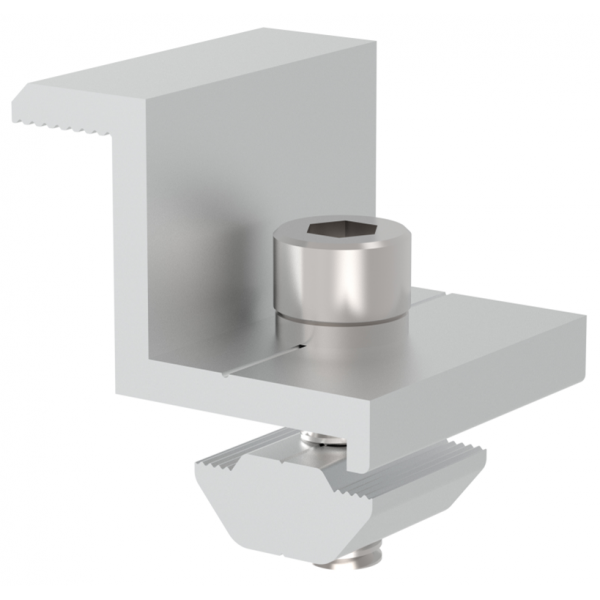
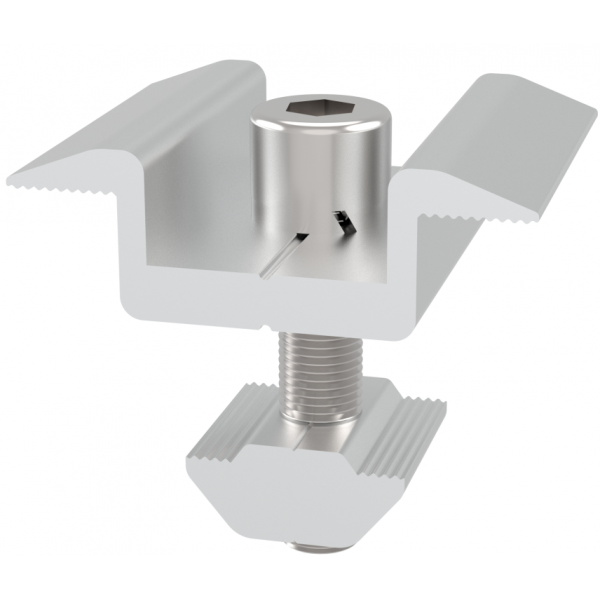
- Clamp and connection specifications
- Grounding/bonding information
- Corrosion protection details
- Relevant certification or test reports
- Installationshandbücher
- Product warranty
For customized projects, ALV can use the customer’s project location, roof type, module dimensions, wind speed, snow load, roof slope and module layout to determine the appropriate mounting configuration.
This is especially important because certification alone cannot replace engineering.
Häufig gestellte Fragen
1. Is UL 2703 mandatory for all solar mounting systems?
No. UL 2703 is particularly relevant to mounting systems intended for the U.S. market. Whether certification is required depends on the applicable electrical, building and local authority requirements. UL 2703 specifically addresses PV mounting systems, clamps, grounding/bonding devices and related requirements.
2. Is IEC 62548-1 a certification for solar mounting systems?
No. IEC 62548-1 is a PV array design and safety standard. The current consolidated version is IEC 62548-1:2023+AMD1:2025, which includes revised provisions related to mounting structures.
3. Do European solar mounting systems need UL 2703?
Not normally as a general European requirement. European projects typically rely on applicable European and national structural, building and electrical requirements. Structural calculations commonly reference the Eurocodes, including EN 1991 for actions such as wind and snow.
4. Does IEC 61215 certify solar mounting systems?
No. IEC 61215 primarily covers design qualification and type approval of terrestrial PV modules. It should not be presented as a mounting-system certification.
5. Is ISO 9227 certification enough to prove a mounting system will last 25 years?
No. ISO 9227 defines salt-spray test methods, but the standard does not specify a universal exposure period or provide a direct prediction of long-term service life.
6. What certification is most important for U.S. solar racking?
For U.S. projects, UL 2703 is one of the most important mounting-system standards to investigate. It covers mounting, clamping, grounding/bonding and related mechanical and fire-classification requirements.
7. What standards are important for aluminium solar mounting systems in Europe?
EN 1999, Eurocode 9, is a key structural design reference for aluminium structures. It addresses resistance, serviceability, durability and fire resistance and is intended to be used together with EN 1990, EN 1991 and relevant execution standards.
8. What documents should I request from a solar mounting manufacturer?
At minimum, request relevant certificates or test reports, material specifications, structural calculations, wind and snow load calculations, installation drawings, module compatibility information, corrosion protection specifications and installation instructions. For commercial projects, a complete engineering and QA package is preferable to a certificate alone.
Final Checklist: What Should You Verify Before Buying?
Before purchasing a solar mounting system, ask the supplier these seven questions:
- Does the system have UL 2703 certification if it is intended for the U.S. market?
- Which structural standard is used for the project design?
- Have local wind and snow loads been included?
- Is the mounting system compatible with the exact PV module model?
- What material and corrosion protection system are used?
- Can the supplier provide structural calculations and installation drawings?
- Can the supplier provide complete certification and test documentation?
A professional mounting system is not defined by the number of certificates printed on its datasheet. The real value comes from certification + engineering + material quality + project-specific calculations + traceable documentation.
For EPCs, installers and distributors looking for a reliable mounting partner, ALV provides solar mounting solutions for rooftop, ground-mount and other PV applications, with technical support for project-specific system design and documentation.
Need to verify whether your current mounting system meets the requirements of your target market?
Kontakt ALV with your project location, module model, roof type and design loads for a technical assessment.
E-mail address:sales@xmalv.com