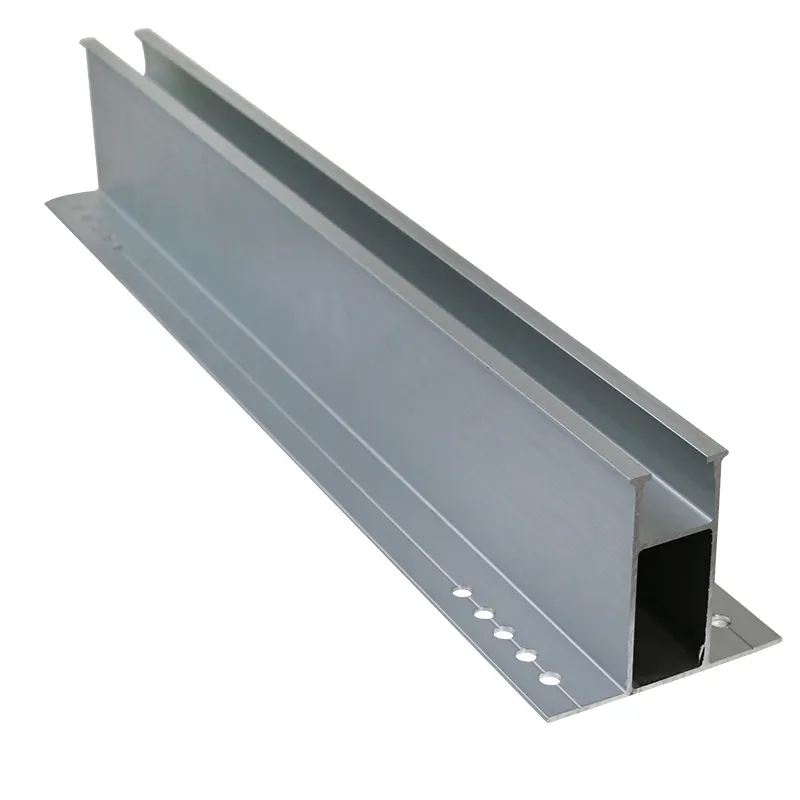


Solar Ground Mount Foundation: 6 Best Options Compared

Every ground-mounted array stands on one decision made long before the panels arrive: what holds it in the soil. The solar ground mount foundation carries the dead load of the modules, resists uplift from wind, survives frost movement and sets the installation schedule for the whole project. Choose the wrong type and the site either costs far more than budgeted or develops problems that only appear after two winters.
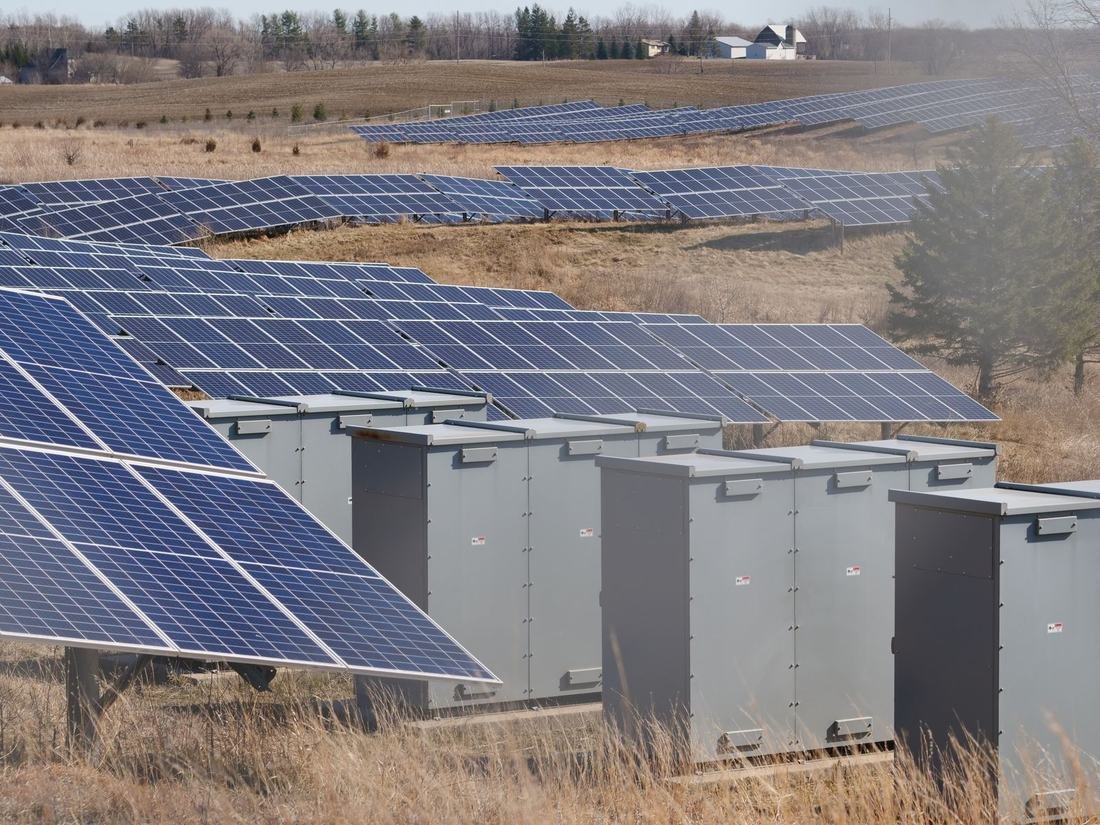
This guide compares the six foundation types used on modern PV projects, explains which soil and site conditions push a project toward each one, and lists the checks to run before signing off a design.
What the foundation actually has to do
Three load cases drive the design:
- Dead load — modules, rails, beams and cabling, typically 12 – 20 kg per square metre of array.
- Wind uplift — the dominant case on most sites. A ground-mounted array acts like an aerofoil; design wind speeds can generate uplift several times the static weight, so the foundation must resist pull-out, not just compression.
- Snow and frost — snow adds downward load, while frost heave lifts and rotates foundations in cold climates unless they extend below the local frost line.
Add seismic action in active zones and corrosion allowance in coastal or industrial air, and the reason for careful foundation selection becomes obvious. A solar ground mount foundation is a geotechnical design problem, not a catalogue item.
1. Driven steel piles — the utility-scale default
A driven pile is a hot-dip galvanized C-section or H-section steel post pushed into the ground by a hydraulic hammer or vibratory driver. Penetration is typically 1.0 – 1.8 m depending on soil and pull-out requirement, and no excavation or concrete curing is involved.
Where it wins: large fields with competent soil, tight schedules, and projects where hundreds of posts per day must be installed. It is the cheapest foundation per post at scale and the fastest to build.
Watch out for: rocky ground (refusal), loose fill, and corrosion at the soil line. Coating thickness and cut-edge protection decide whether the post survives 25 years.
2. Ground screws and helical anchors — clean and removable
A ground screw is a steel shaft with helical flights that is rotated into the soil, transferring load through the helix plates rather than through friction alone. Helical anchors work on the same principle with larger plates for weaker soils.
Where it wins: sites where concrete is banned or undesirable, projects on leased farmland that must be restored at end of life, and locations where installation must continue in cold weather. No curing time means the array can be built the same day.
Watch out for: torque verification. Every screw should be installed to a recorded torque or depth, because holding capacity depends on reaching competent strata. Very rocky or very soft ground reduces the advantage.
3. Concrete piers — predictable where soil is poor
Concrete piers are poured into drilled or excavated holes, often 0.3 – 0.6 m in diameter and 1.0 – 2.0 m deep, with anchor bolts cast in place. They are the traditional answer where soil is loose, expansive or waterlogged.
Where it wins: weak or variable soils, high water tables, expansive clay, and sites where a geotechnical engineer requires a positive mass foundation.
Watch out for: cost and schedule. Excavation, reinforcement, formwork and 7 – 28 days of curing all add up, and concrete in remote locations is expensive. On big projects, piers are usually reserved for the problem areas rather than the whole field.
4. Ballasted foundations — no penetration at all
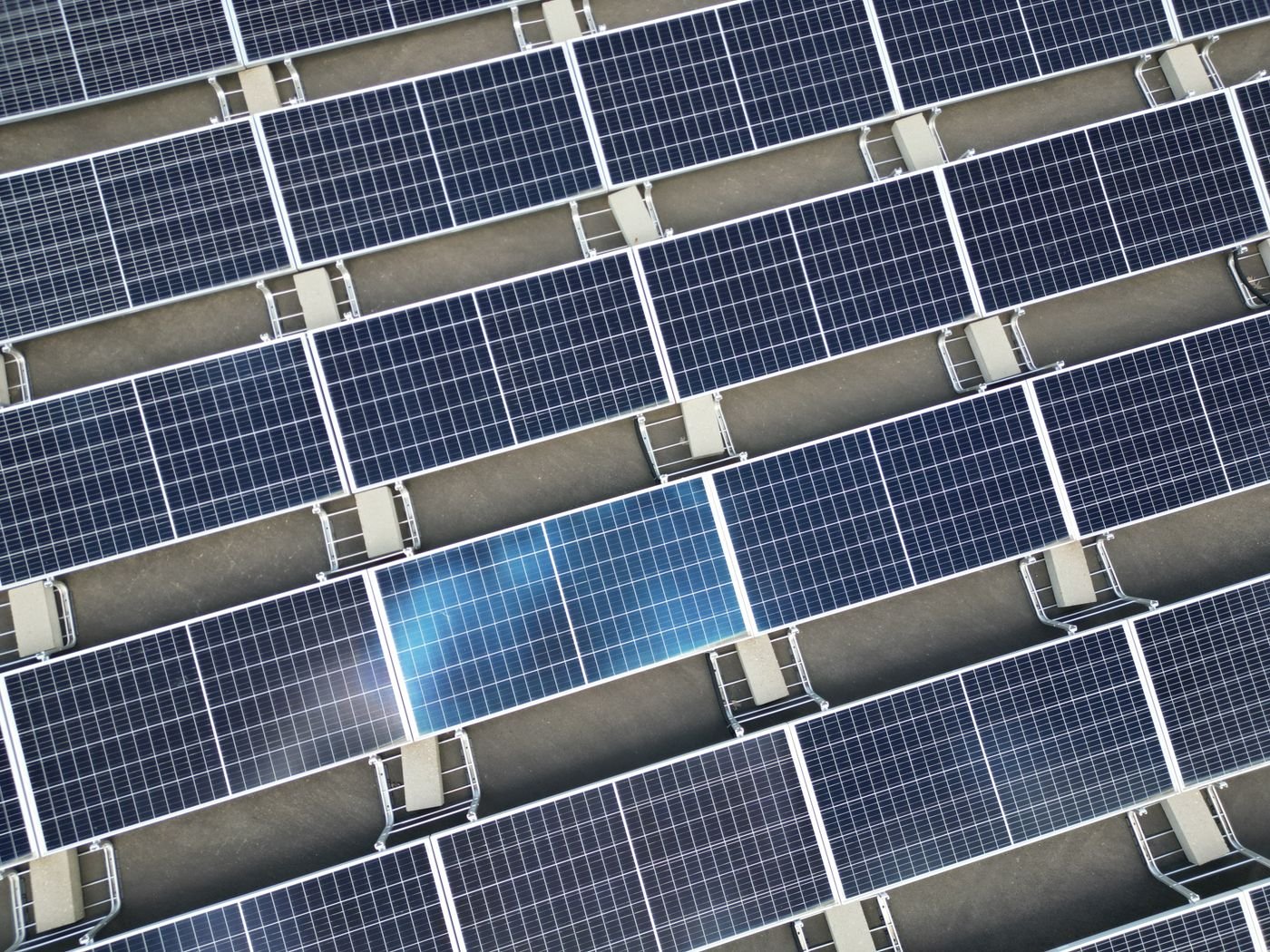
Ballast blocks rely on weight instead of embedment. They are common on landfill caps, contaminated land, membrane roofs and sites where digging is prohibited.
Where it wins: sites where penetration is impossible or legally restricted, and where the surface can carry the ballast load.
Watch out for: the block count needed to resist uplift. Ballast is bulky, needs a load-bearing surface, and adds significant transport cost. For ground-mounted PV it is a niche solution, but on constrained industrial land it can be the only one.
5. Screw piles with concrete caps — hybrid for soft ground
A hybrid combines a driven or screwed shaft with a cast concrete cap, gaining friction capacity from the shaft and bearing capacity from the cap. It suits sites with a soft upper layer over a competent stratum.
Where it wins: layered soils, former agricultural land with compacted plough pans, and projects needing higher uplift resistance than a plain pile can deliver.
Watch out for: two-stage installation and the resulting cost. Specify the cap size from the actual pull-out test, not from a generic table.
6. Rock anchors and grouted bars — for difficult terrain
Where refusal stops a pile within centimetres, a rock anchor or grouted bar drilled into bedrock provides the anchorage. Installation is slower and needs specialist drilling, but it unlocks sites that would otherwise be graded or abandoned.
Where it wins: shallow bedrock, mountainous terrain, and rocky sites where earthworks would be prohibitive.
Comparison at a glance
| Foundation | Typical depth | Best soil | Relative cost | Relative speed | | — | — | — | — | — | | Driven steel pile | 1.0 – 1.8 m | Dense loam, sand, gravel | Low | Fastest | | Ground screw | 1.0 – 2.5 m | Firm to medium soil | Low – medium | Fast | | Concrete pier | 1.0 – 2.0 m | Weak, expansive, wet | High | Slow | | Ballast | Surface only | Any load-bearing surface | Medium – high | Medium | | Screw pile + cap | 1.5 – 2.5 m | Layered, soft top | Medium | Medium | | Rock anchor | Into bedrock | Rock at shallow depth | High | Slow |
Once the foundation type is fixed, the sequence that follows — pile setting-out, beam levelling, rail and module installation — is covered step by step in our ground mount installation guide.
Soil, frost and corrosion checks before you commit
A foundation design is only as good as the site investigation behind it. At minimum, confirm:
- Soil classification and bearing capacity from boreholes or cone penetration tests, not from a neighbouring project.
- Groundwater level — it changes both corrosion risk and the feasibility of driven piles.
- Frost line depth in cold climates; every foundation element must sit below it, or frost heave will lift the array.
- Corrosion category for the site. Coastal and industrial locations may require heavier galvanizing, ZAM coating or stainless hardware; our guide to the Zn-Al-Mg steel ground mounting system explains when the upgrade pays for itself.
- Pull-out test results on at least a sample of posts, used to confirm the drive depth for the whole field.
National guidance is worth checking as well: bodies such as the US Department of Energy solar programme publish site-preparation and foundation references for utility-scale PV, and local building codes usually set the minimum embedment depth.
Specifying a solar ground mount foundation
When you issue an enquiry to a mounting supplier, give them the information they cannot guess:
1. Soil report summary and groundwater level. 2. Design wind speed and snow load, with the relevant code (for example AS/NZS 1170.2 or Eurocode). 3. Frost line depth, if applicable. 4. Module size, weight and array layout. 5. Site access for piling rigs or drilling equipment. 6. Expected construction sequence and completion date.
With those six inputs, a supplier can propose a foundation type, post spacing and coating specification that will actually pass review. Without them, every quote is a guess.
The foundation is the least visible part of a PV plant and the hardest to change later. Spending an extra week on soil data and a pull-out test is almost always cheaper than discovering, two winters into operation, that the posts were driven 40 cm too shallow.
Preguntas frecuentes
What is the cheapest solar ground mount foundation?
Driven galvanized steel piles are normally the cheapest per post on competent soil at scale, because there is no excavation, no concrete and no curing time.
Do ground-mounted solar arrays need concrete?
No. Driven piles, ground screws and helical anchors cover most soil conditions without concrete. Concrete piers are used where the soil is too weak or too variable for embedment alone.
How deep should ground mount posts go?
Typically 1.0 – 1.8 m in competent soil, confirmed by pull-out testing, and always below the local frost line in cold climates.