

Solar Panel Clamps: Mid Clamps vs. End Clamps Explained(2026)

Last Updated: October 20th, 2026
Author: Devi Huang | International Sales Team, ALV(E-mail address:sales@xmalv.com)
Devi Huang is part of the international sales team at ALV, a manufacturer of solar mounting systems and aluminum profiles. She works with EPC contractors, distributors, and project developers worldwide, helping customers choose the right mounting solutions based on project requirements, local standards, and budget.
What Is a Solar Panel Mid Clamp?
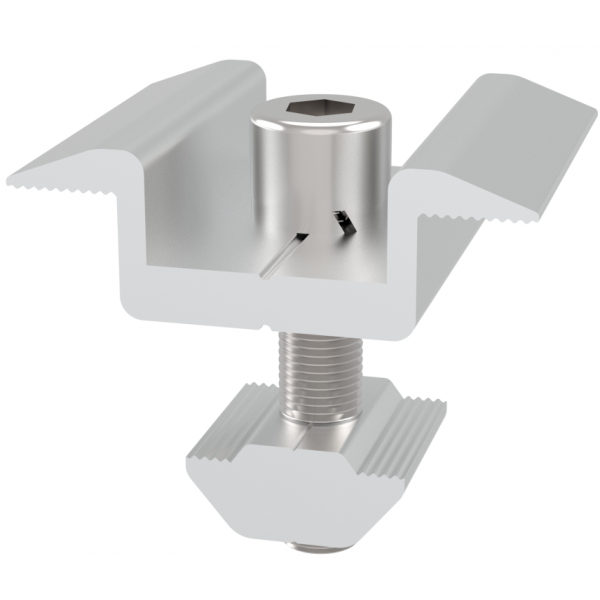
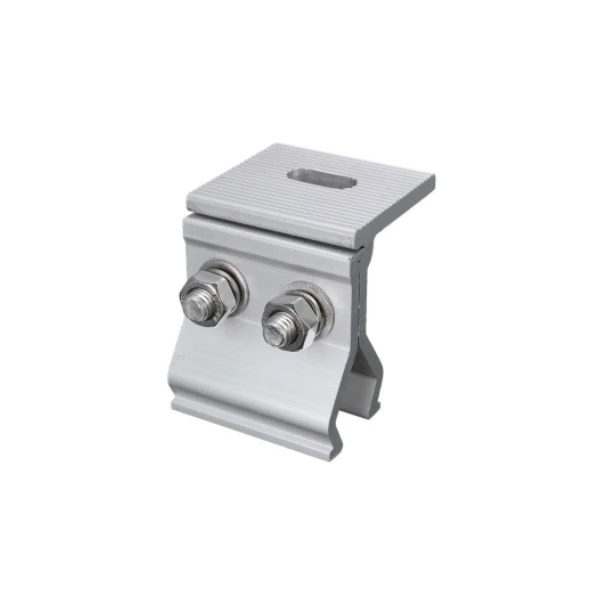
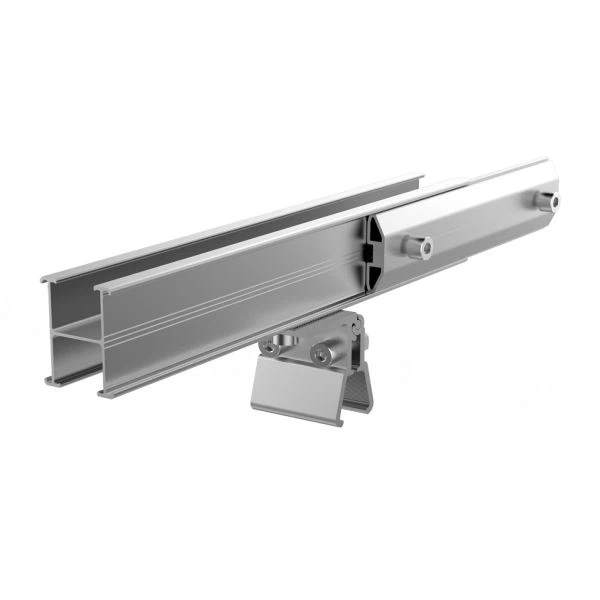
A mid clamp, also called an intermediate clamp, is installed between two adjacent solar panels. Its upper contact surfaces grip the frame of the panel on each side, allowing one clamp assembly to secure two neighboring modules.
This design makes mid clamps particularly useful for continuous rows of PV modules. Instead of installing a separate clamp at every module edge, one mid clamp can connect two adjacent panels to the mounting rail.
NREL research has highlighted an important consideration: because a mid clamp can hold two adjacent modules, failure of one attachment point can potentially contribute to progressive or cascading module failure. This makes clamp design, installation, and fastening particularly important in high-wind applications.
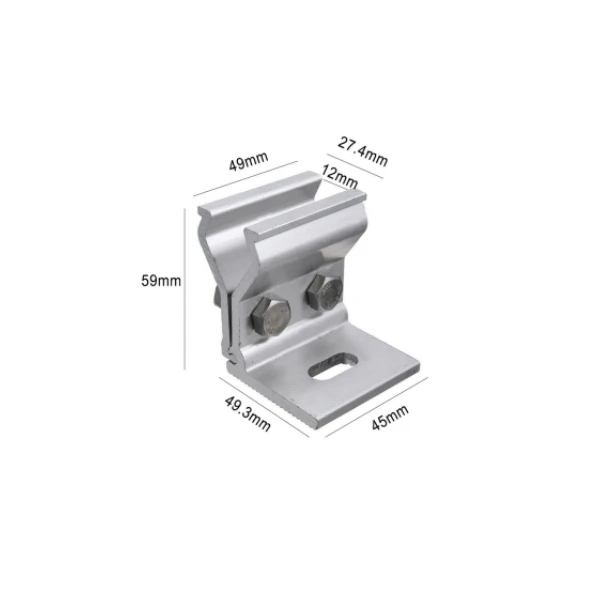
At ALV, mid-clamp designs are available with an aluminum-alloy body and stainless-steel fastening components. ALV‘s listed mid-clamp design uses AL6005-T5 aluminum alloy, with stainless-steel bolts and flange nuts, and can be configured with protective pads for contact with the module frame.
What Is a Solar Panel End Clamp?
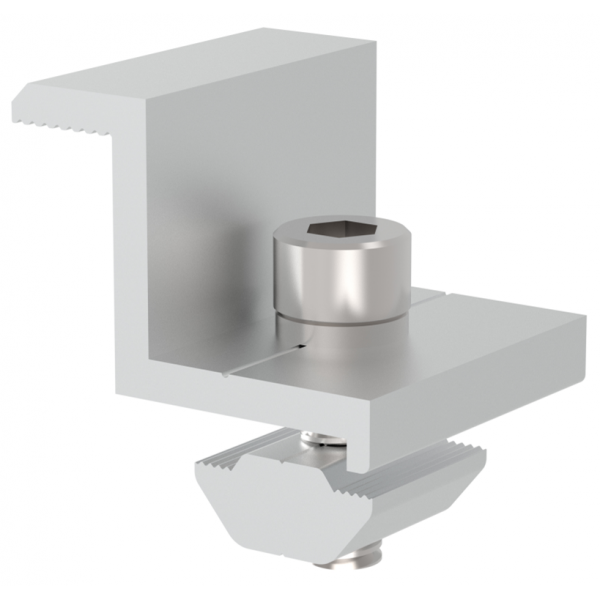
An end clamp is installed at the outside edge of a PV module row. Unlike a mid clamp, it normally grips only one module frame because there is no adjacent panel on the outside.
End clamps are therefore used at the beginning and end of a module row. Their height and contact geometry need to match the module frame so that the clamp applies sufficient holding force without interfering with the glass, frame, or module components.
For example, ALV’s aluminum solar clamp solution is specified for framed or frameless modules and lists compatibility with module thicknesses from 20–50 mm, depending on the configuration. The product specification also lists a wind-load capability of 60 m/s and a snow-load value of 1.4 kN/m². These values are product specifications, not universal design values for every PV project.
Mid Clamp vs. End Clamp: What Is the Difference?
The basic difference is their position and function: a mid clamp connects adjacent modules, while an end clamp secures the outside edge of a module row.
| Feature | Mid Clamp | End Clamp |
| Installation position | Between two adjacent modules | At the outer edge of a module row |
| Modules secured | Normally two adjacent modules | Normally one module |
| Main function | Connect neighboring modules to the rail | Secure the first or last module |
| Typical application | Continuous module rows | Beginning and end of rows |
| Module compatibility | Must match module frame thickness | Must match module frame thickness |
| Common material | Aluminum alloy + stainless steel hardware | Aluminum alloy + stainless steel hardware |
| Installation | Usually top-down into mounting rail | Usually top-down into mounting rail |
| Design consideration | Shared load between adjacent modules | Edge restraint and cantilever behavior |
A complete rail-mounted PV array normally uses both mid clamps and end clamps. They are complementary components rather than competing alternatives.
Which Materials Are Used for Solar Panel Clamps?
Aluminum alloys are widely used for clamp bodies because they combine low weight with corrosion resistance and can be produced through extrusion or precision machining. Stainless steel is commonly used for bolts, nuts, and other fastening components.
ALV uses AL6005-T5 aluminum alloy for its clamp body. This alloy is commonly used in PV mounting components where a balance between mechanical performance, weight, manufacturability, and corrosion resistance is required. Stainless-steel fastening hardware can provide a durable connection when appropriately selected for the project environment.
| Component | Typical Material | Main Reason for Selection |
| Clamp body | AL6005-T5 aluminum alloy | Lightweight, corrosion-resistant, suitable for precision profiles |
| Bolt | Stainless steel | Mechanical fastening and corrosion resistance |
| Nut | Stainless steel | Secure threaded connection |
| Washer/pad | Rubber or polymer | Helps protect the module frame and improve contact |
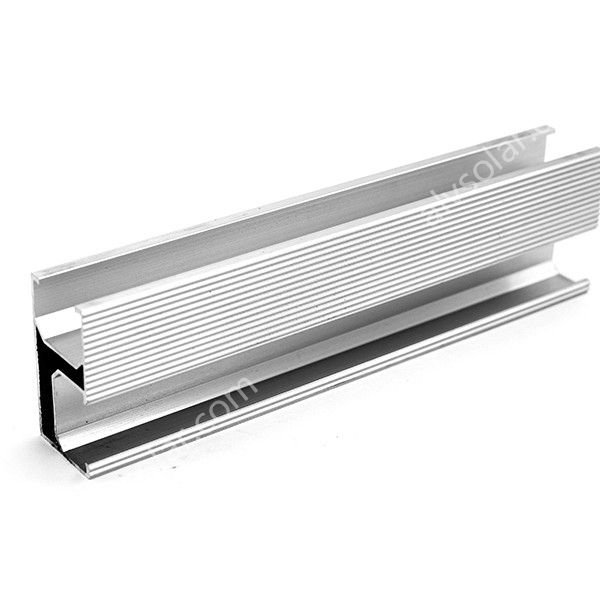
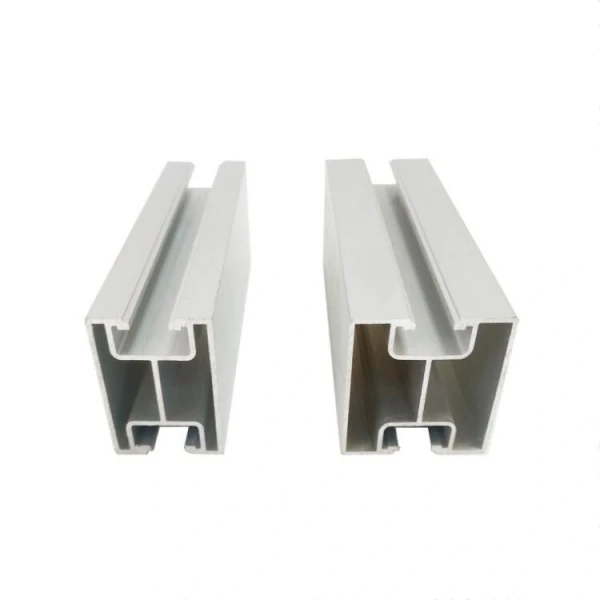
| Rail interface | Aluminum/steel rail compatible hardware | Transfers clamp force into the mounting structure |
For coastal projects, material selection becomes even more important. NREL has specifically identified corrosion-resistant fastening hardware as an important consideration for PV systems exposed to marine environments and recommends marine-grade stainless steel such as 316 stainless steel for appropriate coastal applications.
What Standards Should Solar Panel Clamps Follow?
A solar clamp should not be evaluated only by its material or appearance. The complete mounting system, module compatibility, mechanical loads, grounding/bonding requirements, and installation conditions should be considered.
In the United States, UL 2703 covers PV mounting systems, mounting devices, clamping/retention devices, and ground lugs. The current UL 2703 requirements cover mounting and clamping devices for PV systems up to 1500 V, including mechanical strength, grounding/bonding, fire classification, and material suitability. The standard was revised with ANSI approval in April 2026.
| Standard / Reference | Relevance to PV Clamps |
| UL 2703 | Mounting systems, clamping/retention devices, grounding/bonding and fire classification |
| IEC 61215 | PV module design qualification and testing, including mechanical-load-related testing |
| IEC 62548 | PV array design and installation considerations |
| ASCE 7 | Structural loading, including wind and other environmental loads in applicable projects |
| EN 1991-1-4 | Wind actions for structural design under the Eurocode framework |
It is important to distinguish module standards from mounting-system standards. IEC 61215 is primarily a qualification and testing standard for PV modules; its 2021 series includes cyclic dynamic mechanical-load testing. It does not mean that a particular clamp automatically complies simply because the module is IEC 61215 qualified.
For European projects, EN 1991-1-4 provides rules for determining natural wind actions on structures and wind-exposed elements. The actual design load for a PV mounting system depends on project-specific factors such as location, height, terrain, geometry, and exposure.
Why Clamp Installation Matters as Much as Clamp Selection
Even a correctly specified clamp can perform poorly if it is installed incorrectly. Bolt torque, rail compatibility, module frame position, clamp contact area, and fastener condition all influence the final connection.
The U.S. Department of Energy‘s Federal Energy Management Program identifies inadequate strength, poor installation practices, vibration-induced loosening, joint relaxation, and substandard components among common causes of PV fastener failures. It also notes that failure of mid-clamps can release an entire row and contribute to cascading failures.
NREL field observations have similarly documented bent end clamps and subsequent module movement in wind events. This demonstrates why clamp selection should be considered as part of the complete structural system, rather than as an isolated accessory.
How Do You Choose the Right Solar Panel Clamp?
Start with the solar module frame thickness and mounting rail. Then check the project’s wind and snow loads, module orientation, roof or ground-mount configuration, environmental conditions, and applicable certification requirements.
For example, ALV‘s clamp product range includes configurations for module thicknesses of 20–50 mm, while other dimensions and mounting requirements can be customized according to the project. ALV also provides rooftop and ground-mount solutions, allowing clamp selection to be coordinated with the broader mounting structure rather than treated as a standalone component.
For a quotation, an installer or EPC contractor should ideally provide the module brand/model, frame thickness, rail profile, project location, design wind speed, snow load, and required standards. With these details, the clamp and mounting system can be checked against the actual project conditions.
Frequently Asked Questions
1. Can I use a mid clamp instead of an end clamp?
No. They perform different functions. Mid clamps are designed for the junction between adjacent modules, while end clamps secure the outside edge of a module row.
2. Do solar panels need both mid clamps and end clamps?
Most conventional rail-mounted framed PV arrays use both. Mid clamps secure modules within the row, while end clamps secure the first and last modules.
3. What material is best for solar panel clamps?
Aluminum alloy is commonly used for the clamp body because it is lightweight and corrosion-resistant. Stainless steel is commonly used for fastening hardware. The appropriate combination depends on structural loads and environmental exposure.
4. What module thickness can ALV solar clamps accommodate?
ALV’s listed solar clamp specification supports module thicknesses from 20 to 50 mm, depending on the product configuration. Always confirm the exact clamp before ordering.
5. Are solar panel clamps suitable for high-wind projects?
They can be, but the clamp must be evaluated as part of the complete mounting system. Wind speed, pressure, module dimensions, rail spacing, clamp position, fastener type, and installation torque all affect performance.
6. Do solar clamps need UL 2703 certification?
For applicable U.S. projects, UL 2703 is an important mounting-system standard covering clamping/retention devices and related requirements. However, whether certification is required depends on the project, jurisdiction, equipment configuration, and applicable codes.
7. Can ALV provide customized solar panel clamps?
Yes. ALV manufactures solar mounting systems and aluminum profiles and can provide clamp configurations according to module thickness, rail design, mounting application, and project requirements.
Need the Right Mid Clamps or End Clamps for Your Project?
Choosing a solar clamp should start with the module and project requirements, not simply the lowest unit price. If you are an EPC contractor, distributor, installer, or solar project developer, ALV can help match the appropriate mid clamps, end clamps, rails, and mounting structure to your project conditions.
Send ALV your module model, frame thickness, rail profile, project location, wind/snow requirements, and estimated quantity. Our technical team can review the application and recommend a suitable mounting solution.

Solar Panel Clamps:
Mid Clamps vs. End Clamps Explained(2026)

E-mail address:sales@xmalv.com