

Do Solar Mounting Systems Need Maintenance?(2026)

Last Updated: September 28th, 2026
Yazar: Devi Huang Uluslararası Satış Ekibi | ALV
Devi Huang, güneş paneli montaj sistemleri ve alüminyum profiller üreticisi ALV'nin uluslararası satış ekibinde yer almaktadır. Dünya çapındaki EPC yüklenicileri, distribütörler ve proje geliştiricileriyle çalışarak müşterilerin proje gereksinimlerine, yerel standartlara ve bütçeye göre doğru montaj çözümlerini seçmelerine yardımcı olmaktadır.
Why Do Solar Mounting Systems Need Maintenance?
Solar mounting structures are continuously exposed to wind, rain, snow, temperature changes, UV radiation, humidity, and, in coastal areas, salt-laden air. These environmental conditions can gradually affect structural components and connections.
The mounting system itself may not have motors or electrical components, but its mechanical connections are critical to keeping modules securely attached to the roof or ground structure.
The U.S. National Laboratory of the Rockies (NLR) notes that ongoing O&M is important for PV system performance and that severe weather, component quality, construction quality, and maintenance practices can all influence lifecycle performance and cost.
For this reason, manufacturers such as ALV focus not only on the initial design and supply of solar mounting systems, but also on factors such as material selection, connection design, corrosion resistance, and installation documentation.
What Maintenance Does a Solar Mounting System Require?
Most solar mounting systems do not require frequent servicing. Instead, the recommended approach is periodic visual inspection combined with targeted mechanical checks.
| Maintenance Item | What to Check | Typical Frequency |
| Bağlantı Elemanları | Loose, missing, or damaged bolts and nuts | Annually |
| Montaj rayları | Bending, deformation, movement, or damage | Annually |
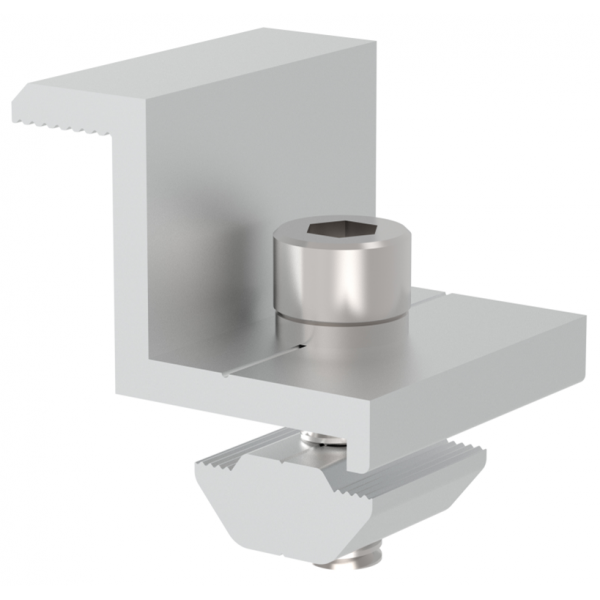
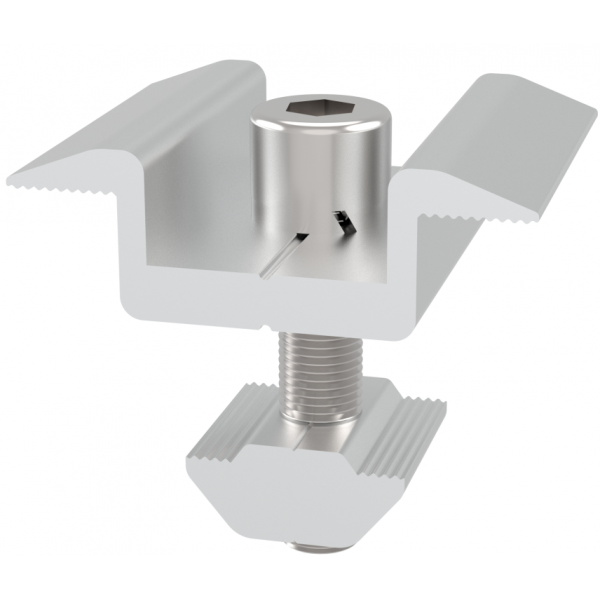
| Clamps | Position, tightness, and visible damage | Annually |
| Corrosion | Rust, oxidation, coating damage, galvanic corrosion | Annually |
| Roof attachments | Water penetration, movement, sealant condition | Annually |
| Ground-mount structure | Posts, foundations, connections, deformation | Annually |
| After severe weather | Movement, damage, loose components | After major events |
| Vegetation | Growth affecting ground-mounted structures | Periodically |
NREL’s PV O&M best-practices guidance includes annual inspection activities such as checking hardware for corrosion and inspecting mechanical components. It also identifies inspection and monitoring as an important part of PV system O&M.
1. Check Bolts, Nuts, and Clamps
Loose fasteners are one of the most important mechanical issues to identify during inspection. Thermal expansion, vibration, installation errors, and repeated wind loading can contribute to movement at mechanical connections.
Inspectors should look for visibly loose bolts, missing hardware, damaged threads, displaced clamps, and abnormal movement. Torque verification may be appropriate where required by the manufacturer’s installation instructions.
For an ALV mounting system, installers should follow the specified installation sequence and torque requirements rather than applying a generic torque value to every connection.
2. Inspect for Corrosion
Corrosion is particularly important for installations in coastal, industrial, or high-humidity environments.
Aluminum mounting components generally provide good corrosion resistance, while galvanized steel structures rely on their protective zinc coating. However, neither material should be considered completely maintenance-free.
Special attention should be given to interfaces between dissimilar metals because galvanic corrosion can occur when incompatible materials are exposed to an electrolyte such as moisture.
| Mounting Material | Typical Advantage | Maintenance Consideration |
| Alüminyum | Lightweight, naturally corrosion-resistant | Check oxidation and dissimilar-metal interfaces |
| Hot-dip galvanized steel | High structural strength and durable zinc protection | Inspect coating damage and corrosion |
| Stainless steel hardware | Excellent corrosion resistance | Higher material cost; check compatibility |
| Pre-galvanized steel | Cost-effective for some applications | Greater attention may be required at cut edges and damaged coatings |
Material selection should therefore consider the project’s climate, structural requirements, installation environment, and expected service life. ALV can help select aluminum or galvanized-steel solutions according to the specific project conditions.
3. Inspect Roof Attachments
For rooftop solar, the mounting structure is only as reliable as its connection to the building.
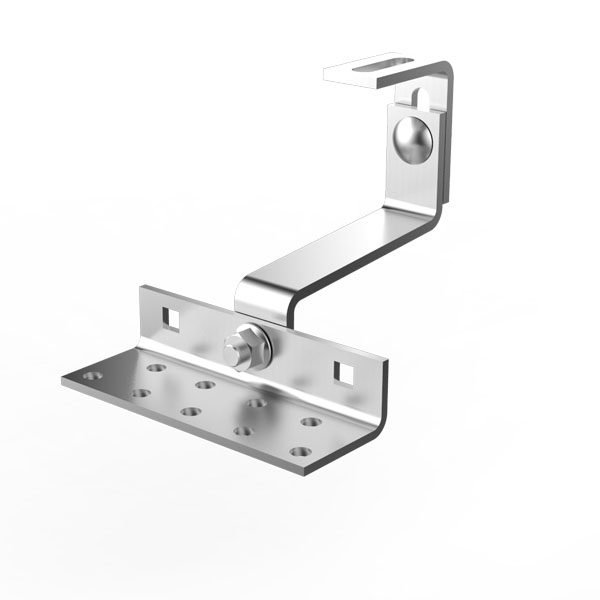
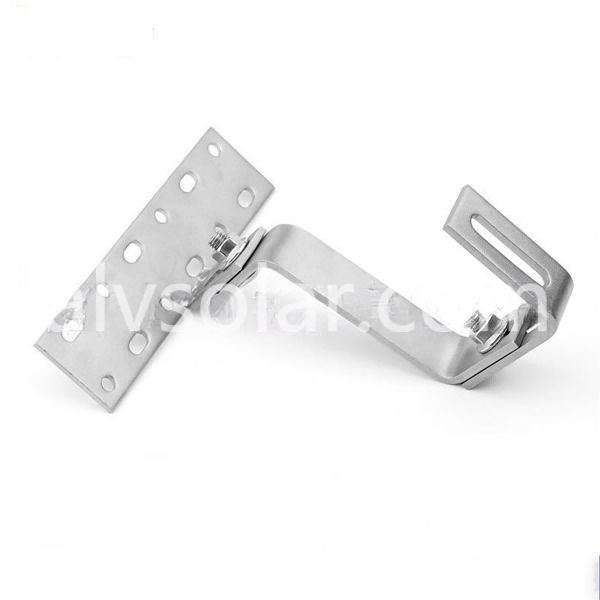
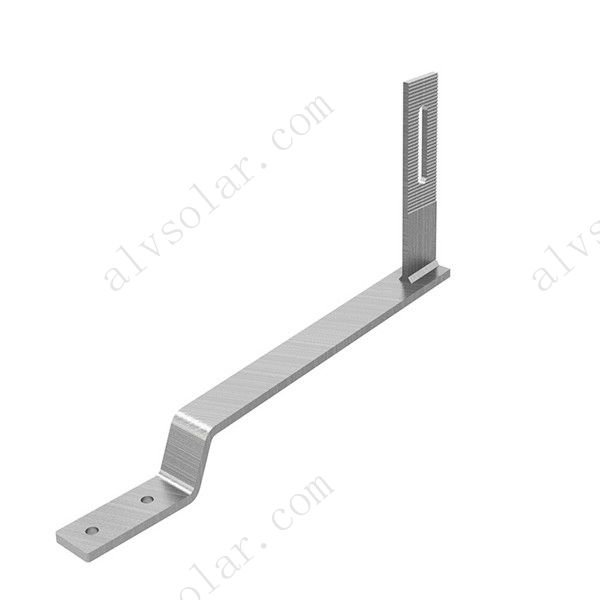
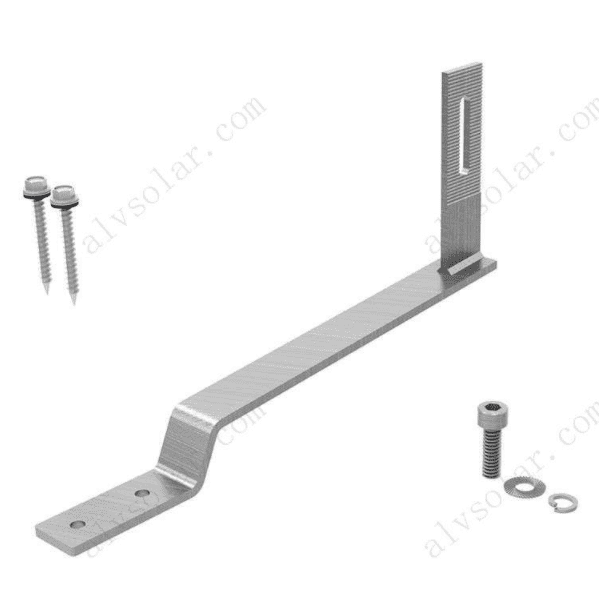
During inspection, check whether mounting feet, brackets, screws, clamps, or other attachment points have moved or become damaged. The surrounding roof area should also be inspected for water ingress, damaged waterproofing, or deterioration around penetrations.
This is especially important after severe storms. A mounting system may remain visually intact while movement at the roof connection has created a potential waterproofing or structural problem.
4. Inspect After Severe Weather
A normal annual inspection may not be enough for areas exposed to hurricanes, heavy snow, strong winds, hail, or extreme storms.
After a major weather event, inspect the array for displaced modules, bent rails, damaged clamps, loose connections, foundation movement, and abnormal structural deformation.
Wind loading should be addressed during the engineering stage rather than solved through maintenance after installation. In the United States, ASCE 7 provides provisions for determining design wind loads, including specific provisions for rooftop solar installations.
This is why ALV recommends project-specific structural design rather than selecting a mounting system based only on panel dimensions and price.
Does Solar Mounting Material Affect Maintenance?
Yes. Material selection can significantly influence the maintenance requirements and long-term durability of a mounting system.
Aluminum is frequently used for rooftop solar because of its low weight and corrosion resistance. Galvanized steel is often selected for larger ground-mounted structures where high structural strength and cost efficiency are important.
However, there is no universal “best” material. The correct choice depends on wind load, snow load, span, installation environment, module configuration, corrosion exposure, and project budget.
A professional supplier should therefore evaluate the complete project rather than recommending a material based solely on its purchase price.
How Often Should Solar Mounting Systems Be Inspected?
For many PV projects, an annual inspection is a practical baseline, with additional inspections after severe weather or when abnormal movement or damage is suspected.
NREL’s published O&M guidance includes annual inspection activities for PV system components, including corrosion inspection and other mechanical/electrical checks.
Large commercial and utility-scale projects may require more structured O&M programs. NLR’s utility-scale PV cost benchmarks also show that O&M includes multiple activities beyond the mounting structure itself, including inspection, monitoring, component replacement, cleaning, vegetation management, and other services.
Therefore, mounting-system inspection should be integrated into the project’s overall O&M schedule.
Which Standards Are Relevant to Solar Mounting and Maintenance?
There is no single international standard covering every aspect of solar mounting-system maintenance. Project requirements typically combine structural design standards, PV system standards, electrical requirements, and local building codes.
| Standard / Guideline | Main Relevance |
| ASCE 7 | Structural and wind-load determination in applicable U.S. projects |
| IEC 62548-1 | PV array design and safety requirements |
| IEC 62446-1 | PV system documentation, commissioning, and verification |
| Local building codes | Structural, wind, snow, seismic, and installation requirements |
| Manufacturer installation manual | Product-specific installation and maintenance requirements |
IEC 62548-1:2023 establishes design requirements for PV arrays, including provisions related to wiring, protection, switching, and earthing. The current consolidated IEC publication also incorporates the 2025 amendment.
Standards should be considered during design and installation, not only after a problem occurs.
How Can You Reduce Solar Mounting Maintenance?
The best maintenance strategy starts before installation.
Choose a mounting system designed for the actual wind, snow, roof, soil, and environmental conditions. Use appropriate corrosion-resistant materials, follow the manufacturer’s installation instructions, and maintain accurate drawings and component records.
For EPC contractors and solar developers, working with an experienced mounting-system manufacturer can reduce future maintenance risks. ALV provides solar mounting solutions for rooftop, ground-mounted, and solar carport applications, with project-specific engineering support and component selection.
A properly engineered system does not eliminate maintenance, but it can make inspection easier, reduce avoidable failures, and improve long-term reliability.
FAQ: Solar Mounting System Maintenance
1. Do solar mounting systems need maintenance?
Yes. Solar mounting systems require periodic inspection to identify loose fasteners, corrosion, damaged components, roof attachment problems, and structural movement. They generally require less maintenance than electrical components, but they should not be considered completely maintenance-free.
2. How often should solar mounting systems be inspected?
An annual inspection is a practical baseline for many systems. Additional inspections are recommended after hurricanes, strong storms, heavy snow, flooding, or other severe weather events.
3. Can solar mounting systems rust?
Yes. Steel mounting systems can corrode if protective coatings are damaged or environmental exposure exceeds the design assumptions. Aluminum is generally corrosion-resistant, but it can still experience surface oxidation and galvanic corrosion at incompatible metal interfaces.
4. Do aluminum solar mounting systems need maintenance?
Yes, but aluminum systems generally require limited mechanical maintenance. Inspectors should still check fasteners, clamps, rails, connections, deformation, oxidation, and contact with dissimilar metals.
5. What should I check after a strong windstorm?
Check for displaced modules, loose clamps, bent rails, damaged fasteners, movement at roof attachments, foundation movement, and visible deformation. If structural damage is suspected, the system should be inspected by a qualified professional before normal operation continues.
6. How long can a solar mounting system last?
A properly engineered and installed mounting system can be designed for a long service life, often comparable to the expected operating life of a PV project. Actual durability depends on material, corrosion exposure, structural loading, installation quality, and maintenance.
7. Does the mounting system affect solar panel performance?
Indirectly, yes. A damaged or displaced mounting structure can change module alignment, create mechanical stress, or compromise the overall PV installation. Proper structural design and regular inspection help maintain system reliability.
8. Yapabilir misiniz? ALV provide a solar mounting system for my project?
Evet. ALV supplies photovoltaic mounting solutions for rooftop, ground-mounted, and solar carport applications. If you provide the module dimensions, project location, roof or ground conditions, wind speed, snow load, and approximate quantity, ALV can evaluate the appropriate mounting solution and provide project-specific support.
Get a Solar Mounting Solution Designed for Your Project
A solar mounting system should not be selected only by comparing the price of rails, brackets, and clamps. Structural loading, corrosion environment, installation method, material selection, and long-term maintenance requirements all affect the real lifecycle value of the system.
If you are planning a rooftop, ground-mounted, or solar carport project, contact ALV with your project information. Our team can help evaluate the mounting structure, material selection, connection method, and project-specific requirements before you place an order.
Do Solar Mounting Systems Need Maintenance?(2026)
E-mail address:satış@xmalv.com