

Flat Roof Solar Mounting Systems: Which Option Is Right for Your Project?(2026)

Last Updated: October 10th, 2026
Tác giả: Devi Hoàng | Đội ngũ bán hàng quốc tế, ALV (Địa chỉ email:sales@xmalv.com)
Devi Huang là thành viên của đội ngũ bán hàng quốc tế tại ALV, một nhà sản xuất hệ thống giá đỡ năng lượng mặt trời và các cấu hình nhôm. Cô làm việc với các nhà thầu EPC, nhà phân phối và các nhà phát triển dự án trên toàn thế giới, giúp khách hàng lựa chọn giải pháp lắp đặt phù hợp dựa trên yêu cầu dự án, tiêu chuẩn địa phương và ngân sách.
Which flat roof solar mounting system should you choose?
For most flat-roof solar projects, the right mounting system depends on roof structure, wind and snow loads, allowable roof loading, waterproofing requirements, module layout, installation conditions, and local building standards—not simply on the lowest product price.
Flat roofs are particularly suitable for commercial and industrial PV because they provide relatively open installation areas. However, unlike pitched roofs, they usually need a mounting structure to create the required module orientation and inclination.
For this reason, a flat roof solar mounting system should be selected as part of the overall engineering design rather than treated as a simple accessory.
NREL identifies both ballasted and mechanically attached systems as common approaches for flat-roof PV and emphasizes that the appropriate solution depends on the specific roof and site conditions.
What are the main types of flat roof solar mounting systems?
| Mounting option | Typical roof condition | Main advantage | Main consideration |
| Ballasted system | Concrete, membrane or suitable flat roofs | Minimal or no roof penetration | Additional dead load |
| Mechanically anchored | Roof with suitable structural connection points | Strong resistance to wind uplift | Waterproofing and structural connection |
| Hybrid system | Projects requiring both ballast and mechanical fixing | Balance between weight and anchoring | More detailed engineering |
There are three common approaches for flat-roof PV projects: ballasted mounting, mechanically anchored mounting, and hybrid systems.
NREL notes that ballasted systems avoid roof penetrations but add significant weight to the roof. The report also states that the typical weight of a ballasted PV system is around 4 lb/ft², although the actual requirement varies with wind speed, tilt angle and system design.
That figure should not be treated as a universal design value. The actual ballast requirement must be calculated for the specific project.
1. When is a ballasted flat roof solar mounting system suitable?
A ballasted system can be attractive when the project owner wants to avoid drilling through the roof membrane.
Instead of fixing the structure directly to the building, ballast such as concrete blocks is used to provide the required resistance against wind uplift.
This can reduce the number of roof penetrations and simplify installation. However, the additional dead load must be checked against the structural capacity of the existing roof.
NREL specifically notes that ballasted systems can save installation time and avoid potential roof damage from penetrations, but they can require significant additional roof weight and may increase labor requirements when the roof needs resurfacing.
For ALV projects, this makes roof structure assessment an important first step before recommending a ballast solution.
2. When should you choose a mechanically anchored system?
Mechanically anchored mounting is generally considered when the roof or building structure can provide suitable fixing points and when the project requires a lower ballast load or higher mechanical resistance.
The connection may be made to structural members or other engineered attachment points, depending on the roof construction.
However, roof penetration introduces another engineering consideration: waterproofing.
NREL recommends that penetrating mounts be properly connected to structural supports and that penetrations use suitable flashing and sealing to prevent water intrusion.
This is why ALV does not recommend selecting a mechanically fixed system simply because it appears lighter or cheaper. The roof construction, structural layout and waterproofing method should be reviewed together.
3. Is aluminum or steel better for a flat roof solar mounting system?
Both aluminum and steel can be appropriate. The better choice depends on project size, corrosion environment, structural requirements, transportation and installation conditions.
| Factor | Aluminum mounting | Galvanized steel mounting |
| Cân nặng | Thấp hơn | Cao hơn |
| Corrosion resistance | Excellent, especially with appropriate alloy/design | Good with appropriate galvanizing |
| Handling | Easier for installers | More demanding |
| Large utility-scale structures | Suitable depending on design | Often advantageous |
| Coastal environment | Strong option with correct material selection | Requires careful corrosion protection |
| Installation efficiency | Generally high | Depends on structure |
| Typical application | Rooftop, commercial, special structures | Large ground/roof structures |
For commercial flat roofs, aluminum can be particularly attractive when installers need lightweight components and efficient manual handling.
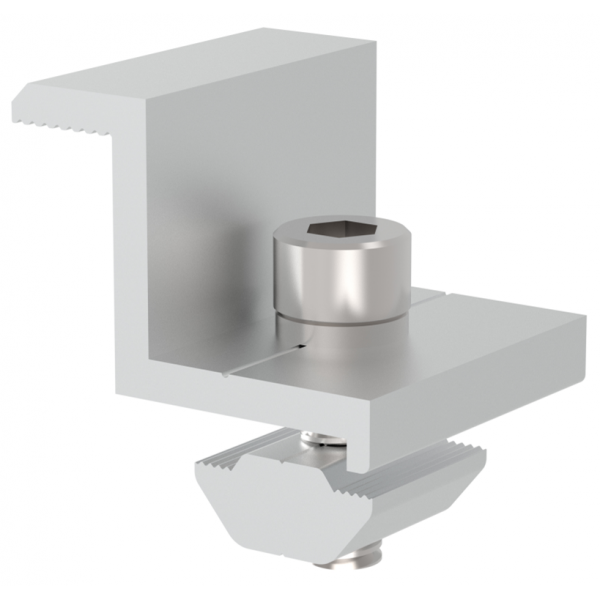
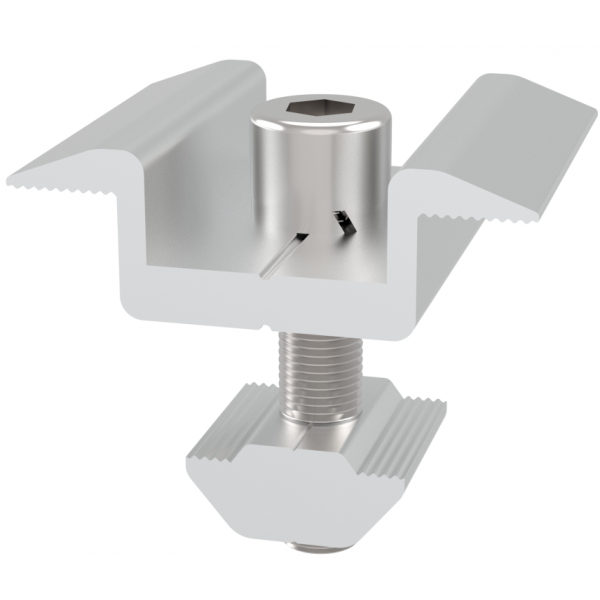
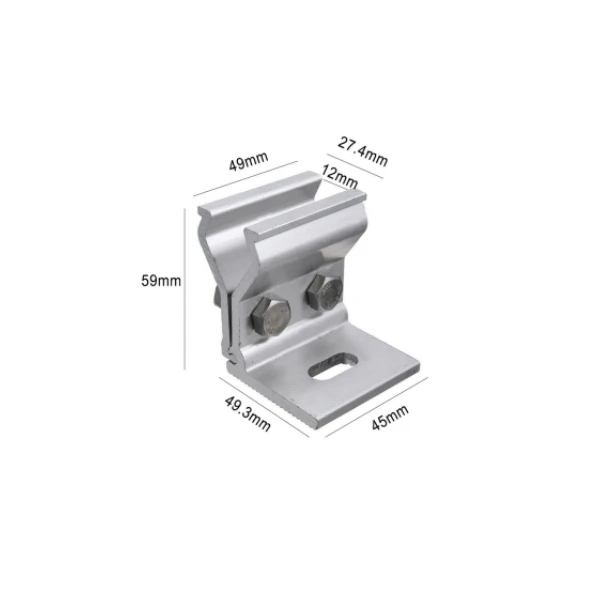
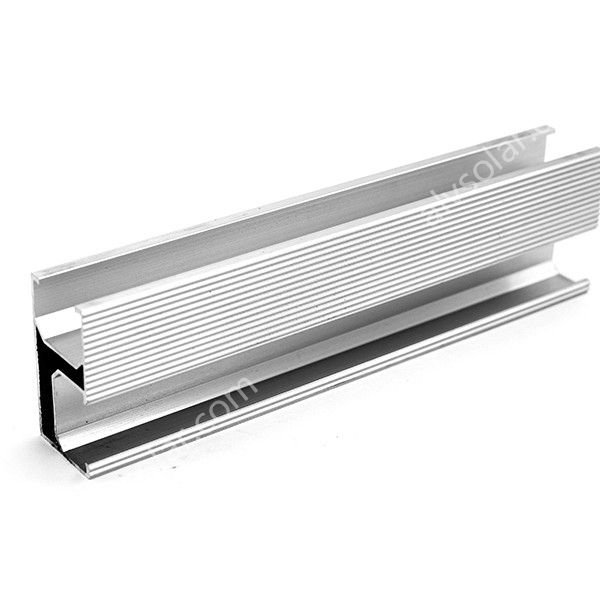
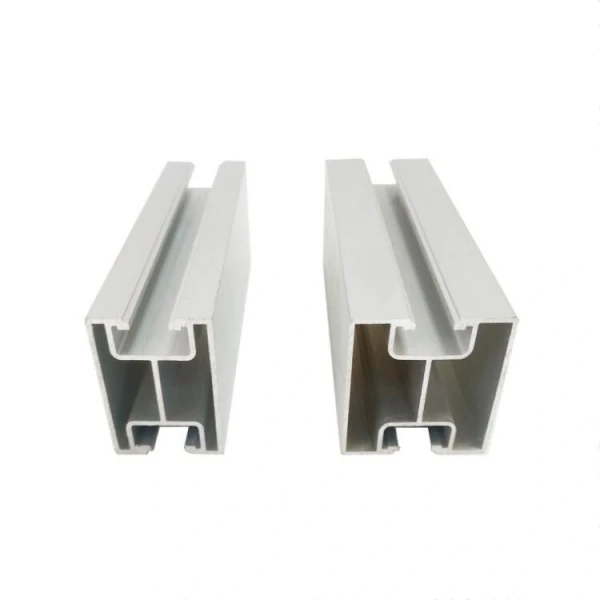
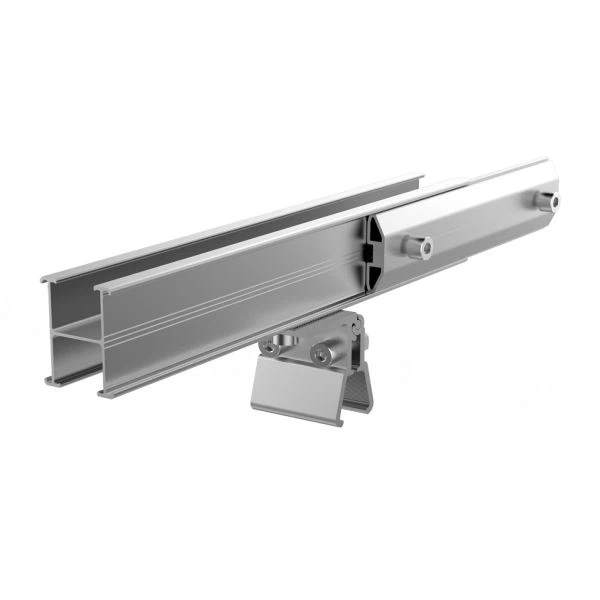
ALV supplies aluminum rails, supports, clamps and ballast solutions for rooftop applications, allowing the structure to be configured according to different roof conditions.
What standards should be considered for flat roof PV mounting?
The mounting system should be designed according to the applicable structural, electrical, fire and roofing requirements in the target market.
| Standard / guideline | What it addresses | Why it matters |
| ASCE/SEI 7-22 | Wind, snow and other design loads | Structural load calculation |
| UL 2703 | PV mounting systems and grounding | Mounting and electrical safety in applicable markets |
| IEC 61215 | Đánh giá thiết kế mô-đun PV | Module performance and testing |
| Local building codes | Structural and fire requirements | Project approval and compliance |
| NRCA guidance | Rooftop PV and roofing considerations | Roof integrity and installation practices |
ASCE/SEI 7-22 provides design provisions covering wind, snow, rain, seismic and other environmental loads. ASCE describes it as the nationally adopted loading standard for general structural design in the United States.
For example, ASCE 7-22 specifically includes provisions for flat-roof snow loads, meaning that a flat roof PV structure should not be evaluated only for its own weight and wind uplift.
UL 2703 covers PV mounting systems, mounting devices, clamping/retention devices and grounding components. UL also notes that the standard can be used to determine the fire classification of rooftop PV systems consisting of the module and mounting system.
Meanwhile, IEC 61215-1:2021 defines design qualification and type-approval requirements for terrestrial PV modules. It is important to distinguish module standards such as IEC 61215 from mounting-system standards.
How should wind load affect your mounting choice?
Wind is one of the most important factors in flat-roof PV design because elevated modules can experience significant uplift.
The required ballast or mechanical connection depends on factors such as design wind speed, building height, roof zone, module tilt, array geometry, parapets, exposure and local code requirements.
NREL has highlighted that high wind can cause uplift forces on PV modules and that mounting and clamping design can affect the load tolerance of the module/attachment system.
Therefore, an EPC contractor should provide the mounting supplier with the project location, roof height, wind speed or applicable design standard, roof drawings and module specifications before finalizing the structure.
This is also how ALV approaches project-specific quotations: the objective is not simply to select a standard mounting kit, but to match the structure to the actual project conditions.
What information should you provide before requesting a quote?
A good quotation starts with good project information.
| Information | Why it is needed |
| Vị trí dự án | Determines environmental conditions |
| Roof type | Determines fixing method |
| Roof drawings | Helps understand structural layout |
| Roof dimensions | Determines array layout |
| Module brand/model | Determines clamp and rail compatibility |
| Module quantity | Determines system quantity |
| Module orientation | Affects layout and loading |
| Tilt angle | Influences wind loading and energy yield |
| Wind speed/design load | Determines structural resistance |
| Tải trọng tuyết | Determines structural requirements |
| Roof load capacity | Critical for ballast systems |
| Coastal environment | Determines corrosion considerations |
| Project schedule | Helps plan production and delivery |
If detailed roof drawings are available, sending them to ALV’s technical team can significantly improve the accuracy of the initial mounting proposal.
For projects without complete drawings, roof photos, dimensions, module datasheets and project coordinates can still provide a useful starting point.
Flat Roof Solar Mounting Systems: Quick Comparison
| Requirement | Ballasted | Mechanically anchored | Hybrid |
| Avoid roof penetration | ★★★★★ | ★★ | ★★★ |
| Reduce roof dead load | ★★ | ★★★★★ | ★★★★ |
| Simple installation | ★★★★ | ★★★ | ★★★ |
| High-wind applications | Project-specific | Project-specific | Project-specific |
| Waterproofing concern | Lower penetration risk | Cao hơn | Trung bình |
| Structural calculation | Yêu cầu | Yêu cầu | Yêu cầu |
| Suitable for commercial roofs | Yes | Yes | Yes |
The stars above are general design considerations, not engineering ratings. Actual suitability must be verified against the project-specific structural and local-code requirements.
FAQ: Flat Roof Solar Mounting Systems
1. What is the best mounting system for a flat roof?
There is no universal best system. Ballasted, mechanically anchored and hybrid systems can all be appropriate depending on roof structure, wind load, roof capacity, waterproofing requirements and local regulations.
2. Can solar panels be installed on a flat roof without drilling?
Yes. Ballasted mounting systems can be designed without penetrating the roof membrane. However, the additional ballast weight must be checked against the roof’s structural capacity.
3. How much does a ballasted solar mounting system weigh?
NREL gives approximately 4 lb/ft² as a typical ballasted PV system weight, but actual ballast requirements vary according to wind speed, tilt and system design.
4. Is aluminum good for flat roof solar mounting?
Yes. Aluminum can provide a lightweight and corrosion-resistant solution, particularly for rooftop applications. The alloy, component design, fasteners and project environment should all be considered.
5. Does a flat roof solar system need a tilt angle?
Usually, yes. A mounting structure can raise the modules to a designed inclination and orientation. The optimum configuration depends on latitude, energy objectives, roof layout, wind conditions and project constraints.
6. What information does ALV need to design a flat roof mounting system?
ALV typically needs the project location, roof type, roof drawings or photos, roof dimensions, module model and quantity, module orientation, tilt angle, wind/snow loads and any special installation requirements.
7. Is a ballasted system always cheaper than a mechanically fixed system?
Not necessarily. The total cost depends on ballast quantity, roof structure, installation labor, waterproofing, engineering and local material costs. Comparing only the mounting-system unit price can give a misleading result.
Choosing the Right Flat Roof Solar Mounting System
The right flat-roof solar mounting system is the one that balances structural safety, roof integrity, installation efficiency, corrosion resistance and project economics for the specific site.
For a small commercial roof, a lightweight aluminum ballast solution may be appropriate. For a high-wind location or a roof with limited allowable dead load, a mechanically anchored or hybrid design may be more suitable.
ALV works with EPC contractors, distributors and project developers to develop project-specific rooftop mounting solutions, including aluminum rails, supports, clamps and ballast systems.
If you have a flat-roof PV project, send ALV your roof drawing, module information, project location and wind/snow requirements. Our technical team can review the available information and help determine which mounting approach is technically suitable for your project.
Need a flat roof solar mounting solution?
Liên hệ ALV for a project-specific design and quotation.

Flat Roof Solar Mounting Systems:
Which Option Is Right for Your Project?(2026)

E-mail address:sales@xmalv.com