

How to Select, Design, and Install a High‑Performance Solar Carport System

Solar Carport Design Fundamentals
At its core, a solar carport is a ground‑mounted solar structure that incorporates a canopy roof to provide overhead protection for parked vehicles. The fundamental difference from conventional ground‑mount systems is the structural requirement for a roof spanning vehicle parking spaces without obstructing access. The canopy area is slightly sloped, providing a perfect platform for the seamless mounting of solar panels while adding to the aesthetics of the car park.
A well‑designed solar carport is not a roof with solar panels attached—it is an integrated system where PV modules form the weatherproof envelope. This is called Building‑Integrated Photovoltaics (BIPV), and it represents the gold standard for solar carport design.
Primary Structural Configurations
Modern solar carports are available in several distinct structural configurations, each suited to different site conditions and aesthetic preferences.
Single‑Column (Cantilever) Design: Using a single central support per carport bay, this design eliminates ground‑level posts at corners, maximizing parking accessibility and visibility. The self‑supporting cantilever structure can extend up to 10 meters in span, accommodating large vehicles and multiple parking rows without obstructive posts.
Dual‑Column (T‑Frame) Design: The traditional approach with two columns per carport bay, providing robust structural support and allowing for greater total roof spans. Typically more economical for very large installations where column quantity is not a primary concern.
Fully Integrated BIPV System: The most advanced configuration where structural and waterproofing elements are unified. The panel and supporting frame are designed together, creating inherently stronger structures that achieve higher safety certifications.
Waterproofing: The #1 Technical Challenge
Here’s an uncomfortable truth about solar carports: water will find a way in unless you specifically engineer it out.
A carport that leaks completely defeats its purpose. Rainwater dripping onto vehicles and occupants defeats the “vehicle protection” value proposition. Worse, persistent leakage leads to structural corrosion, electrical hazards, and customer dissatisfaction. Yet waterproofing is notoriously difficult to achieve with conventional solar module clamping systems because standard PV panels were never designed to be roof membranes.
BIPV waterproofing approach: Fully integrated BIPV carports adopt an integrated approach combining module drainage, gutter conduction, and structural waterproofing. Advanced BIPV systems integrate rails with built‑in gutters to achieve fully concealed drainage, saving approximately 14.2% in cost per watt compared to conventional solutions—finally solving the long‑standing waterproofing challenge.
EPDM sealing systems: High‑quality systems incorporate EPDM rubber sealing strips at all module junctions, preventing water ingress between panels while maintaining flexibility for thermal movement and structural settling.
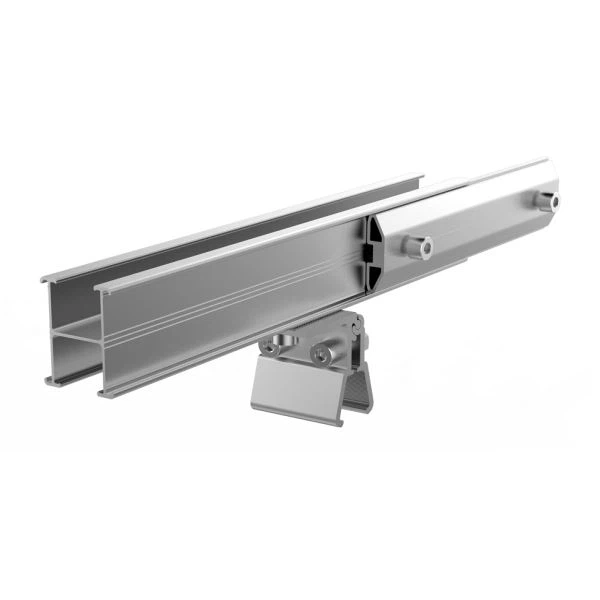
Drainage integration: The integrated drainage channel approach uses longitudinal sink rails that catch water from horizontal gaps between solar modules. Panels installed at precise 1-2 mm spacing direct water into concealed gutters that channel rainwater away from the parking area.
Tilt angle optimization: Proper roof slope (typically 5–15°) is essential for drainage. Insufficient pitch allows water pooling, which accelerates corrosion and increases leakage risk. Fixed tilt angles can be optimized for different latitudes, with adjustable tilt options available for maximum flexibility.
Material Selection and Corrosion Protection
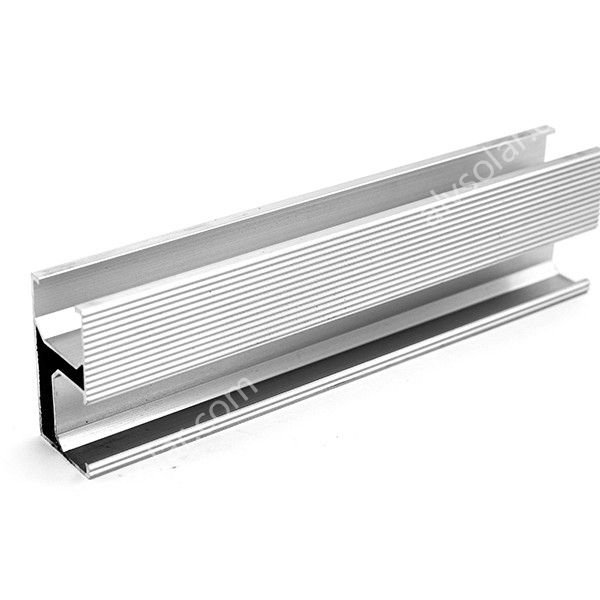
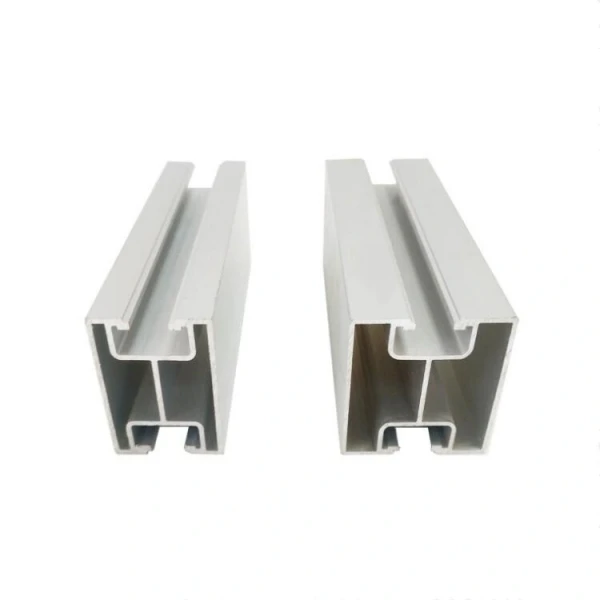
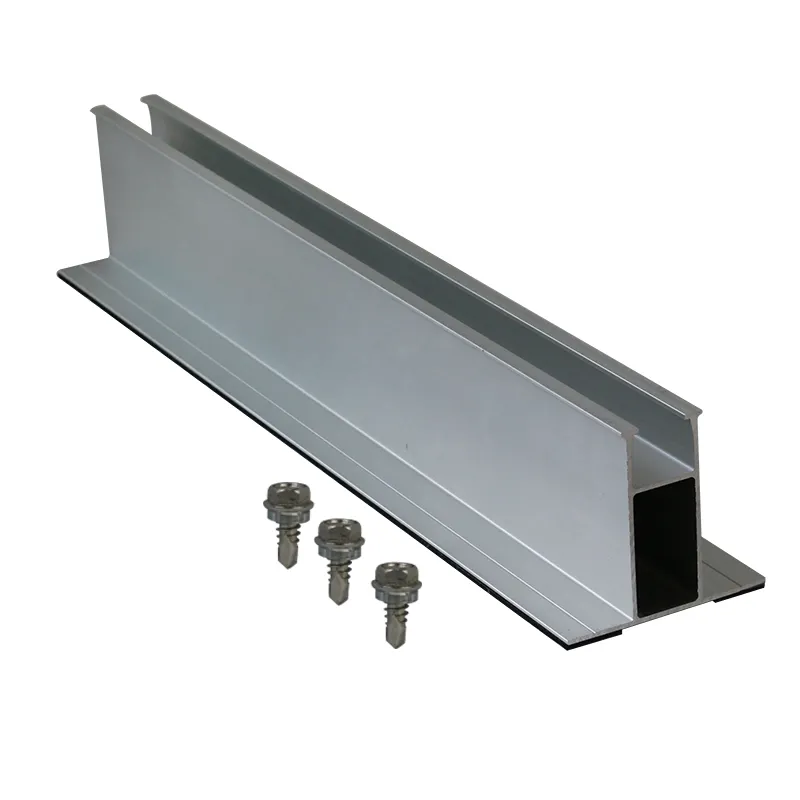
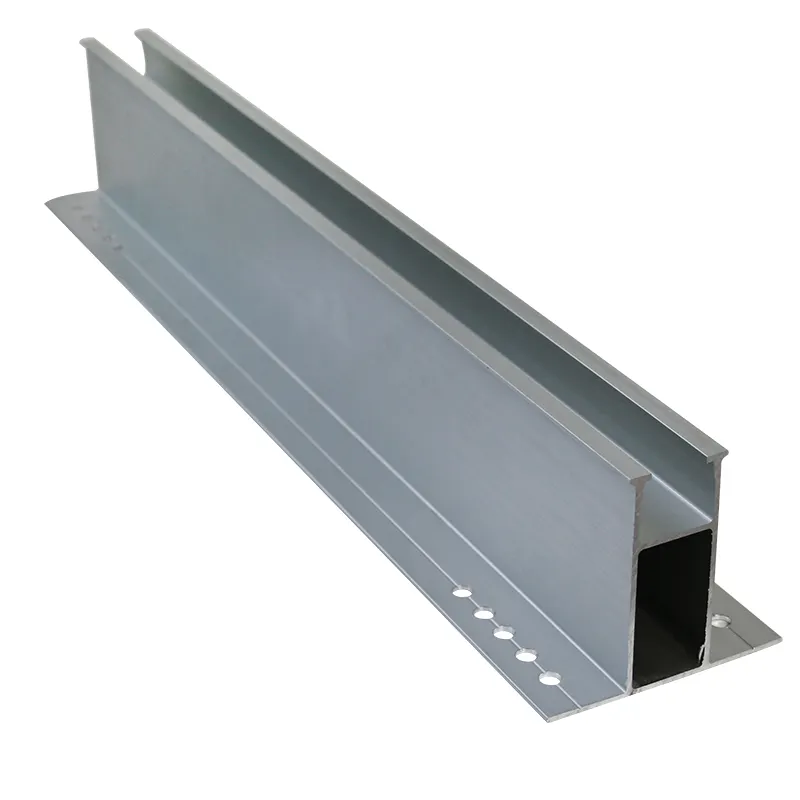
Aluminum Alloy (AL6005-T5): Widely regarded as the premium material for solar carport construction. AL6005-T5 aluminum alloy delivers excellent lightweight properties (approximately 30% lighter than steel brackets) with exceptional corrosion resistance when anodized. Anodized aluminum frames with professional anodizing exceeding 10μm thickness provide outstanding protection against UV and salt spray.
Galvanized Carbon Steel (Q355B): For large commercial projects where maximum structural strength at lower material cost is required, hot‑dip galvanized carbon steel remains standard. Coatings exceeding 80μm provide corrosion resistance exceeding ISO‑1461 standards. Steel systems offer high strength‑to‑weight characteristics, typically achieving 25‑year design service life with proper corrosion protection.
Stainless Steel Fasteners: All critical connections should use SUS304 or higher-grade stainless steel hardware, correctly matched to the aluminum or steel structural materials to prevent galvanic corrosion. Galvanic compatibility across all components is essential for system longevity.
Load Engineering: Wind and Snow
Solar carports must be engineered for site‑specific wind and snow loads. These are not optional design considerations—they are structural requirements.
Wind load performance: High‑quality aluminum carport systems are engineered to withstand wind speeds up to 60 m/s (approximately 130 mph), well above the requirements for most coastal and hurricane‑prone regions. For extreme wind regions, engineering certification to AS/NZS1170 and ASCE7-10 standards with certified performance across Wind Load Regions A, B, and C provides verified performance documentation.
Snow load capacity: Quality systems provide certified snow load ratings up to 2.5 kN/m², accommodating heavy winter conditions in northern latitudes without structural compromise. For reference, 2.5 kN/m² corresponds to approximately 250 kg per square meter of snow load—sufficient for all but the most extreme alpine conditions.
System Sizing and Electrical Specifications
Understanding system capacity ranges helps match carport configurations to project requirements. In commercial carport systems, heavy steel configurations deliver larger capacities from 35.64 kW upwards for large‑scale installations, with design life typically 25 years.
In residential and small commercial applications, modular designs are available in 4.8 kW single units and 8.0 kW double units, both using adjustable poles with front heights of 3-3.5 m and rear heights of 2-2.5 m to provide proper panel tilt for optimal solar capture.
Installation Requirements and Site Preparation
Foundation options: Solar carports can be installed on various foundation types:
- Concrete pad foundations (standard commercial approach)
- Ground screw foundations (reduced site disruption, quicker installation)
- Bolt‑in installation to existing concrete (no new footing required for systems designed specifically for retrofit applications)
- Precast concrete blocks (applicable for certain ground conditions)
Site assessment checklist:
- Verify soil conditions and bearing capacity
- Confirm vehicle clearance requirements (standard commercial: 2.4m minimum height)
- Assess shading from adjacent buildings or trees
- Plan electrical conduit runs and inverter placement
- Review local zoning and permitting requirements
Installation complexity: Properly designed modular carport systems can be installed by crews of three with no onsite welding or cutting required. For a single residential carport, four hours of assembly time is typical; a double unit requires approximately six hours.
EV Charging Integration
Solar carports and EV charging are a natural fit. Modern carports can be designed to include:
- Integrated EV chargers (7kW to 150kW+ depending on application)
- Battery storage systems to capture excess daytime generation
- Smart energy management platforms that prioritize EV charging during peak solar production
- IoT‑based real‑time monitoring and load balancing
The integration of smart charging technologies and grid‑connected systems is accelerating the solar carport market, enabling optimal energy utilization for both electric vehicles and nearby facilities.
Compliance and Safety Certification
Safety is not a marketing term—it is the absolute prerequisite for every well‑engineered solar carport. Look for systems carrying certifications including IEC 61215 (PV module design and performance reliability), IEC 61730 (PV module safety), UL 790 (fire resistance for BIPV products), AS/NZS1170 and AS4100 (structural standards), and EN 12600 (pendulum impact safety).
Real‑World Performance: Case Examples
Australian residential case: More than 80 units of a modular residential carport have been installed across Australia and New Zealand, with systems including 4.8 kW and 8.0 kW configurations. In an 8 kW double carport installation, the system generates energy for daily needs, EV charging, and future battery storage.
Croatian commercial installation: A 12 kW waterproof carport mounting system installed in northern Croatia uses integrated drainage channels, EPDM sealing strips, and optimized slope design to prevent rainwater infiltration. The structure uses anodized aluminum and stainless steel fasteners with one‑row or two‑row parking layouts supporting EV chargers and battery storage integration.
Maintenance Requirements for Longevity
Unlike rooftop solar, carports are accessible structures designed for straightforward maintenance. For corrosion‑resistant aluminum systems, annual visual inspections for seal integrity, fastener torque checks, and drainage path clearance are sufficient.
Selection Framework: Finding Your Optimal System
When evaluating solar carport systems, ask these five questions:
1. What are your site‑specific wind and snow loads? The system must be engineered for your location—not a generic “region.” Request certified structural calculations.
2. Is waterproofing fully integrated or an afterthought? BIPV systems with concealed drainage are superior to conventional panel clamping.
3. What is the material and corrosion protection? Anodized aluminum or heavy‑gauge galvanized steel with stainless steel hardware.
4. Can the system accommodate EV charging and future storage? Modularity for future upgrades is a critical long‑term value factor.
5. What certifications does the system carry? IEC, UL, AS/NZS, EN—verified compliance is non‑negotiable.
Engineered for Performance, Backed by Certification
A solar carport is a permanent investment in your property’s energy future. The difference between a premium, engineered system and a commodity product is structural integrity, waterproofing reliability, and long‑term durability. Our aluminum solar carport systems are engineered from AL6005‑T5 with professional anodized finishing, integrated waterproofing, full certification, and the structural engineering documentation required for permitting worldwide.
We provide complete solar carport solutions including custom structural engineering, site‑specific load calculations, integrated EV charging infrastructure design, and full installation documentation. Contact our engineering team to discuss your project requirements and receive a complete system quotation.